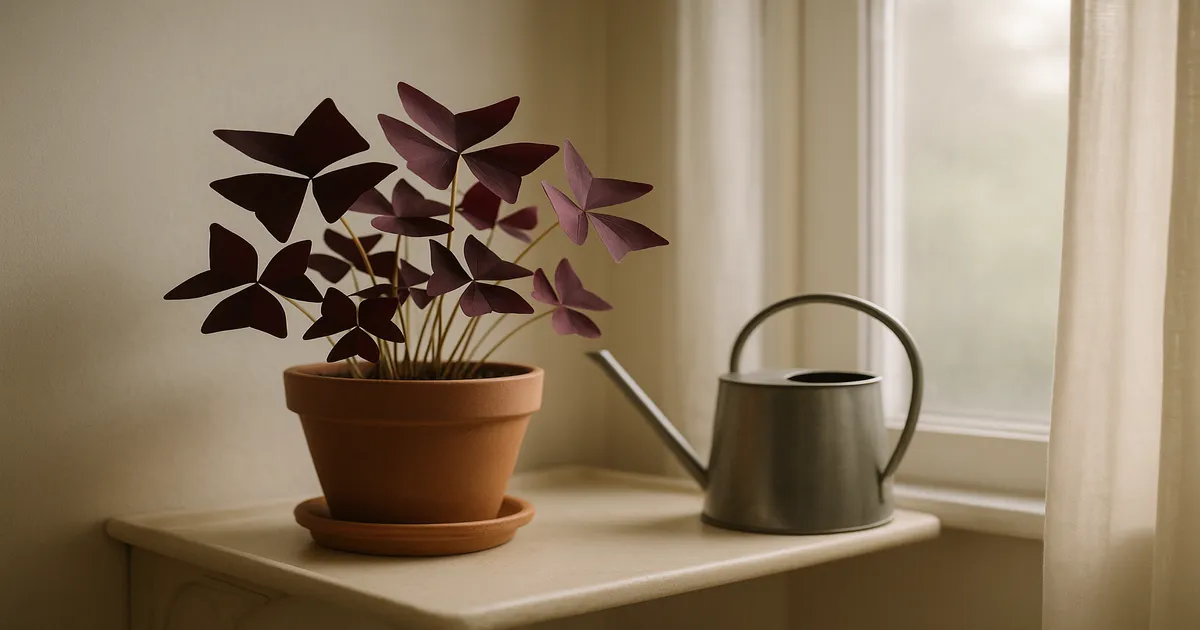
Quick Answer: Water oxalis every 7–10 days during active growth (spring through fall), then pull back to once every 3–4 weeks when the plant goes dormant. Because oxalis grows from bulbs or rhizomes that store water and energy, it’s far more forgiving of a missed watering than it is of a soggy pot.
Knowing how often to water oxalis is less about following a rigid schedule and more about understanding one unusual trait: this plant lives a double life. During active growth it’s a cheerful, leafy houseplant. Then, seemingly out of nowhere, it collapses — and most owners assume they’ve killed it. They haven’t. They’ve just hit dormancy, and how you water through that transition makes all the difference.
How Often to Water Oxalis: Quick-Reference Table
| Active Season (Spring–Fall) | Dormant Period | |
|---|---|---|
| Frequency | Every 7–10 days | Every 3–4 weeks |
| Soil dryness target | Top 1–2 inches dry before watering | Top 2–3 inches fully dry before watering |
| Fertilising | Every 2–4 weeks (diluted) | Stop completely |
These numbers are a starting point. Pot material, light levels, soil mix, and time of year can all push your actual frequency up or down — the sections below walk through each one.
Why Oxalis Watering Is Different from Other Houseplants
Most popular houseplants are tropical foliage plants that want relatively consistent moisture year-round. Oxalis is a geophyte — it grows from underground bulbs or rhizomes that act as built-in water tanks, buffering the plant against short dry spells. That means oxalis tolerates a missed watering far better than a pothos or fern, but it cannot tolerate sitting in soggy soil for days on end.
The other key difference is dormancy. Most tropical houseplants don’t have a true rest period. Oxalis does, and if you keep watering at active-growth rates while the plant is dormant, you’ll rot the bulbs before it ever gets a chance to bounce back.
Understanding Oxalis Bulbs and How They Affect Watering
How the Bulb Acts as a Water Reservoir
The underground storage organ — whether a true bulb, corm, or rhizome depending on the species — is essentially the plant’s savings account. It holds water and carbohydrates, which means oxalis can coast through a week or two of dry soil without serious damage. The trade-off is that bulbs are also the part most vulnerable to rot, because they sit in the soil and have no way to escape prolonged wetness.
Popular Species and Their Watering Differences
Most houseplant oxalis falls into a handful of species. Their needs are broadly similar, but not identical:
- Oxalis triangularis (purple shamrock) — the most common houseplant species; moderate drought tolerance; typically goes dormant in summer or under stress
- Oxalis regnellii (green shamrock) — nearly identical care to O. triangularis; same watering rhythm
- Oxalis tetraphylla (Iron Cross) — native to Mexico; slightly more drought-tolerant; handles a touch longer between waterings
- Oxalis versicolor (Candy Cane oxalis) — South African origin; more pronounced seasonal dormancy; reduce water aggressively when it starts to die back
- Oxalis vulcanicola — tolerates slightly more consistent moisture than the others; popular in mixed containers
The Dormancy Cycle Explained
Dormancy is triggered by photoperiod (day length), accumulated heat, or prolonged stress — not drought alone. O. triangularis often goes dormant in mid-to-late summer, which surprises growers who assume hot weather means the plant needs more water. The opposite is true. Leaves yellow, droop, and collapse over one to two weeks, and the plant looks dead. It isn’t. The bulbs are simply resting, and they need cool, dim, barely-moist conditions to do it well.
7 Factors That Change How Often You Need to Water Oxalis
1. Pot Material and Size
Terracotta pots lose moisture through their porous walls at roughly two to three times the rate of plastic or glazed ceramic. That’s not a flaw — it’s a feature if you tend to overwater. A plant in terracotta might need water every 6–7 days; the same plant in a plastic nursery pot might go 10–14 days.
Pot size matters just as much. Oxalis does best slightly pot-bound. An oversized pot holds far more soil than the roots can draw from, keeping the root zone wet long after the surface looks dry. Stick to a pot 1–2 inches larger than the bulb mass.
2. Soil Mix and Drainage
Standard potting mix retains too much water for oxalis. A blend of 50% potting mix, 25% perlite or pumice, and 25% coarse horticultural sand hits the right balance — enough moisture retention to support growth, enough drainage to prevent the wet-feet problems that rot bulbs. Target a soil pH of 6.0–6.5; outside that range, nutrient uptake suffers and the plant can show drought-like stress even in moist soil.
3. Light Levels and Transpiration
More light means more photosynthesis, more transpiration, and faster soil dry-down. Oxalis thrives in bright indirect light (1,500–3,000 foot-candles). Here’s how to calibrate watering to actual light conditions:
- Bright indirect light (1,500–3,000 foot-candles): every 7–10 days
- Low light (under 500 foot-candles): every 14–21 days
- Supplemental grow light, 14–16 hour photoperiod: every 5–7 days
A plant whose leaves stay folded during the day is telling you it’s in too little light — and using water very slowly.
4. Temperature and Humidity
Oxalis grows best at 60–75°F (15–24°C). Heated winter rooms often drop humidity to 20–30%, which accelerates soil dry-down even when the plant is growing slowly. Check moisture more frequently in winter than you might expect, and keep the plant away from heating vents or radiators where extreme dryness and temperature swings cause stress.
5. Root and Bulb Health
A pot that’s been growing for two or more years may be so packed with bulbs that almost no soil remains. In that case, the tiny amount of growing medium dries out in 3–5 days rather than 7–10. Conversely, a plant recovering from root rot has damaged roots that can’t move water efficiently, so it shows drought symptoms even in moist soil. If your plant wilts despite adequate watering, check the roots.
6. Water Quality
Fluoride in tap water accumulates in leaf tips and causes tip burn that can mimic underwatering. Hard water (above 180 ppm total dissolved solids) gradually raises soil pH, locking out nutrients and stressing roots. Cold water (below 50°F/10°C) can shock roots and temporarily impair uptake. Room-temperature filtered water or collected rainwater sidesteps all three issues.
7. Season and Growth Stage
Spring and fall are peak growing periods — stick to the 7–10 day baseline. Summer may look like peak growing season, but watch for dormancy onset. Winter watering depends entirely on whether your plant is dormant or actively growing under supplemental light.
Signs Your Oxalis Needs Water — and Signs It Doesn’t
Visual and Tactile Cues for Underwatering
An underwatered oxalis droops dramatically and looks pitiful, but perks up within a few hours of a good drink. That rapid recovery is the key diagnostic. Other reliable signals:
- Soil is dry 2 inches deep when you poke a finger in
- The pot feels noticeably light when you lift it
- Leaves are folded and dull during the day, not just at night (oxalis folds its leaves at night normally — daytime folding signals stress)
How to Tell Dormancy Apart from Underwatering
This is where most people go wrong. Both dormancy and severe underwatering cause yellowing, drooping, and collapse. The difference is in the bulbs. Gently brush away a little soil and excavate one bulb. A firm, cream-coloured bulb means healthy dormancy. The plant will not respond to watering right now, and that’s fine. A mushy, brown, foul-smelling bulb means rot — a different problem entirely.
If you’re unsure, water once and wait 48 hours. A truly underwatered plant will show some improvement. A dormant plant won’t, no matter how much water you give it.
Overwatering Warning Signs
- Yellowing that doesn’t improve after watering
- Soft, mushy stems at soil level
- Foul-smelling soil
- Brown, mushy bulbs when you excavate
The pot-weight method is your best low-tech tool: lift the pot right after watering, note how heavy it feels, then lift it again before your next scheduled watering. When it feels light, it’s time. A soil moisture meter removes the guesswork entirely — insert the probe into the middle of the root zone rather than just the surface for an accurate reading.
How to Water Oxalis Correctly
Top-Down vs. Bottom-Up Watering
Both methods work. Top watering is faster and flushes accumulated mineral salts from the soil — water thoroughly until it drains freely from the bottom, then empty the saucer within 30 minutes. Never let oxalis sit in standing water.
Bottom watering is useful when your soil has become hydrophobic and water runs straight down the sides of the pot without wetting the root zone. Place the pot in a tray of water for 20–30 minutes, then remove it and let it drain fully before returning it to its spot.
How Much Water to Use
Water until you see it flowing freely from the drainage holes — not a token splash. You want to wet the entire root zone, not just the top inch. Then stop, and don’t water again until the appropriate depth of soil has dried out.
Best Water Type and Temperature
Room-temperature filtered water or rainwater is ideal. If you use tap water, letting it sit in an open container overnight allows chlorine to off-gas, though chloramine (used in many municipal systems) won’t dissipate this way — a simple pitcher filter handles both. Avoid cold water straight from the tap in winter.
Seasonal Watering Schedule
| Season | Typical Frequency | Notes |
|---|---|---|
| Spring | Every 7–10 days | Resume as new growth appears |
| Summer | Every 7–10 days, or pause | Watch for dormancy onset |
| Fall | Every 7–10 days | Active growth resumes post-dormancy |
| Winter | Every 3–4 weeks (dormant) or 7–10 days (active under lights) | Depends on whether plant is resting |
Watering Oxalis During Dormancy
Recognising When Dormancy Begins
Dormancy typically announces itself over one to two weeks: leaves yellow progressively, stems weaken, and the plant collapses. No new growth appears. If this happens in mid-to-late summer or during a period of stress, it’s almost certainly dormancy — not death, and not a watering problem.
Dormancy Watering Routine
Once you’ve confirmed dormancy (firm bulbs when you check), shift your approach:
- Stop fertilising immediately.
- Reduce watering to once every 3–4 weeks — just enough to keep the bulbs from desiccating completely.
- Allow the top 2–3 inches of soil to dry completely between waterings.
- Move the pot to a cool, dim spot (55–65°F / 13–18°C) — a basement shelf or a north-facing room works well.
Waking Your Oxalis from Dormancy
When you see new shoots pushing up from the soil — typically after 6–12 weeks of rest — don’t flood the pot immediately. Let the shoots reach 1–2 inches tall, then gradually increase watering back to the active-season schedule over two to three weeks. The root system needs time to re-establish before it can handle normal watering volumes.
Fixing Overwatered and Underwatered Oxalis
How to Rescue an Overwatered Oxalis
Act quickly — the longer bulbs sit in wet, anaerobic soil, the less likely they are to recover.
- Unpot the plant and shake off all old soil.
- Inspect each bulb. Healthy bulbs are firm and white to cream-coloured.
- Trim any rotted roots with sterilised scissors.
- Dust cut surfaces with powdered cinnamon (a natural antifungal) or a sulphur-based fungicide powder.
- Repot into fresh, well-draining mix.
- Withhold water for 5–7 days to let any cuts callous.
If fewer than half the bulbs are affected, salvage the healthy ones and replant. If all bulbs are mushy and foul-smelling, the plant is unlikely to recover — clean the pot thoroughly and start fresh with new bulbs.
Reviving an Underwatered Oxalis
Place the pot in a basin of room-temperature water and let it soak for 30 minutes, then allow it to drain fully. Most underwatered oxalis perks up noticeably within a few hours. Resume a consistent watering schedule going forward.
The contrast with overwatering is stark: an underwatered oxalis recovers in hours; an overwatered one takes weeks — if it recovers at all.
Soil, Pot, and Setup Tips to Make Watering Easier
Best Soil Mix for Oxalis
The right mix does half the work of proper watering for you. Aim for:
- 50% peat-based or coir-based potting mix
- 25% perlite or pumice
- 25% coarse horticultural sand or fine bark chips
This blend drains freely while retaining just enough moisture. Refresh the soil every one to two years before it compacts or becomes hydrophobic. When repotting, consider working a mycorrhizal inoculant into the fresh mix — these beneficial fungi extend the effective root surface area and improve water uptake efficiency, which is especially helpful after the root system has been disturbed.
Choosing the Right Pot
Always use a pot with at least one drainage hole — no exceptions. Terracotta is the best choice for anyone who tends to overwater. Size the pot only 1–2 inches larger than the bulb mass, and if you use a decorative cachepot, empty any standing water within 30 minutes of watering.
Monitoring Tools Worth Having
A basic soil moisture meter removes the single biggest source of watering error: guessing. Insert the probe into the middle of the root zone — not just the surface — and water when the reading drops to the dry-to-moist boundary. A lux meter or a smartphone light-meter app can tell you actual foot-candles at your plant’s location, helping you calibrate watering to real light levels rather than assumptions. A compact digital hygrometer is also worth keeping nearby in winter, when heated rooms dry out faster than expected.
Frequently Asked Questions About Watering Oxalis
Why is my oxalis drooping even though I just watered it?
Drooping despite moist soil usually points to root or bulb damage from previous overwatering. Damaged roots can’t move water efficiently, so the plant wilts even when moisture is available. Gently unpot the plant and check the bulbs — mushy, brown bulbs confirm rot. It’s also possible the plant is entering dormancy, in which case no amount of watering will perk it up.
Should I water oxalis from the bottom or the top?
Either method works. Top watering is quicker and flushes mineral salts from the soil over time — just make sure water drains freely and you empty the saucer within 30 minutes. Bottom watering is especially useful if your soil has become hydrophobic and water channels down the sides of the pot rather than soaking in; let the pot sit in a tray of water for 20–30 minutes, then remove it.
How do I know if my oxalis is dormant or dead?
Gently brush away some soil and excavate one bulb. A firm, cream-coloured or white bulb is alive and healthy — the plant is dormant and will return. A mushy, brown, foul-smelling bulb indicates rot from overwatering. If the bulbs look healthy, move the pot to a cool, dim spot and water sparingly; new shoots should appear within 6–12 weeks.
Can I water oxalis with tap water?
Tap water is generally fine, but two issues can develop over time. Fluoride accumulates in leaf tissue and causes brown tip burn, and hard water gradually raises soil pH above the optimal 6.0–6.5 range, which can mimic drought stress. If you notice persistent tip burn or declining vigour, switching to filtered water or collected rainwater — and occasionally flushing the soil thoroughly — usually resolves it.
How often should I water oxalis in winter?
It depends on whether your plant is dormant or actively growing. A dormant plant needs water only every 3–4 weeks — just enough to keep the bulbs from completely drying out. If your oxalis is actively growing under supplemental lighting, it may still need water every 7–10 days, though heated indoor air and low humidity can cause the soil to dry faster than expected, so check every 5–7 days rather than waiting the full 10.