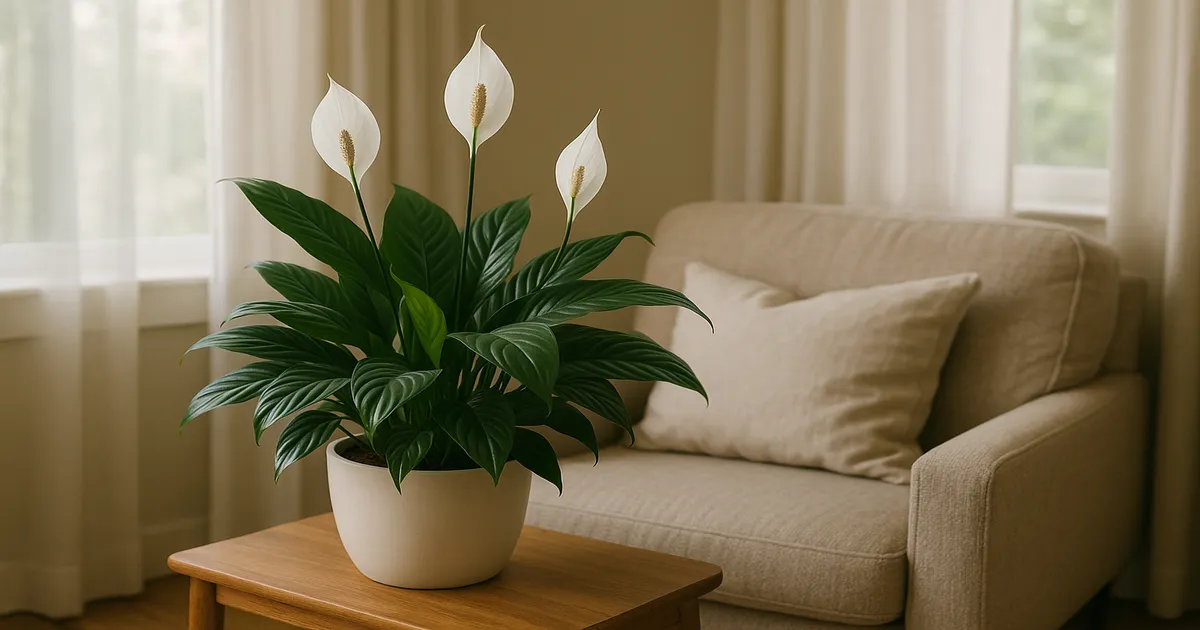
Quick Answer: To take care of a peace lily, give it medium indirect light, water every 7–10 days when the top inch of soil is dry, and maintain humidity between 50–70% at temperatures of 65–85°F. Feed monthly at half-strength with a balanced fertiliser in spring and summer, repot every 1–2 years, and keep it away from pets and children — all parts are toxic if ingested.
Peace lilies are one of the most forgiving houseplants you can own, but knowing how to take care of a peace lily properly makes the difference between a plant that merely survives and one that actually blooms. Get the basics right — light, water, and humidity — and this tropical beauty will reward you with glossy foliage and elegant white flowers for years.
Peace Lily Care at a Glance
| Parameter | Ideal Range |
|---|---|
| Light | Medium indirect light (1,000–1,500 foot-candles) |
| Watering | Every 7–10 days; every 14–21 days in winter |
| Humidity | 50–70% |
| Temperature | 65–85°F (18–29°C) |
| Soil pH | 5.8–6.5 |
| Fertiliser | Balanced 20-20-20 at half-strength, monthly in spring/summer |
| Repotting | Every 1–2 years, up one pot size |
Peace lilies suit most indoor environments, including offices and lower-light apartments. They do contain calcium oxalate crystals, making them toxic to cats, dogs, and small children if ingested — symptoms include oral irritation, drooling, and vomiting. Place them out of reach if you share your home with curious pets or toddlers.
Understanding the Peace Lily
Native Habitat and Popular Cultivars
Peace lilies (Spathiphyllum spp., family Araceae) are native to the shaded tropical rainforest floors of Central and South America and parts of Southeast Asia. In the wild, they grow near streams in dappled light and consistently moist, well-draining soil. Indoors, they form clumping rosettes of glossy, lance-shaped leaves that emerge directly from the soil with no visible stem.
That iconic white “flower” is actually a spathe — a modified leaf bract — wrapped around a spadix, the slender spike that carries the true flowers. It’s the same structure you’ll recognise from anthuriums and calla lilies.
| Cultivar | Size | Notable Trait |
|---|---|---|
| S. wallisii | 12–18 inches | Most common houseplant variety |
| S. ‘Mauna Loa’ | 3–4 feet | Popular office plant; large blooms |
| S. ‘Sensation’ | 4–6 feet | Largest cultivar; deeply ribbed leaves |
| S. ‘Domino’ | 18–24 inches | Variegated white-streaked leaves |
| S. ‘Piccolino’ | 10–12 inches | Dwarf; ideal for terrariums |
| S. ‘Power Petite’ | 12–15 inches | Compact; prolific bloomer |
Light Requirements for a Healthy Peace Lily
How Much Light Does a Peace Lily Need?
Peace lilies are shade-adapted plants that photosynthesize efficiently at lower light levels. Their sweet spot is medium indirect light — roughly 1,000–1,500 foot-candles. They’ll survive in dimmer conditions, but “tolerates low light” is not the same as “thrives in it.” Below about 200 foot-candles, flowering stops entirely and growth slows to a crawl.
Too much direct sun causes the opposite problem. Exposure above roughly 3,000 foot-candles destroys chlorophyll faster than the plant can replace it, leaving bleached, papery patches on whichever side of the leaf faces the window. Those patches won’t recover, but new growth will be healthy once you move the plant.
Best Positions and Grow Light Options
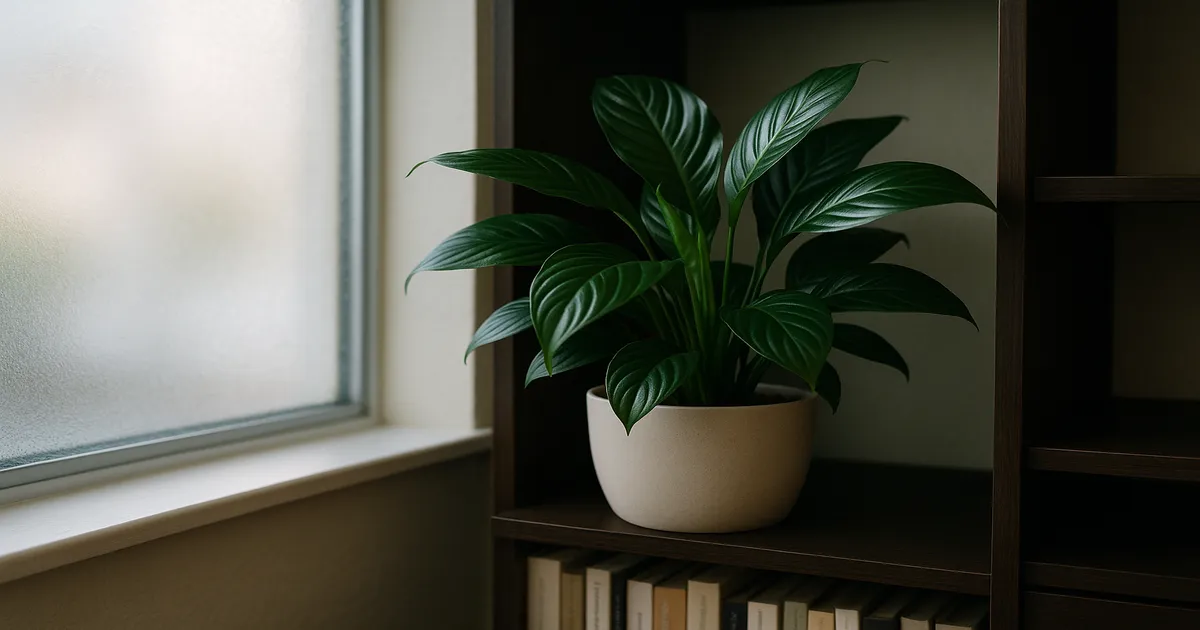
The safest spots are 3–5 feet from a north- or east-facing window, or 5–8 feet from a south- or west-facing window with a sheer curtain to diffuse the intensity. If your home is genuinely dark, a full-spectrum LED grow light positioned 12–18 inches above the plant for 12–14 hours a day will keep your peace lily healthy year-round — look for a unit in the 5,000–6,500K colour temperature range.
How to Water a Peace Lily Correctly
How Often Should You Water a Peace Lily?
There’s no single schedule that works for every home. Pot size, soil mix, humidity, and season all affect how fast the soil dries. A rough guide is every 7–10 days in spring and summer, and every 14–21 days in winter — but treat the calendar as a starting point, not a rule.
The most reliable method: insert your finger 1–2 inches into the soil. If it feels dry at that depth, water. If it still feels cool and damp, wait another day or two. If you prefer a gadget, a soil moisture meter reading of 3–4 on a 1–10 scale is the right trigger point.
Watering Technique
Pour slowly and evenly over the soil surface until water runs freely from the drainage holes, then discard whatever collects in the saucer after 30 minutes. Never let the roots sit in standing water. For a severely underwatered plant, bottom-watering works better: set the pot in a basin of room-temperature water for 20–30 minutes and let the soil rehydrate from below.
Tap Water and Brown Leaf Tips
Peace lilies are sensitive to fluoride and chlorine, both common in municipal tap water. Over time, these accumulate in leaf tissue and cause brown tips. The fix is straightforward — use filtered or distilled water, or let tap water sit uncovered overnight so the chlorine off-gasses before you use it. (Brita Standard Pitcher with Filter)
Diagnosing and Fixing Overwatering
Overwatering is the number-one killer of peace lilies. Soggy soil starves roots of oxygen and invites root rot fungi like Pythium and Phytophthora. Watch for yellowing lower leaves, a foul-smelling potting mix, or wilting despite wet soil.
If you suspect root rot, act quickly:
- Remove the plant and inspect the roots — healthy roots are white or tan and firm; rotted roots are brown, black, and mushy.
- Trim all rotted material with sterile scissors.
- Dust cut ends with powdered cinnamon (a natural antifungal) or a sulfur-based fungicide.
- Repot in fresh, well-draining mix.
- Hold off watering for 3–5 days to let cut roots begin to heal.
Humidity, Temperature, and Air Conditions
Ideal Humidity for Peace Lily Care
Most homes sit at 20–40% relative humidity — well below the peace lily’s preferred 50–70%. Dry air pulls moisture out of leaf tissue faster than roots can replace it, causing brown tips and making the plant more vulnerable to spider mites, which thrive in low-humidity conditions.
The most effective solution is an ultrasonic or evaporative humidifier placed near the plant — it’s the only method that reliably and consistently hits 50% or above. Grouping several plants together also helps, since collective transpiration raises the local humidity. Pebble trays offer a modest 5–10% boost at best. Skip misting entirely — the humidity spike lasts only minutes, and wet foliage sitting overnight invites fungal leaf spot.
Temperature and Cold Draft Damage
Keep your peace lily between 65–85°F (18–29°C). Cold damage begins below 55°F (13°C) and becomes severe below 45°F (7°C). The sneaky culprits are AC vents blowing directly on leaves, cold windowsills in winter, and drafts near exterior doors. Cold-damaged leaves develop dark brown or black patches — that’s cellular death from membrane disruption. Remove damaged leaves with sterile scissors and move the plant to a warmer, draft-free spot. As long as the roots are healthy, the plant will recover.
Soil, Fertilising, and Repotting
The Best Soil Mix for Peace Lilies
Standard potting mix holds too much moisture. A better DIY blend:
- 40% peat-based potting mix or coco coir
- 30% perlite
- 20% orchid bark or coarse bark chips
- 10% worm castings or compost
This mimics the forest floor substrate peace lilies evolved in — moisture-retentive but never waterlogged, with good aeration. Keep soil pH between 5.8 and 6.5. Stray above 6.5 and iron becomes chemically unavailable, causing yellowing between the leaf veins even in a well-fertilised pot.
How and When to Fertilise
Peace lilies are light feeders. Apply a balanced liquid fertiliser at half the recommended strength, once a month during spring and summer, and stop entirely in autumn and winter. (Jack’s Classic All Purpose 20-20-20) Their natural habitat delivers nutrients slowly through decomposing leaf litter — concentrated doses do more harm than good.
Watch for these signs of trouble:
- Nitrogen deficiency: Uniform yellowing starting on older, lower leaves.
- Iron deficiency (interveinal chlorosis): Veins stay green while tissue between them yellows — usually a pH problem, not a lack of iron in the soil.
- Fertiliser salt burn: Brown tips and a white crust on the soil surface. Fix it by slowly pouring 3–4 times the pot’s volume of filtered water through the soil, letting it drain fully, then waiting 4–6 weeks before fertilising again.
When and How to Repot a Peace Lily
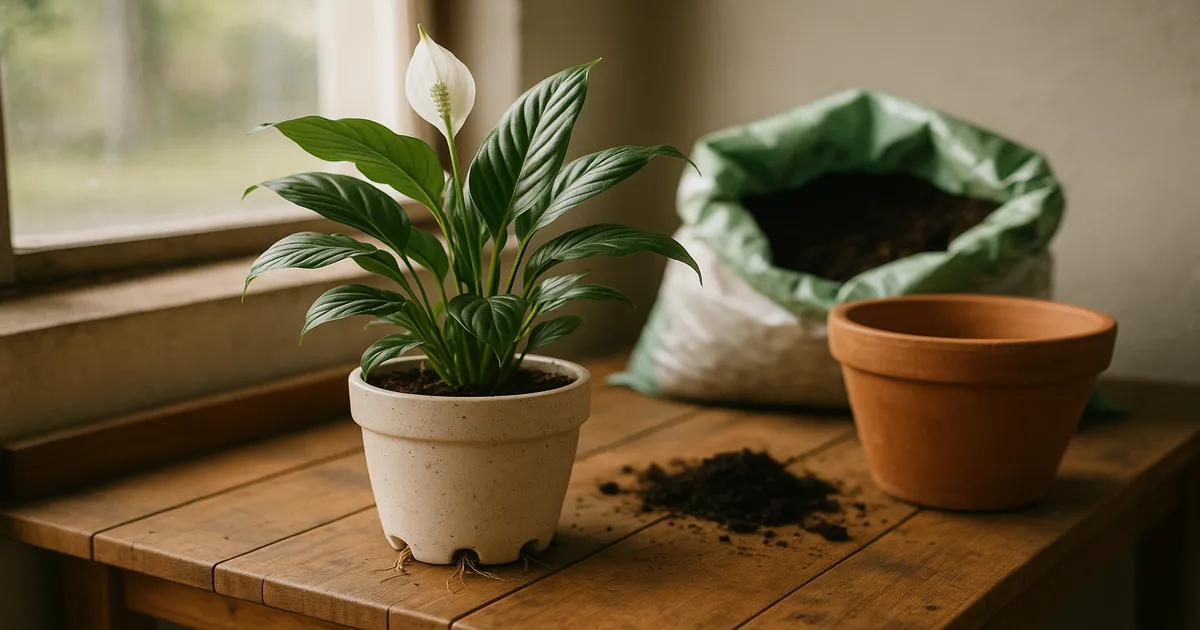
Repot every 1–2 years, or when roots are circling out of the drainage holes, soil dries suspiciously fast, or the plant wilts shortly after watering.
- Choose a pot only 1–2 inches larger in diameter — too big and excess soil stays wet too long.
- Confirm it has drainage holes.
- Loosen any circling roots before placing in the new pot.
- Fill with fresh mix and water lightly.
- Keep in lower light for 1–2 weeks to reduce transplant stress.
Terracotta pots breathe well and help prevent overwatering — a good choice if you tend to water generously. Plastic or glazed ceramic retain moisture longer, which suits drier environments.
Common Pests and How to Treat Them
Spider mites cause stippled, silvery foliage and fine webbing on leaf undersides. They thrive in dry conditions, so boost humidity first, then spray all leaf surfaces with insecticidal soap or neem oil every 5–7 days for three to four weeks.
Mealybugs appear as white, cottony masses in leaf axils and along stems. Dab individual bugs with a cotton swab dipped in 70% isopropyl alcohol, then follow up with a neem oil spray every 7 days for three to four cycles.
Scale insects look like brown, waxy bumps on stems. Scrape them off with a soft toothbrush, then apply horticultural oil to smother survivors.
Fungus gnats lay eggs in moist soil; it’s the larvae that damage roots, not the flying adults. Let the soil dry out more between waterings, apply a Bacillus thuringiensis israelensis (Bti) biological drench to kill larvae, and use yellow sticky traps to catch adults.
Thrips cause silvery streaking and distorted new growth. Isolate the plant immediately, then apply a spinosad-based insecticide or neem oil every 5 days for three to four treatments.
Always inspect new plants before bringing them indoors — most infestations start with a single new addition.
How to Get a Peace Lily to Bloom Again
The most common reason a peace lily stops flowering is insufficient light. A plant sitting below 200 foot-candles simply doesn’t have the energy to bloom. Other culprits include the plant being under two years old, overly consistent indoor temperatures, or excess nitrogen pushing leafy growth at the expense of flowers.
To encourage blooming, move the plant to a brighter spot with medium indirect light. In late winter, allow a 5–10°F night temperature drop for four to six weeks to simulate the seasonal shift that triggers flowering in the wild. Switch from your balanced fertiliser to one higher in phosphorus — a 10-30-10 NPK formula — in late winter and early spring, since phosphorus directly supports bloom formation.
One more thing worth knowing: many commercially sold peace lilies are treated with gibberellic acid, a plant hormone that forces blooms for the shop floor. Once that effect wears off, the plant may not rebloom naturally for 12–18 months. If your plant bloomed beautifully when you bought it and then went quiet, be patient — focus on giving it the right conditions and it will flower again.
Frequently Asked Questions About Peace Lily Care
Why are my peace lily leaves turning yellow?
Yellowing leaves most often point to overwatering — soggy soil deprives roots of oxygen and triggers leaf drop starting at the bottom of the plant. Check soil moisture first. If it’s been consistently wet, ease off watering and inspect the roots for rot. Less commonly, yellowing can indicate nitrogen deficiency or a root-bound plant.
Why does my peace lily have brown tips?
Brown tips are almost always caused by low humidity, fluoride or chlorine in tap water, or fertiliser salt build-up. Switch to filtered or overnight-rested tap water, add a humidifier nearby, and flush the soil every few months to clear accumulated salts. The brown tips won’t turn green again, but trimming them and correcting the cause stops new browning.
Is a peace lily toxic to cats and dogs?
Yes. All parts of the plant contain calcium oxalate crystals, which cause immediate oral burning, drooling, vomiting, and difficulty swallowing in cats, dogs, and humans. The plant is rarely fatal, but it causes significant discomfort. Keep it out of reach and contact your vet or Poison Control immediately if ingestion occurs.
How do I get my peace lily to flower again?
Move it to a brighter spot with medium indirect light — that’s the most common fix. Switch to a phosphorus-rich fertiliser (10-30-10) in late winter, and allow a slight night temperature drop of 5–10°F for four to six weeks. If the plant was treated with gibberellic acid before purchase, it may simply need 12–18 months to rebloom naturally.
How do I know if my peace lily needs repotting?
Look for roots growing out of the drainage holes, soil that dries out within a day or two of watering, or a plant that wilts shortly after being watered despite moist soil. When any of these appear, move up to a pot just 1–2 inches wider — no larger.