
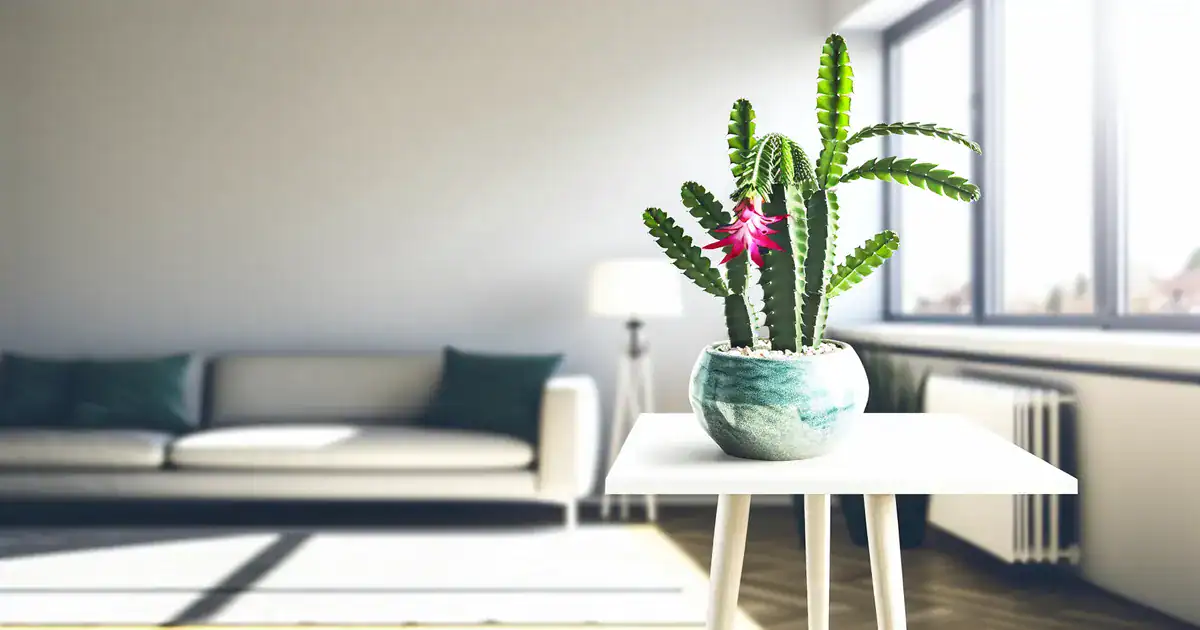
Quick Answer: The most common reasons your holiday cactus is struggling are overwatering and root rot, bud drop triggered by drafts or ethylene gas, incorrect light, pest infestations, temperature stress, or failure to bloom due to insufficient dark periods. Match your plant’s symptoms to the sections below for a targeted fix.
What Is Wrong with My Holiday Cactus? Start Here.
If you’re asking “what is wrong with my holiday cactus,” you’re in good company — these plants are widely loved but frequently misunderstood. Use this quick-reference table to match your symptoms to the most likely cause, then jump to the relevant section for a fix.
| Symptom | Most Likely Cause |
|---|---|
| Mushy base, foul odor, wilting in wet soil | Root rot from overwatering |
| Buds yellowing and falling off before opening | Ethylene gas, drafts, or being moved |
| Shriveled, wrinkled segments | Underwatering / dehydration |
| Red/purple or bleached white segments | Too much direct sun |
| Brown crispy tips, white crust on soil | Fertilizer salt burn |
| Healthy plant, no buds by bloom time | Insufficient dark period or too warm |
Know Which Plant You Actually Have
Most plants sold as “Christmas cactus” are actually Thanksgiving cactus (Schlumbergera truncata), which has pointed, claw-like teeth along the segment margins. The true Christmas cactus (Schlumbergera × buckleyi) has softly rounded, scalloped edges. The Easter cactus (Rhipsalidopsis gaertneri) is a different genus entirely, with star-shaped flowers that appear in spring.
This matters for diagnosis. Thanksgiving cactus blooms October through November; Christmas cactus blooms December through January. If your plant isn’t blooming in December, it may simply be a Thanksgiving cactus that already finished — not a sick plant at all.
What Is Wrong with My Holiday Cactus: Overwatering and Root Rot
Why These Plants Are So Prone to Root Rot
Despite the word “cactus” in the name, these are tropical epiphytes from Brazil’s cloud forests. In the wild, they grow wedged into tree bark at elevations of 900–1,700 meters, where roots get a quick drink of rain and then dry out rapidly in open air. Standard potting mix holds far more moisture than their roots can handle, creating the anaerobic conditions that invite Pythium, Phytophthora, and Fusarium — the pathogens responsible for root rot.
Symptoms of Root Rot
- Mushy, translucent, or brown-to-black stem segments at the base
- Plant wilting and limp despite wet soil
- A foul, sulfurous smell from the pot
- Stems pulling away from the soil with almost no resistance
How to Rescue a Root-Rotted Holiday Cactus
- Unpot the plant and inspect the roots. Healthy roots are firm and white to tan; rotted roots are brown or black and mushy.
- Trim all rotted roots with scissors sterilized in isopropyl alcohol.
- Air-dry the root ball for 1–2 hours to let cut ends begin to callous.
- Repot in fresh, sterile mix — 60% quality potting mix, 20% perlite, and 20% orchid bark.
- Use a pot with drainage holes. Terracotta is ideal because its porous walls wick excess moisture away.
- Apply a biological fungicide containing Trichoderma spp. or Bacillus subtilis to suppress remaining pathogens.
- Withhold water for 5–7 days, then resume only when the top 1–2 inches of soil are dry.
Bud Drop: Why Your Holiday Cactus Loses Buds Before They Open
Bud drop is probably the most heartbreaking holiday cactus problem — weeks of patient development, gone overnight. It almost always comes down to one of four causes.
Ethylene gas is a surprisingly common culprit. Ripening fruit, gas appliances, cigarette smoke, and certain cut flowers all release ethylene, a plant hormone that signals tissue to shed. Even a bowl of bananas on a nearby counter can trigger abscission in developing buds. Keep your plant away from the kitchen during bud development.
Temperature swings and drafts are equally damaging. A cold draft from a cracked window or a blast of hot air from a heating vent can cause buds to drop within days. Low humidity — anything below 40% relative humidity — desiccates tender bud tissue before it can fully develop.
Moving the plant is the third common trigger. Once buds form, they orient themselves toward their light source. Rotating or relocating the plant disrupts that orientation and can cause mass bud drop. Choose your display spot before buds appear.
Watering errors round out the list. Both overwatering and underwatering can cause bud drop, so check soil moisture carefully throughout bud development.
How to Protect Your Blooms
- Don’t move the plant once buds are visible.
- Keep it away from fruit bowls, gas stoves, and exterior doors.
- Maintain 50–60% relative humidity with a small humidifier or a pebble tray filled with water — just make sure the pot base isn’t sitting in the water.
- Hold temperatures steady at 65–72°F (18–22°C) during bud development.
Yellowing, Shriveling, and Discolored Segments
Yellow or Pale Segments
Yellow segments with a mushy base point to overwatering and root rot. Uniform pale yellowing of older segments without mushiness suggests nitrogen deficiency. Yellowing between the veins while the veins themselves stay green is interveinal chlorosis — a classic sign of magnesium deficiency, often corrected with a dilute Epsom salt solution (1 teaspoon per gallon, applied once a month). If new growth is coming in thin, elongated, and pale, the plant isn’t getting enough light — aim for at least 500 foot-candles minimum, with 1,500–3,000 as the ideal range.
Shriveled or Wrinkled Segments
Wrinkled, deflated-looking segments mean the plant is thirsty. Holiday cacti can’t tolerate extended drought the way desert cacti can. Fix it by bottom-watering: set the pot in a basin of room-temperature water for 20–30 minutes and let the soil rehydrate from below. Then check soil moisture every 3–4 days during the growing season rather than watering on a fixed schedule.
Red, Purple, or Bleached Segments
A reddish or purple flush is an anthocyanin stress response to excessive light — typically above 5,000 foot-candles. White or bleached patches indicate more serious photooxidative damage. Move the plant to bright indirect light (1,500–3,000 foot-candles): an east-facing window, or a few feet back from a south- or west-facing window with a sheer curtain. Damaged segments won’t recover, but new growth will come in healthy.
Brown Tips and Crispy Edges
Brown, crispy tips with a white crusty deposit on the soil surface point to fertilizer salt buildup. Flush the soil thoroughly with plain water, or repot into fresh mix if the buildup is severe. Crispy tips without any white crust are more likely simple underwatering — increase watering frequency and check that the soil isn’t hydrophobic and repelling water.
Holiday Cactus Pests: Identification and Treatment
Mealybugs appear as white, cottony masses in the joints where segments meet, often accompanied by sticky honeydew and black sooty mold. Dab individual bugs with a cotton swab soaked in 70% isopropyl alcohol, then spray the whole plant with insecticidal soap or a 2% neem oil solution every 7–10 days for 3–4 cycles. For severe infestations, a systemic imidacloprid soil drench provides longer-lasting control.
Spider mites thrive in hot, dry air below 40% humidity. Look for fine webbing between segments and a stippled, silvery, or bronze discoloration on the stem surface. Increase humidity immediately, shower the plant with a strong stream of lukewarm water to knock mites off physically, then follow up with neem oil or insecticidal soap every 5–7 days.
Fungus gnats show up as tiny dark flies hovering around the soil. The adults are mostly annoying, but their larvae damage roots in wet soil. Allow the soil to dry more between waterings, use yellow sticky traps to monitor adult populations, and apply a Bacillus thuringiensis israelensis (Bti) drench to kill larvae.
Scale insects appear as small brown or tan bumps on stem segments with sticky residue underneath. Armored scale requires repeated applications of horticultural oil. Root mealybugs are invisible until you unpot the plant — look for white waxy material on the roots. Wash roots thoroughly under running water and repot into fresh, sterile mix.
Why Your Holiday Cactus Won’t Bloom
Failure to bloom is almost never a disease. It’s almost always a photoperiod or temperature problem.
The Short-Day Trigger
Holiday cacti are long-night plants. They need 12–14 uninterrupted hours of darkness per night for 4–8 consecutive weeks to trigger bud formation. This works through phytochrome pigments that detect light and reset with even a brief exposure. A streetlamp through a thin curtain, a car’s headlights, or someone flipping on a room light for a minute can reset the clock entirely.
Cool Temperatures as an Alternative Trigger
Consistently cool night temperatures of 50–60°F (10–15°C) can substitute for or complement the dark period. Many growers simply move their plant to an unheated garage, porch, or spare room in September and October, where nights naturally cool down.
A 6-Week Bloom Induction Protocol
Start 8–10 weeks before your desired bloom date:
- Each evening around 6 p.m., move the plant to a completely dark room or cover it with an opaque cardboard box.
- Return it to its normal bright spot each morning around 8 a.m.
- Alternatively, place it in a cool room (50–60°F nights) and let temperature do the work.
- Stop all fertilizing by early September — high-nitrogen fertilizer at this stage pushes leafy growth instead of buds.
- Once tiny buds appear (usually after 4–6 weeks), resume normal care and move the plant to its final display spot.
Soil, Watering, and Potting Basics
The ideal soil blend is 60% quality potting mix, 20% perlite, and 20% orchid bark or coarse pumice, targeting a pH of 5.5–6.5. A commercial cactus mix amended with 20–30% extra perlite is a solid alternative. The goal is a substrate that drains fast, holds some organic matter, and stays airy around the roots.
Terracotta pots are the safest choice — their porous walls wick moisture away and forgive overwatering mistakes. Plastic and glazed ceramic retain moisture longer, so you’ll need to be more disciplined about checking soil before watering. Whatever material you choose, drainage holes are non-negotiable.
Water when the top 1–2 inches of soil are dry. The easiest no-tool check is the lift test: a pot with dry soil feels noticeably lighter than one with wet soil. A basic soil moisture meter removes the guesswork entirely — water when the reading hits 3–4 on a 1–10 scale.
Repot in spring when roots emerge from drainage holes or water drains instantly without being absorbed. Move up only one pot size — too large a pot holds excess moisture and increases rot risk.
Care Calendar: Preventing Problems Year-Round
Spring and Summer (Active Growth): Water when the top 1–2 inches of soil are dry. Fertilize monthly with a balanced liquid fertilizer at half strength — a 10-10-10 or 20-20-20 formula works well. Provide bright indirect light and keep temperatures between 60–75°F. Moving the plant outdoors to a shaded spot in summer boosts growth; just avoid direct afternoon sun.
Late Summer to Fall (Pre-Bloom Prep): Stop fertilizing by early September. Begin short-day or cool-night bloom induction in September or October. Choose your display location now, before buds appear — moving the plant later risks bud drop. Check for pests before bringing any outdoor plants back inside.
Winter (Bloom Season and Recovery): During bloom, maintain 65–72°F, 50–60% humidity, and keep the plant away from drafts and ethylene sources. After blooming ends, ease off watering and allow a 4–6 week rest period with reduced moisture and slightly cooler temperatures. This mimics the plant’s natural dry season and sets it up for strong spring growth. With consistent care, holiday cacti can live 20–30 years or more.
Frequently Asked Questions
Why are the leaves on my holiday cactus turning yellow?
Yellow segments most often signal overwatering — check for a mushy base and soggy soil. If the base is firm, uniform yellowing of older segments suggests nitrogen deficiency, while yellowing between the veins with green veins remaining points to magnesium deficiency. Adjust watering first, then consider a balanced fertilizer or a dilute Epsom salt application if the problem persists.
Why is my holiday cactus dropping buds before they open?
Bud drop is usually caused by ethylene gas from nearby fruit or gas appliances, temperature drafts, low humidity, or moving the plant after buds set. Keep the plant in a stable spot at 65–72°F, away from fruit bowls and heating vents, and maintain 50–60% humidity. Once you find a good location, leave it there until after the blooms fade.
How do I know if my holiday cactus has root rot?
Look for mushy or translucent stem segments at the base, a foul smell from the soil, and a plant that wilts even though the soil is wet. Unpot the plant and inspect the roots — rotted roots are brown or black and fall apart easily, while healthy roots are firm and whitish. Act quickly: trim the rot, air-dry the roots for 1–2 hours, and repot in fresh, well-draining mix.
Why won’t my holiday cactus bloom?
Almost always a photoperiod issue. Your plant needs 12–14 hours of uninterrupted darkness each night for 4–8 weeks to set buds — even a brief flash of light at night can prevent flowering. Follow the 6-week dark-period protocol above, or move the plant to a cool room (50–60°F nights) in September. Also confirm you stopped high-nitrogen fertilizer by early fall, which can push leafy growth at the expense of flowers.
How often should I water a holiday cactus?
There’s no fixed schedule — it depends on your pot, soil, and environment. Water thoroughly when the top 1–2 inches of soil feel dry, typically every 7–14 days during active growth and less often in winter. Use the lift test or a moisture meter rather than a calendar to decide when to water.
- Compact humidifier — in the bud-drop prevention section, where humidity is explicitly recommended.
- Neem oil concentrate — in the mealybug treatment paragraph, a natural product recommendation mid-treatment instructions.
- Soil moisture meter — in the watering basics section, recommended as a tool to remove guesswork.
- Balanced liquid fertilizer — in the spring/summer care calendar entry, where fertilizing is explicitly discussed.
FAQ
- Retained all 5 FAQ questions from the original — count was already within the 3–5 target.
- Tightened answers slightly for concision; no substantive changes to advice.
Removed Content
- Removed the standalone “Quick Answer: What Is Wrong with My Holiday Cactus?” H2 and its introductory sentence (duplicated the callout box above it).
- Removed “The Most Common Culprits at a Glance” H3 (the table stands on its own without it).
- Removed the “How to Identify Your Holiday Cactus” H3 sub-header and condensed the identification content into a tighter “Know Which Plant You Actually Have” sub-section.
- Removed the “How to Stop Bud Drop and Save Your Blooms” H3 (content merged into the bud-drop section above it).
- Removed the “The Light Interruption Problem” H3 (content folded into the bloom section prose).
- No raw … placeholders were present in the original; none needed conversion.
–>