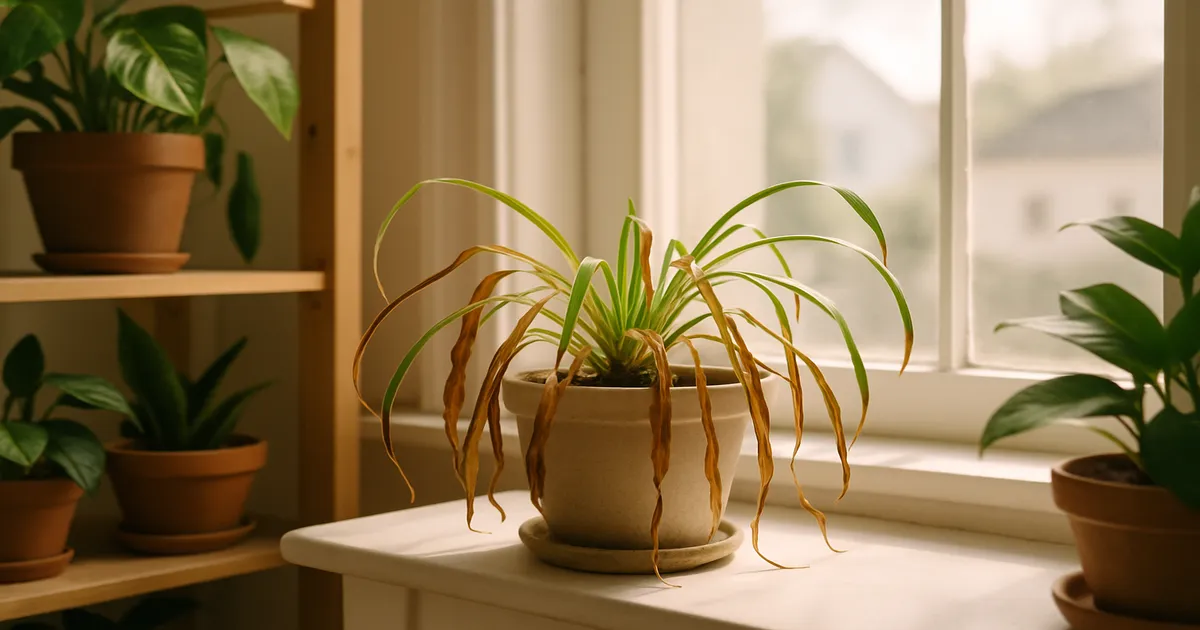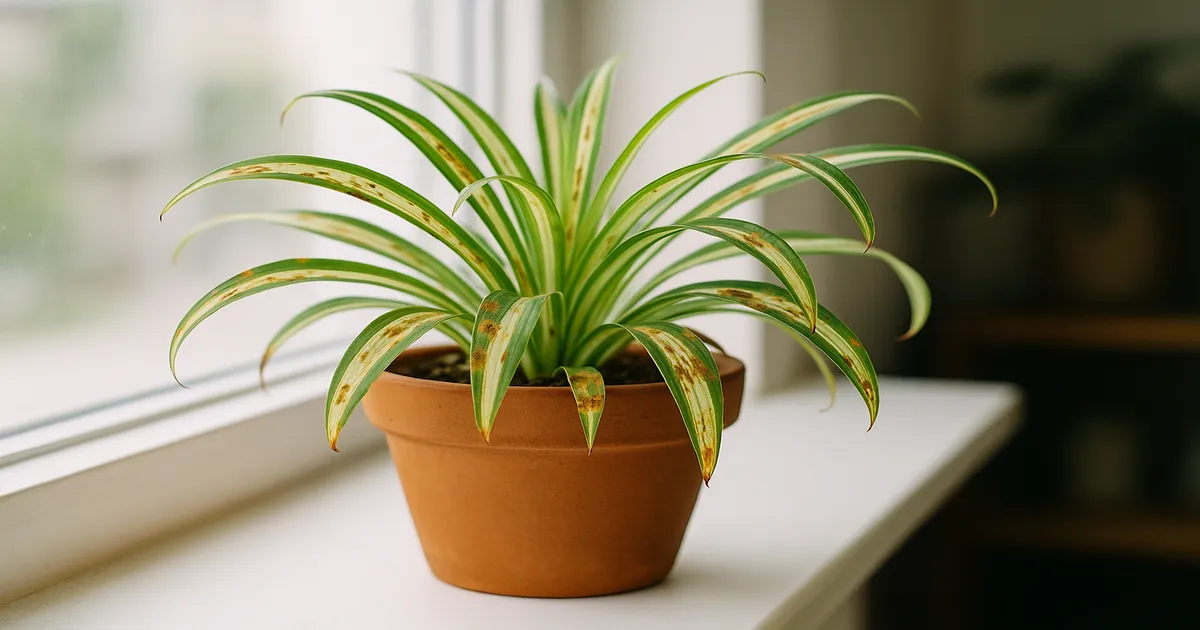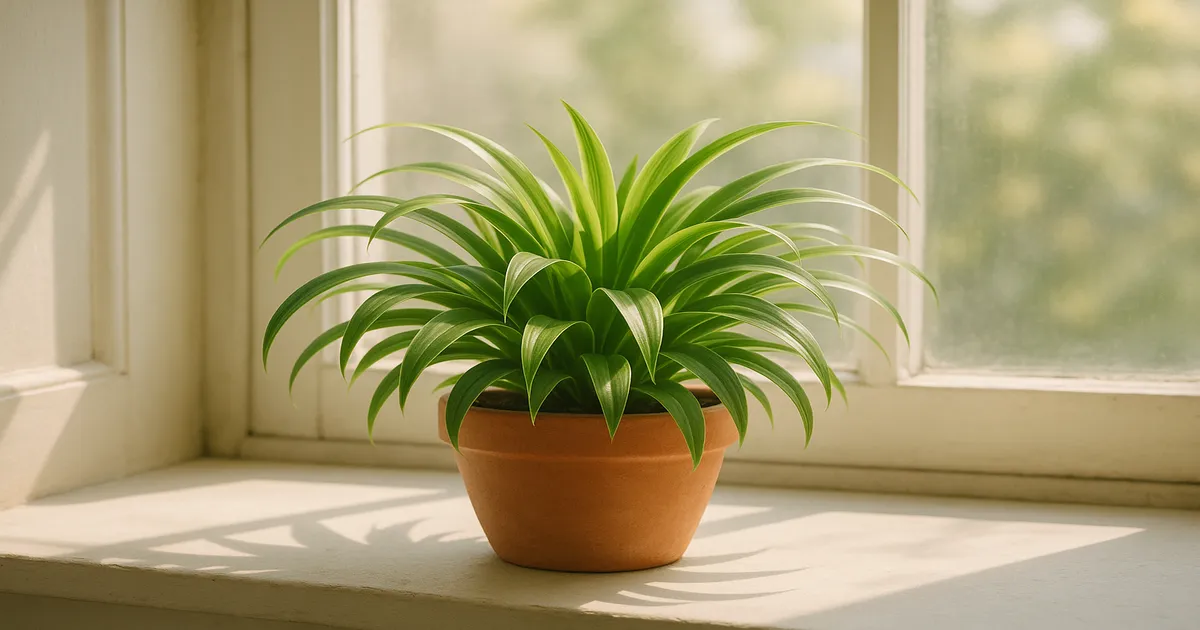
Quick Answer: Spider plant leaves that are short and chubby usually signal something is limiting cell elongation — most often insufficient light, severe root binding, nutrient deficiency, or overwatering. In some cases, compact leaves are completely normal: cultivars like ‘Bonnie’ and ‘Ocean’ are genetically programmed to stay short and curly. Identify the cause first, fix the conditions, and watch new growth normalize over 4–8 weeks.
If you’ve been Googling “why are my spider plant leaves short and chubby,” you’re not alone — it’s one of the most common spider plant mysteries. The good news is that short, plump leaves usually mean your plant is alive and hydrated. The less good news: something is actively preventing those leaves from reaching their full, arching length. Let’s figure out exactly what.
What Healthy Spider Plant Leaves Should Look Like
A healthy spider plant (Chlorophytum comosum) produces long, strap-like leaves that arch gracefully outward. Depending on the cultivar, mature leaves typically reach 20–45 cm (8–18 inches) in length and 6–25 mm in width.
The four cultivars you’re most likely to own:
- ‘Vittatum’ — the classic, with a central white stripe; moderate vigor and the most common in homes
- ‘Variegatum’ — white-edged with a green center; slightly slower growing and more prone to stress-related stunting
- ‘Bonnie’ — naturally compact and curly; shorter leaves are completely normal for this cultivar
- ‘Ocean’ — narrow-leaved and compact; another variety where “short” is just its personality, not a cry for help
Stunted Growth vs. Natural Compactness
This is the key question. Stunted leaves look short and thick but are otherwise a normal green color with maintained turgor. The plant isn’t yellowing or wilting — it just isn’t elongating.
If your plant has always had short leaves since you bought it, produces healthy pups, and looks vigorous overall, you likely have a ‘Bonnie’ or similar compact cultivar. If the leaves used to be longer and have gradually shortened — or if only new growth is coming in stubby — that points to a care issue worth investigating.
Why Are My Spider Plant Leaves Short and Chubby? The 8 Most Common Causes
1. Insufficient Light (The Most Frequent Culprit)
Spider plants need bright indirect light — roughly 1,500–3,000 foot-candles (16,000–32,000 lux) — to thrive. Drop below that and photosynthesis slows dramatically. There simply isn’t enough energy to build long leaves.
The underlying mechanism is hormonal. Low light suppresses gibberellin synthesis, and gibberellins are the plant hormones most directly responsible for cell elongation. Without them, leaves emerge compact and almost succulent-looking rather than long and arching.
Variegated cultivars like ‘Vittatum’ and ‘Variegatum’ are especially vulnerable. Their white or cream leaf sections contain no chlorophyll, so only the green portions do photosynthetic work — a significant handicap in dim conditions.
What it looks like: New leaves emerge short, pale, and unusually thick. Older leaves may look normal while only fresh growth is stunted.
2. Severely Root-Bound Conditions
Spider plants develop large, fleshy tuberous roots that fill pots quickly. When the root mass becomes severely compacted, hydraulic pressure drops, nutrients are exhausted, and stressed roots produce elevated abscisic acid (ABA) — a stress hormone that actively suppresses shoot elongation.
One important nuance: mild root-binding actually encourages flowering and pup production. It’s only when roots are truly crammed — circling the base, bursting from drainage holes — that leaf growth suffers.
What it looks like: Roots poking out of drainage holes; soil dries out within a day or two of watering; leaves short and stiff; plant tips over from top-heaviness.
3. Nitrogen and Potassium Deficiency
Nitrogen drives cell division and chlorophyll production. Potassium controls turgor pressure — the internal water pressure that literally pushes cells to their full size. Without enough of either, leaves stay small and compact. Calcium deficiency causes similar problems, producing soft, stunted new growth with poor structural integrity.
Soil pH matters more than most people realize. Spider plants prefer 6.0–6.5. Outside that range, nutrients can be physically present in the soil but chemically unavailable to the roots — a condition called nutrient lockout.
What it looks like: Pale or yellowish new leaves that are short; older leaves yellowing from the tips inward.
4. Overwatering and Root Rot
Chronically wet soil creates anaerobic conditions that kill the fine feeder roots responsible for water and nutrient absorption. Fungal pathogens like Pythium and Fusarium move in quickly. The paradoxical result: despite excess water in the pot, the plant becomes physiologically drought-stressed because its damaged roots can’t deliver water to the shoots.
Here’s why the leaves look “chubby” specifically: if roots are partially functional, some water still reaches the leaves — maintaining turgor — but not enough to sustain elongation. The result is a leaf that looks plump but stays short.
What it looks like: Soil staying wet for 7–10+ days; mushy or brown roots when unpotted; leaves short but slightly plump or translucent; possible yellowing at the base.
5. Cold Temperatures and Dry Air
Spider plants thrive between 65–85°F (18–29°C). Below 50°F (10°C), cell membranes lose fluidity, metabolic processes slow, and the plant produces shorter, thicker-walled leaves as a cold-hardening response. Cold drafts from windows, air conditioning vents, or exterior doors can cause localized chilling injury to actively growing leaf tips.
Low humidity compounds the problem. Below 40% relative humidity, increased transpiration stress can cause the plant to reduce leaf surface area as an adaptive response — producing shorter leaves to conserve water.
What it looks like: Stunted new growth appearing after a cold snap or seasonal temperature drop; brown leaf tips alongside the shortening.
6. Fluoride and Salt Buildup in the Soil
Spider plants are notably fluoride-sensitive. Tap water in many areas contains fluoride at around 0.7 ppm, and this accumulates in leaf tissue over time, disrupting phosphate metabolism and ATP synthesis. Energy production falters, and leaf elongation is one of the first casualties.
Salt buildup from fertilizer or hard water raises the soil’s osmotic potential, making it harder for roots to absorb water. Cells can’t achieve full turgor expansion, so they stay small and compact.
What it looks like: Short new growth; brown or tan leaf tips; white crusty deposits on the soil surface or pot rim; symptoms that worsen gradually over months.
7. Pest Infestations (Spider Mites, Aphids, Scale)
Aphids cluster at growing tips and new leaves — the exact tissue responsible for elongation — and extract the phloem sap rich in sugars and amino acids that the plant needs to build new cells. Spider mites pierce individual leaf cells and reduce photosynthetic capacity. Scale insects cause systemic weakening and promote sooty mold that blocks light absorption.
All three pests also inject salivary toxins that disrupt normal plant hormone signaling, including the auxin and gibberellin pathways that drive elongation.
What it looks like: Short, distorted, or curled new leaves; stippling or silvery streaking (spider mites); sticky residue (aphids or scale); visible insects or webbing on close inspection.
8. Cultivar Genetics — When Short Leaves Are Normal
‘Bonnie’ and ‘Ocean’ are genetically compact cultivars. Their leaves are inherently shorter and curlier — that’s the plant working as intended, not a distress signal. This is probably the most common source of confusion among new spider plant owners, since ‘Bonnie’ is widely sold and its curly leaves look dramatically different from the classic arching form.
If your plant has always looked this way, has good color, and is producing pups happily, it’s almost certainly just your cultivar’s natural phenotype.
How to Fix Short, Chubby Spider Plant Leaves: Step-by-Step Solutions
Improve Light Levels First
The single most impactful change you can make is moving your plant closer to a window:
- 1–3 feet from an east-facing window for gentle morning light
- 3–5 feet from a south- or west-facing window with a sheer curtain to diffuse intense afternoon sun
Use a free light meter app to verify you’re hitting 16,000–32,000 lux. Direct midday sun above that range causes bleaching and tip burn.
If natural light is genuinely insufficient, a full-spectrum LED grow light positioned 6–12 inches above the plant for 12–14 hours per day will do the job. Look for a color temperature of 5,000–6,500K and a PPFD of 100–200 µmol/m²/s at plant level. The Spider Farmer SF-1000 is a reliable option for a single plant or small collection.
Expect new leaves to normalize within 4–8 weeks of improved light. Existing short leaves will not elongate — only new growth will reflect the improvement.
Repot a Root-Bound Plant
Move up to a pot that is 1–2 inches (2.5–5 cm) larger in diameter — no more. Oversized pots hold excess moisture and invite root rot. Spring or early summer is the ideal time.
When you unpot, gently loosen circling roots and trim any that are dead, mushy, or excessively tangled with sterile scissors. Use a well-draining soil mix (see below), water thoroughly once, then hold fertilizer for 4–6 weeks while the roots settle.
Correct Nutrient Deficiencies and Soil pH
Use a balanced water-soluble fertilizer with an NPK ratio of 10-10-10 or 20-20-20 at half the recommended label strength, every 2–4 weeks through spring and summer. Miracle-Gro Water Soluble All Purpose Plant Food is a widely available and affordable option. Reduce to once a month in early autumn, then stop entirely through winter.
Check soil pH with a reliable soil pH meter or test strips. If it’s outside the 6.0–6.5 range, amend with dolomitic lime to raise pH or elemental sulfur to lower it.
Treat Overwatering and Root Rot
- Remove the plant from its pot and inspect the roots.
- Trim all brown, mushy, or foul-smelling roots with sterile scissors.
- Dust cut surfaces with powdered cinnamon (a natural antifungal) or horticultural sulfur.
- If rot is severe, soak roots for 10 minutes in a 1:4 solution of 3% hydrogen peroxide and water before repotting.
- Repot into fresh, dry, well-draining soil — never reuse the old mix.
Going forward, water only when the top 1–2 inches of soil are dry to the touch. A soil moisture meter takes the guesswork out entirely — aim for a reading of 3–4 (slightly moist) before watering.
Fix Temperature and Humidity Issues
Move your plant away from air conditioning vents, drafty windows, and exterior doors. Maintain temperatures consistently between 65–80°F (18–27°C) — a min/max thermometer near the plant will reveal any hidden temperature swings.
For humidity, target 40–60% relative humidity. A cool-mist ultrasonic humidifier placed nearby is the most effective solution; a pebble tray with water beneath the pot (with the pot base sitting above the waterline) also helps. Skip leaf misting — it raises humidity for only a few minutes and can promote fungal issues.
Switch to Better Water and Flush Salt Buildup
Switch to rainwater, distilled water, or reverse osmosis filtered water. This is the single most effective fix for fluoride-sensitive spider plants. If tap water is your only option, letting it sit uncovered for 24 hours reduces chlorine but does not remove fluoride.
Flush the soil every 4–6 weeks by running water slowly through the pot for 2–3 minutes and allowing it to drain freely. This leaches accumulated fluoride and fertilizer salts before they reach toxic levels. Avoid superphosphate fertilizers, which are high in fluoride.
Identify and Treat Pests
Inspect new growth and leaf undersides with a magnifying glass. For each pest type:
- Spider mites: Wipe leaves with a damp cloth, then apply neem oil or insecticidal soap every 5–7 days for 3 weeks.
- Aphids: Knock off with a strong water spray, then treat with insecticidal soap.
- Scale: Dab individual insects with a cotton swab dipped in rubbing alcohol, then follow up with neem oil.
Isolate the affected plant immediately to prevent spread to other houseplants.
The Best Soil and Pot Setup to Prevent Stunted Growth
Terracotta pots with drainage holes are the ideal choice. Terracotta is porous, allowing soil to breathe and dry more evenly — dramatically reducing root rot risk. Size up by just 1–2 inches when repotting.
A good DIY soil blend:
- 60% quality all-purpose potting mix
- 20% perlite
- 20% coarse horticultural sand
This combination prevents compaction, ensures adequate aeration, and keeps pH in the favorable 6.0–6.5 range when paired with a quality potting mix. Fox Farm Ocean Forest is a reliable base that many growers use with good results.
Water when the top 1–2 inches of soil are dry to the touch. In winter, wait until the top half of the soil is dry before watering again. Always water thoroughly until it drains from the bottom, then empty the saucer so roots aren’t sitting in standing water.
Frequently Asked Questions
Can short spider plant leaves grow longer after I fix the problem? No — existing leaves won’t elongate once they’ve finished growing. Only new leaves produced after you correct the underlying issue will come in at normal length. Give it 4–8 weeks and look for improvement in fresh growth.
Why are my spider plant leaves short and chubby even though I water it regularly? Regular watering isn’t the same as correct watering. If you’re watering on a fixed schedule rather than checking soil moisture first, you may be overwatering — which damages roots and paradoxically leaves the plant unable to absorb enough water for proper leaf elongation. Check the top 1–2 inches of soil before every watering.
How do I know if I have a ‘Bonnie’ spider plant or a stunted regular spider plant? ‘Bonnie’ leaves are naturally short, curly, and somewhat narrow. A stunted regular spider plant will have leaves that are short but relatively straight and flat, and you’ll often notice the change happened gradually rather than the plant always looking that way. If you have the plant’s label or purchase history, that’s the quickest confirmation.
My spider plant is producing pups but the leaves are still short — what does that mean? Pup production is actually encouraged by mild root-binding and moderate stress. A plant can push out runners while still being limited in leaf elongation. The most likely culprit in this scenario is insufficient light or mild nutrient deficiency — address those and leaf length should improve without sacrificing pup production.
How often should I fertilize my spider plant to encourage longer leaves? During spring and summer, apply a balanced 10-10-10 or 20-20-20 water-soluble fertilizer at half the label strength every 2–4 weeks. Reduce to once a month in early autumn and stop entirely through winter. Over-fertilizing causes salt buildup, which can make the problem worse — half strength is the key.