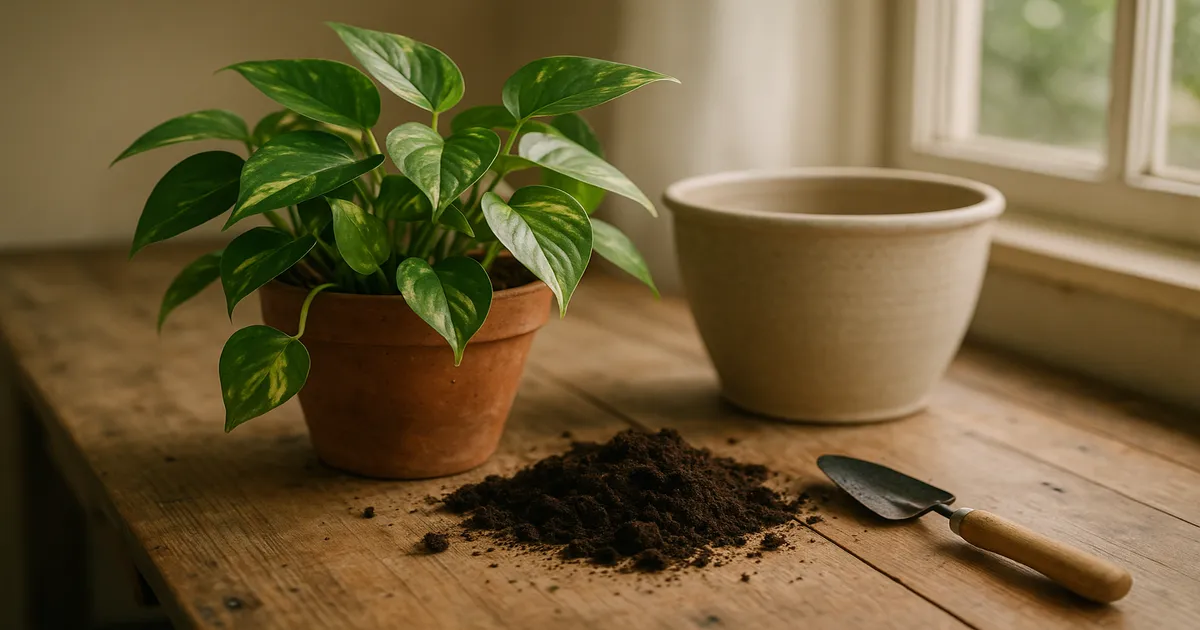
Quick Answer: Most pothos need repotting every 1–2 years. The fastest way to tell it’s time: roots are poking out of the drainage holes, water rushes straight through without being absorbed, or growth has completely stalled during the growing season despite good care. Variegated cultivars like Marble Queen grow more slowly and can go 2–3 years between repots. Pothos tolerate being somewhat rootbound, so there’s rarely a need to panic.
If you’ve ever pulled your pothos off the shelf and wondered, do I need to repot my pothos, or is it fine? — you’re not alone. It’s one of the most common questions plant parents ask, and the answer isn’t always obvious. Pothos are forgiving plants with a surprisingly high tolerance for cramped quarters, but there comes a point when even the most easygoing plant needs a fresh start.
This guide covers everything: how to diagnose whether repotting is actually necessary, how to do it properly, and what to do when root rot or pests complicate things.
Does Your Pothos Need Repotting? Start Here
Check for three things right now:
- Roots escaping the drainage holes — the root ball has outgrown the pot
- Water rushing straight through — soil can no longer absorb water properly
- Growth completely stalled — no new leaves for months during the growing season
If you’re seeing one or more of these, it’s time to repot. If none apply, you may be able to buy more time with a simpler fix — more on that below.
How Often Do Pothos Need Repotting?
Most actively growing pothos need repotting every 1–2 years. Variegated cultivars like Marble Queen and Manjula grow more slowly — less chlorophyll means less photosynthetic energy — and typically need repotting every 2–3 years. Scindapsus species, often sold as Satin Pothos, are also slower growers and fall into that longer window.
Pothos are hemiepiphytes, meaning they naturally grow both in soil and climbing trees in the wild. This background makes them more tolerant of rootbound conditions than many other houseplants. A slightly cramped pothos isn’t an emergency.
Understanding Pothos Roots
Two Root Types Worth Knowing
Pothos produce two distinct root types, and knowing the difference saves unnecessary repotting.
- Feeder roots — fine, white-to-tan roots that absorb water and nutrients. These are what you’re assessing at repotting time.
- Aerial roots — thick, brown, nub-like roots that emerge from nodes along the stem. These are for climbing and humidity absorption. One poking out of the pot isn’t a repotting alarm — it’s just what pothos do.
When assessing whether your pothos needs a new home, focus on the feeder roots. Healthy ones are firm, pale, and slightly fuzzy under close inspection.
Does Cultivar Change the Timeline?
Yes, meaningfully. All-green cultivars like Golden Pothos and Neon grow vigorously and typically hit repotting thresholds every 1–2 years. Variegated types take longer. Epipremnum pinnatum ‘Cebu Blue’ is slightly more sensitive to root disturbance than standard E. aureum, so handle it carefully when repotting. Scindapsus species prefer to dry out more between waterings, which also influences the soil mix you should use when you do repot them.
8 Signs Your Pothos Needs to Be Repotted
1. Roots Are Escaping the Drainage Holes or Soil Surface
The most obvious sign. When roots push out of drainage holes or spiral up through the soil surface, the root ball has run out of room. Water and nutrient uptake become compromised because root mass has overwhelmed the soil’s ability to hold and release nutrients effectively.
2. Water Rushes Straight Through Without Being Absorbed
Pour water in and watch it pour straight out the bottom? That’s channeling. Roots have colonized so much of the pot that water follows root channels rather than being absorbed by the soil. The plant ends up drought-stressed even when you’re watering regularly.
3. Growth Has Stalled Despite Good Light and Watering
A pothos that stops growing during spring and summer — despite adequate bright indirect light and consistent watering — is often out of space. Nutrient depletion and physical root restriction both contribute. Winter slowdowns are normal; mid-summer stalls are not.
4. The Soil Smells Sour or Looks Dark and Compacted
Potting mix breaks down over time. Organic components like peat and bark decompose, collapsing the air pockets that roots need for oxygen. When soil smells fermented, looks dense and dark, or pulls away from the pot edges when dry, it’s past its useful life — even if the roots aren’t yet crowded.
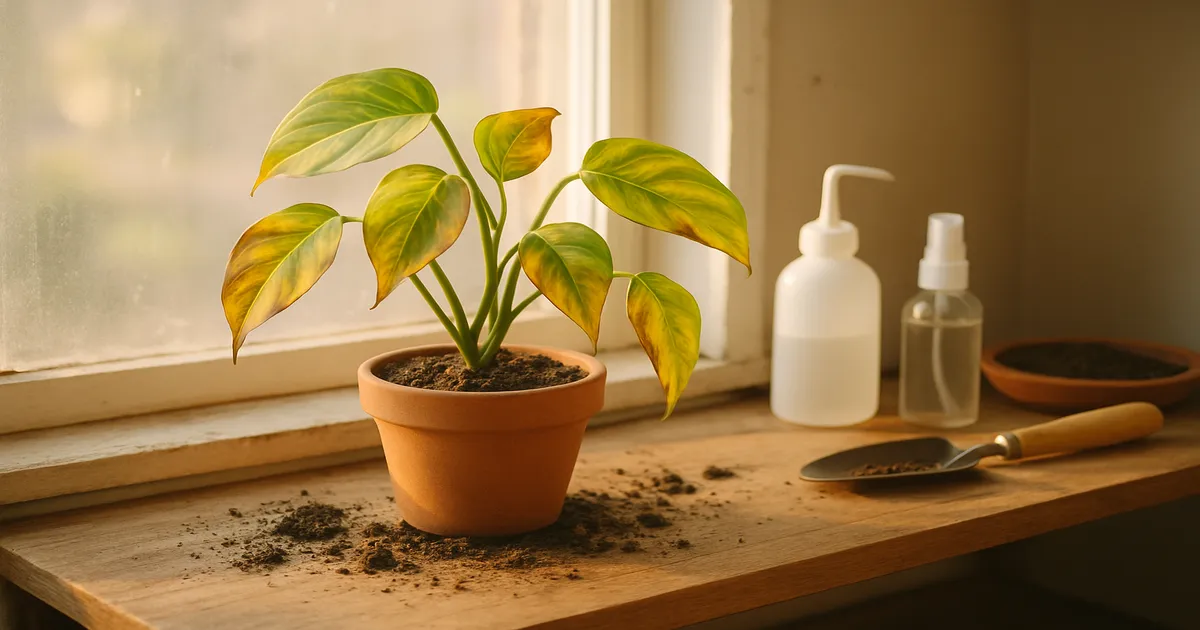
5. Leaves Are Yellowing, Pale, or Browning at the Edges
These can signal nutrient depletion. Yellowing older leaves often point to nitrogen deficiency, leaf-edge browning to potassium deficiency, and purple-tinged stems to phosphorus issues. That said, this symptom alone doesn’t always mean repotting is necessary. A balanced liquid fertilizer can sometimes resolve it without disturbing the roots at all.
💡 Tip: Don’t repot based on a single symptom. A mild nutrient deficiency? Try fertilizing first. One root poking out of a drainage hole? You probably have a few more months. Look for multiple signs before making the call.
6. Wilting That Watering Doesn’t Fix
Wilting despite wet soil is a classic root rot symptom. Pathogens like Pythium and Phytophthora thrive in waterlogged, oxygen-depleted soil — exactly what compacted, degraded potting mix creates. If you pull the plant and find brown, mushy, foul-smelling roots, act quickly. See the root rot section below.
7. Tiny Flies or White Cottony Masses in the Soil
Fungus gnats are annoying but manageable. Their larvae feed on fine root hairs and can impair nutrient uptake over time. White cottony material on roots or at the soil surface is more serious — that’s root mealybugs (Rhizoecus spp.), and full soil replacement is non-negotiable.
8. The Pot Is Cracked, Lacks Drainage, or No Longer Fits
A pot without drainage holes creates a permanently saturated zone at the bottom regardless of how carefully you water. If your pothos is sitting in a decorative pot with no drainage, that alone is worth fixing — even if the plant seems fine right now.
How to Repot a Pothos: Step by Step
What You’ll Need
- New pot (2 inches / 5 cm larger in diameter than the current one)
- Fresh potting mix, perlite, and fine orchid bark
- Sterile scissors or pruning shears
- Watering can
Choosing the Right Pot
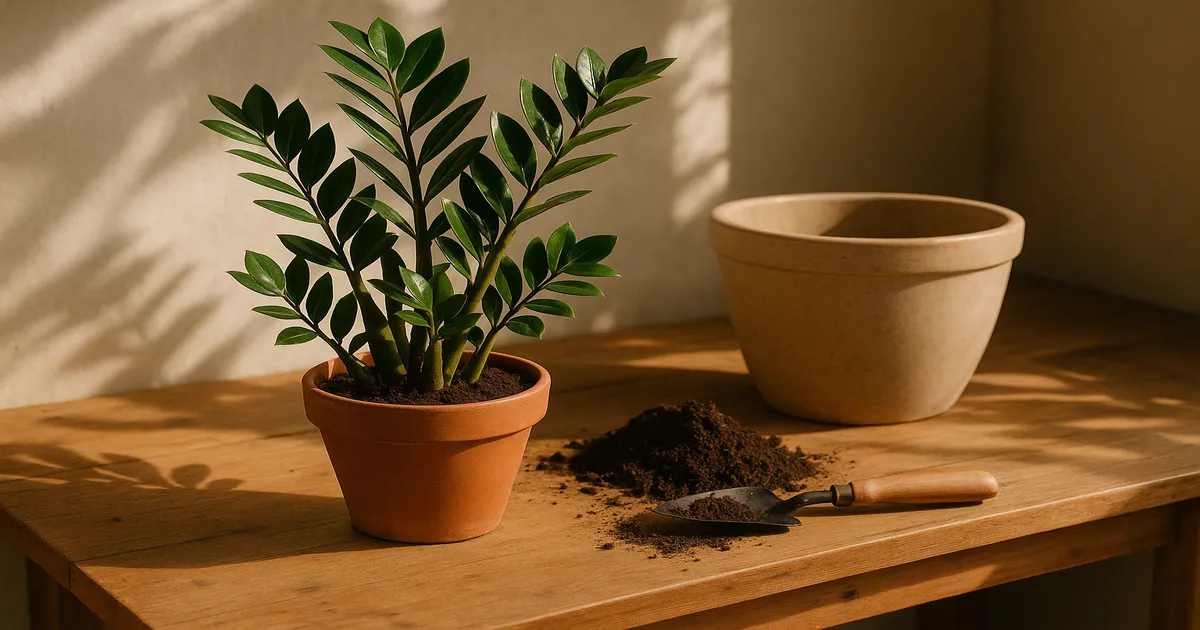
Go up only one size — 2 inches larger in diameter. Jumping to a much larger pot is a common mistake: extra soil holds moisture that roots haven’t yet colonized, which raises the risk of rot significantly. For material, terracotta wicks moisture away from the soil, which suits humid environments or overwater-prone plant parents. Glazed ceramic and plastic retain moisture longer, which works well for most homes. Whatever you choose, drainage holes are non-negotiable.
The Best Soil Mix for Pothos
A reliable all-purpose pothos mix:
- 60% quality potting mix — a well-balanced commercial blend like Fox Farm Ocean Forest works well
- 20% perlite — Espoma Organic Perlite is a widely available option
- 20% fine orchid bark
This combination drains well, holds enough moisture for healthy root growth, and maintains its structure far longer than straight potting mix. For Scindapsus species, increase perlite to 30% since they prefer to dry out more between waterings.
Repotting Instructions
- Water 24 hours before repotting. Hydrated roots are more flexible and less likely to snap during handling.
- Remove the plant from its pot. Tip it sideways and squeeze the sides if it’s plastic. Slide a blunt knife around the inside edge of ceramic or terracotta pots.
- Loosen the root ball. Use your fingers or a clean chopstick to gently tease apart the outer roots, especially any circling ones.