Quick Answer: White dots under pothos leaves are most commonly caused by spider mites, mealybugs, scale insects, or whiteflies — but they can also be completely harmless, resulting from mineral deposits, powdery mildew, natural variegation, or intumescence (edema). Use the quick-reference table below to narrow down your situation in under a minute, then follow the targeted fix for your specific cause.
So you’ve spotted white dots under your pothos and you’re not sure whether to panic or ignore them. You’re in good company — this is one of the most common houseplant questions around, and the answer isn’t always “pests.” Pothos leaf undersides attract both biological and non-biological white marks, and telling them apart is the first step to fixing the problem.
What Are These White Dots Under My Pothos? A Quick-Reference Guide
The Most Common Culprits at a Glance
| Cause | Key Distinguishing Feature |
|---|---|
| Spider mites | Tiny moving specks on paper tap test; possible webbing |
| Mealybugs | Fluffy, 3D cottony clusters; sticky honeydew |
| Scale insects | Hard bumps that lift off with a soft body underneath |
| Whiteflies | Adults fly up when plant is disturbed |
| Thrips | Silvery streaks + black frass dots alongside feeding scars |
| Powdery mildew | Powdery coating that wipes off with a damp cloth |
| Mineral deposits | Flat chalky spots that dissolve with dilute vinegar |
| Variegation / Intumescence | Consistent pattern; doesn’t spread or change rapidly |
How to Tell Pests Apart from Non-Pest Causes in 60 Seconds
Ask yourself three questions: Does anything move? Does it wipe off? Does it match the plant’s existing color pattern?
If something moves, you have pests. If it wipes off cleanly with a damp cloth, you’re dealing with mildew or mineral deposits. If the white areas are symmetrical and match the leaf’s natural patterning, it’s almost certainly variegation or intumescence — neither of which needs treatment.
Why Pothos Leaves Get White Dots on the Underside
The underside of a pothos leaf — the abaxial surface — is structurally different from the top. It has a higher density of stomata, a thinner protective cuticle, and naturally higher humidity because it faces away from airflow. These conditions make it the preferred feeding and sheltering ground for a wide range of pests.
Piercing-sucking insects like mites and scale find it easier to penetrate the thinner underside cuticle to reach plant tissue. Shelter from light and air movement also means pests are less likely to dry out or be disturbed. Even mineral deposits can accumulate here when misting causes water droplets to land and evaporate on the underside.
Variegated cultivars add another layer of confusion. If you grow Marble Queen, N’Joy, Pearls and Jade, or Manjula pothos, the natural white or cream patterning extends to leaf undersides, making early-stage pest colonies or mineral deposits genuinely easy to miss. When in doubt, reach for a magnifying glass — the three-dimensional, irregular texture of a pest colony looks very different from the flat, integrated look of natural variegation.
Pest Causes of White Dots Under Pothos Leaves
Spider Mites
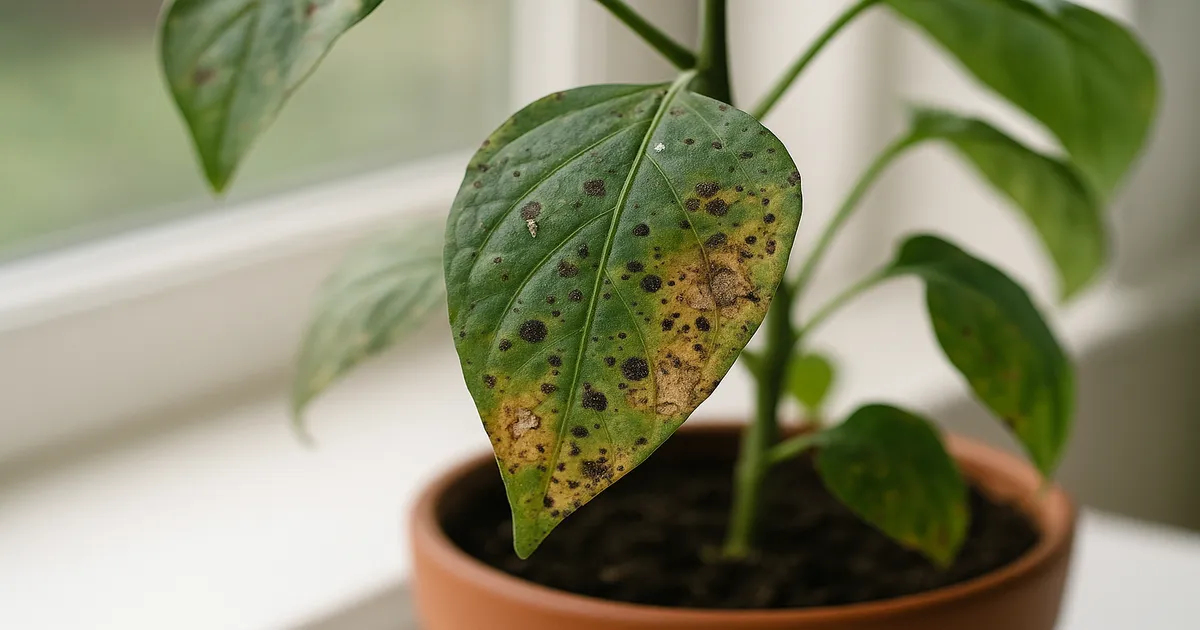
Spider mites (Tetranychus urticae) are tiny arachnids — barely 0.3–0.5 mm long — that pierce individual plant cells and extract the contents. Each feeding puncture collapses the cell, leaving a pale, air-filled dot. Hundreds of these together create chlorotic stippling, giving the leaf a dusty, washed-out look. In advanced infestations, fine silky webbing appears between leaves and stems.
They thrive when humidity drops below 40% RH and temperatures climb above 27°C (80°F). Drought-stressed, dusty plants are especially vulnerable.
Mealybugs
Mealybugs form three-dimensional, fluffy white masses tucked into leaf axils, along midribs, or clustered on the underside. That cottony coating is a waxy secretion the insect produces to protect itself from drying out. They also excrete honeydew — a sticky liquid that can trigger a secondary sooty mold infection if left untreated. Overwatered plants and those fed high-nitrogen fertilizers tend to attract them, since the resulting soft, lush growth is their preferred food source.
Scale Insects
Scale is easy to mistake for part of the plant itself. Armored scale produces a hard, detachable waxy shield beneath which the insect feeds. The shield is made from shed exoskeletons and wax, not the insect’s body, which is why it lifts away cleanly. Soft scale is more translucent and produces honeydew; armored scale does not. The fingernail-scrape test (see below) is the fastest way to confirm. Unlike mealybugs, scale colonies sit flat and lack that fluffy, cottony texture.
Whiteflies
Whiteflies spend their immobile nymphal stages as flat, oval, pale shields on leaf undersides — easily mistaken for white dots or scale. The giveaway comes when you touch or shake the plant: adults explode into the air in a small cloud of white, moth-like insects. That fly-up response is essentially a definitive identification. Like mealybugs and scale, whiteflies feed on phloem sap and excrete honeydew.
Thrips
Thrips are slender, 1–2 mm insects that rasp open epidermal cells and lap up the contents. The damage looks similar to spider mite stippling but tends to be more elongated — silvery-white streaks rather than uniform tiny dots. The diagnostic clue is small black frass dots alongside the feeding scars. If you see that combination, thrips are almost certainly the culprit. They’re particularly difficult to eradicate because they lay eggs inside plant tissue, hiding them from contact sprays.
Non-Pest Causes of White Dots Under Pothos Leaves
Powdery Mildew
Powdery mildew is caused by biotrophic fungi that — counterintuitively — thrive in warm, dry air rather than wet conditions. The white coating is a layer of fungal mycelium and spores growing on the leaf surface, spreading via air currents. Pothos is less susceptible than many houseplants thanks to its waxy cuticle, but it does happen. Quick test: wipe a spot with a damp cloth. If it comes off, it’s mildew or mineral deposits.
Hard Water and Mineral Deposits
When tap water evaporates from leaf surfaces, it leaves behind dissolved calcium carbonate, magnesium sulfate, and other mineral salts as white, chalky residue. Water with a hardness above 150 ppm is enough to leave visible deposits, especially if you mist regularly. These spots are flat and non-living. A few drops of dilute white vinegar dissolve them instantly — that’s how you distinguish them from mildew.
Variegation and Intumescence (Edema)
Some white marks on pothos are completely normal. Variegation in cultivars like N’Joy and Manjula results from cells that lack chloroplasts — it’s a genetic trait, not damage, and it won’t spread or change suddenly.
Intumescence (edema) produces small, corky white or translucent bumps on the underside when the plant absorbs water faster than it can transpire. Inconsistent watering is the usual trigger. The bumps look alarming but are harmless and won’t spread to other plants.
How to Treat White Dots on Pothos: Targeted Fixes
Spider Mites
- Isolate the plant immediately to prevent mites spreading via air currents.
- Rinse thoroughly under a lukewarm shower, focusing on leaf undersides; repeat every 3–5 days.
- Raise humidity to 60–80% RH using a humidifier.
- Spray with insecticidal soap every 5–7 days for 3–4 cycles, coating all leaf surfaces.
- Apply neem oil in the evening — azadirachtin disrupts mite molting and reproduction, and evening application avoids phototoxicity.
- Use a miticide for severe infestations. Pyrethrin- or abamectin-based products work well; rotate active ingredients to prevent resistance.
Mealybugs
- Spot-treat with 70% isopropyl alcohol on a cotton swab — dab each visible mealybug directly to dissolve its waxy coating on contact.
- Spray with insecticidal soap to target mobile crawlers.
- Apply a neem oil soil drench to address root mealybugs (Rhizoecus spp.) hiding below the surface.
- Consider an imidacloprid drench for severe cases — it’s absorbed through roots and transported to all plant tissue.
- Repot in fresh, well-draining mix if root mealybugs are confirmed; rinse roots before repotting. (Fox Farm Ocean Forest Potting Soil)
- Repeat every 7–10 days for 4–6 weeks — eggs protected inside the waxy sac will hatch in waves.
Scale Insects
- Manually remove scale with a soft toothbrush or wooden skewer — this is the most effective first step, especially for armored scale.
- Apply 70% isopropyl alcohol directly to remaining scale with a cotton swab.
- Spray with horticultural oil to smother crawlers by blocking their breathing pores.
- Note: Imidacloprid is less effective against armored scale, which feeds on mesophyll cells rather than phloem and doesn’t absorb the systemic chemical as readily.
- Expect 6–8 weeks of consistent treatment — inspect weekly and don’t skip applications.
Whiteflies
- Hang yellow sticky traps near the plant to capture adults and reduce population pressure.
- Vacuum adults off leaves gently before spraying to immediately reduce numbers.
- Spray insecticidal soap thoroughly on leaf undersides where nymphs are feeding.
- Apply pyrethrin spray every 5–7 days for adult knockdown.
- Use an imidacloprid soil drench — highly effective against phloem-feeding nymphs.
Thrips
- Isolate immediately — thrips spread quickly via air and contact.
- Spray insecticidal soap or spinosad on all leaf surfaces, including undersides; repeat every 5–7 days.
- Apply a systemic insecticide (imidacloprid drench) to reach eggs laid inside plant tissue, which contact sprays can’t touch.
- Continue treatment for at least 4–6 weeks to break the egg cycle.
Powdery Mildew
- Improve air circulation — move the plant or run a small fan nearby on a low setting.
- Stop misting — surface moisture encourages spore germination.
- Spray with baking soda solution (1 teaspoon sodium bicarbonate per liter of water plus a few drops of liquid soap) weekly to raise leaf surface pH.
- Apply dilute hydrogen peroxide (3% solution mixed 1:3 with water) to kill spores on contact.
- Remove heavily infected leaves and dispose of them in a sealed bag to reduce airborne spore load.
Mineral Deposits
- Wipe leaves with a soft cloth dampened with a 1:3 solution of white vinegar to distilled water — the mild acidity dissolves calcium carbonate instantly.
- Switch to filtered, distilled, or rainwater with a TDS below 100 ppm for all watering and misting. A TDS meter makes this easy to monitor. (HM Digital TDS-EZ Water Quality TDS Tester)
- Flush the soil periodically by watering thoroughly and letting it drain completely to prevent mineral salt buildup in the root zone.
Intumescence (Edema)
- Reduce watering frequency — allow the top 50% of soil to dry out between waterings. A soil moisture meter removes the guesswork.
- Increase light levels slightly to help the plant transpire more efficiently.
- Avoid erratic watering cycles — consistent moisture management prevents future edema episodes.
How to Confirm Which White Dot Problem You Have
The Paper-Tap Test for Spider Mites
Hold a sheet of white paper under a suspect leaf and give it a firm tap. If tiny specks land on the paper and start moving, you have spider mites. They’re too small to see clearly on the leaf but become obvious against a white background.
The Fingernail-Scrape Test for Scale
Gently try to scrape a bump off with your fingernail. If it lifts cleanly and you find a soft body underneath, it’s scale. If it’s integrated into the leaf tissue and won’t budge without tearing, it isn’t scale.
The Wipe Test for Mildew vs. Mineral Deposits vs. Variegation
- Wipes off with a damp cloth → mildew or mineral deposit
- Dissolves when you apply dilute vinegar → mineral deposit
- Does not wipe off at all → natural variegation or intumescence
This three-step sequence rules out the two most common non-pest causes in under 30 seconds.
Using a Magnifying Glass or Smartphone Macro Lens
A 10x loupe or your phone’s macro lens mode is genuinely transformative for diagnosis. Under magnification, spider mite damage shows as uniform tiny dots with possible fine webbing; thrips damage shows elongated silver scars with distinct black frass dots nearby; mealybug colonies are clearly three-dimensional and fluffy; scale has a defined raised shield with a clean edge. You don’t need expensive equipment — even a cheap clip-on macro lens works well for this purpose.
Preventing White Dots on Pothos Leaves
Maintaining bright indirect light (1,500–3,000 foot-candles) and 50–70% relative humidity goes a long way toward keeping spider mites at bay. Good air circulation deters both powdery mildew and whiteflies. Avoid high-nitrogen fertilizers that produce the soft, lush growth mealybugs prefer.
Use filtered, distilled, or collected rainwater with a TDS below 100 ppm. Water consistently rather than erratically — boom-and-bust cycles are the primary trigger for intumescence. Let the top half of the soil dry out between waterings rather than keeping it perpetually moist.
Always quarantine new plants for 2–4 weeks in a separate room before placing them near your existing collection. During quarantine, inspect leaf undersides twice a week. It’s the single most effective habit for preventing pest introductions.
Finally, wipe leaves monthly with a damp microfiber cloth to remove dust, early pest colonies, and mineral deposits before they become a problem. A quick underside inspection once a week — ideally with a magnifying lens — takes less than two minutes per plant and catches infestations when they’re still easy to treat.
Frequently Asked Questions About White Dots Under Pothos Leaves
Are white dots under pothos leaves always a sign of pests?
No — and this is probably the most important thing to know before panicking. Mineral deposits, intumescence (edema), and natural variegation are all common non-pest causes that are completely harmless. Use the paper-tap test, wipe test, and fingernail-scrape test described above to rule out the most likely culprits before reaching for a pesticide.
Can white dots spread from my pothos to other houseplants?
It depends on the cause. Spider mites, mealybugs, whiteflies, and thrips can all spread to nearby plants — isolate your pothos immediately if you suspect any of these. Powdery mildew can also spread via air currents. Mineral deposits, variegation, and intumescence are not contagious and pose no risk to other plants.
My pothos has white dots but I can’t see any bugs. What now?
Start with the paper-tap test — spider mites are nearly invisible to the naked eye but show up clearly on white paper. If nothing moves, do the wipe test. If the marks don’t wipe off and the plant is a variegated cultivar, you’re most likely looking at natural patterning or intumescence. When in doubt, a 10x magnifying loupe will reveal pest colonies that are otherwise invisible.
How quickly do I need to act if I find pests?
As soon as possible. Spider mite populations can double in as little as three to five days under warm, dry conditions. Mealybugs and scale spread more slowly but are harder to eradicate once established. Isolate the plant the same day you identify a pest problem, and begin treatment within 24–48 hours.
Will neem oil fix all of these problems?
Neem oil is effective against spider mites, mealybugs, and whitefly nymphs, and it has some antifungal properties useful against powdery mildew. However, it is less effective against armored scale (which requires manual removal and horticultural oil) and does nothing for mineral deposits, variegation, or intumescence. It’s a useful tool, but not a universal fix.