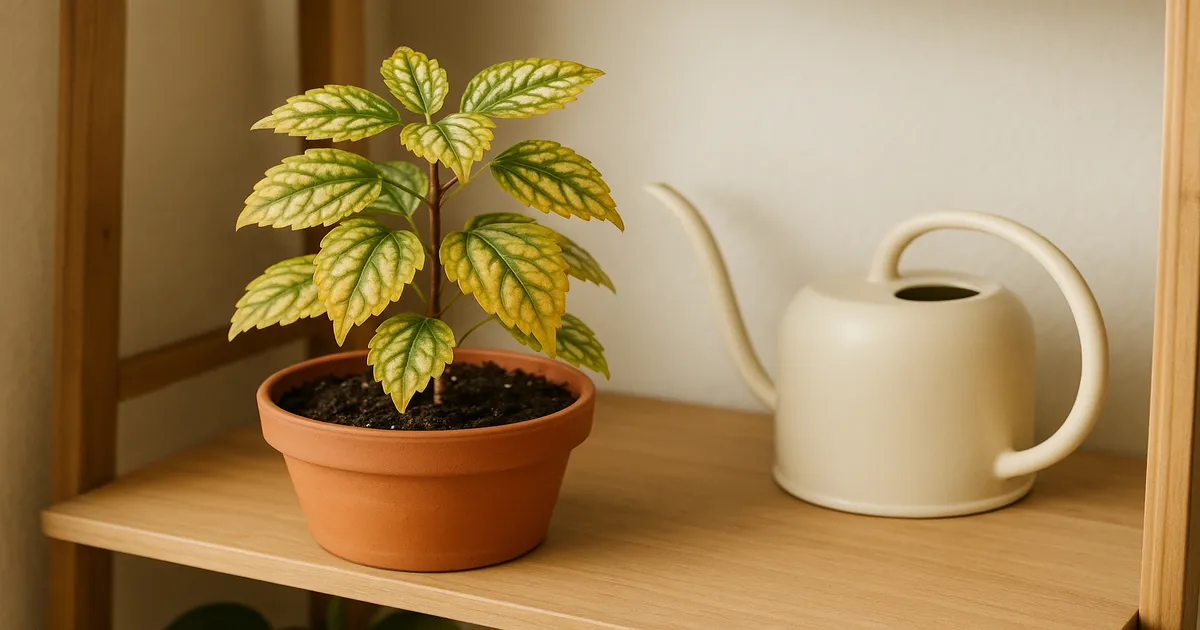
Quick Answer: To revive a severely stressed Pilea cadierei, diagnose the root cause before you treat anything. Overwatering and root rot are the most common killers, but drought, low light, pests, and cold damage are serious culprits too. Fading silver patches are the earliest universal stress signal — act as soon as you notice them. For plants with severe stem rot or those older than 2–3 years, taking stem cuttings and starting fresh is usually smarter than trying to save the parent plant.
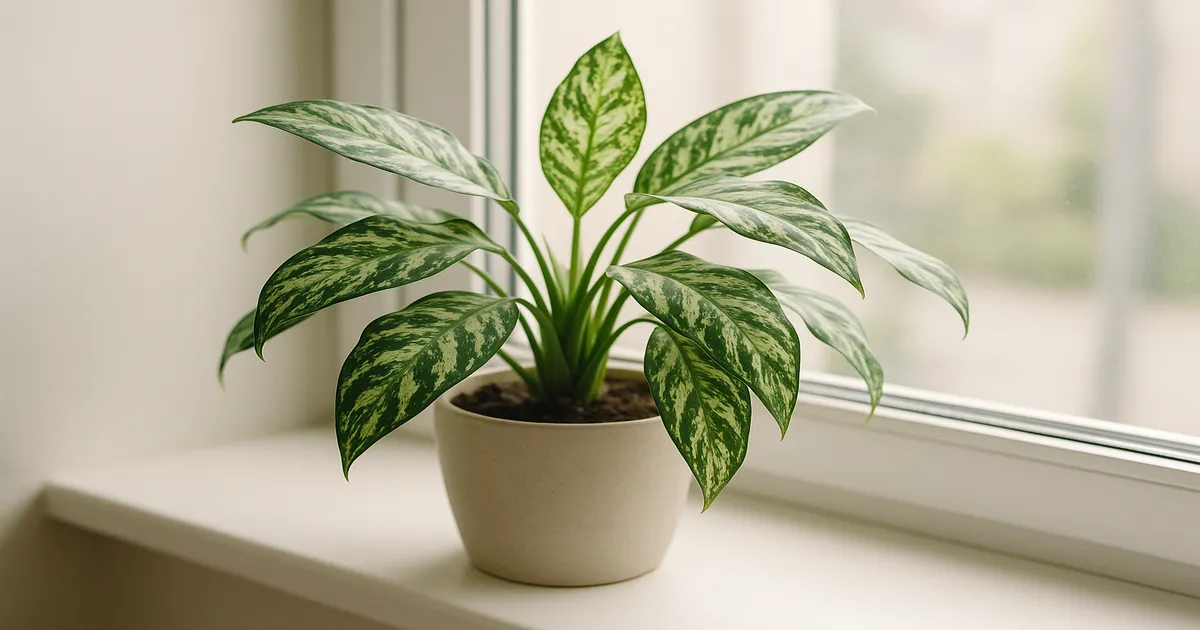
Pilea cadierei — the aluminum plant — looks effortlessly striking when it’s happy: bold metallic silver patches gleaming against deep green leaves. But knowing how to revive a severely stressed Pilea cadierei means slowing down and diagnosing before you treat. Throwing water at a rotting plant, or moving a drought-stressed one into full sun, will make things dramatically worse. This guide walks you through every major stressor, how to spot it, and exactly what to do about it.
Quick Signs Your Aluminum Plant Is in Serious Trouble
Not all stress looks the same. Watch for:
- Silver patches dulling or shrinking — the earliest universal warning, regardless of cause
- Yellowing lower leaves + mushy stems — overwatering or root rot
- Drooping, curling leaves with bone-dry soil — drought stress
- Long, weak stems with faded markings — insufficient light
- Sudden blackening or translucent patches — cold damage
- Crispy brown leaf edges — low humidity or salt buildup
- Stippling, webbing, or white cottony deposits — pest infestation
The Most Important First Steps
Resist the urge to immediately repot, fertilize, or flood with water. Instead:
- Identify the cause first — check soil moisture, light level, temperature, and leaf undersides before touching anything
- Isolate the plant if you suspect pests
- Fix the root cause — most plants fail to recover because the underlying problem isn’t resolved before “rescue” treatments begin
Understanding What Makes Pilea Cadierei Vulnerable
Natural Habitat and Why It Matters Indoors
Pilea cadierei originates from the humid, shaded understory of Vietnamese and southern Chinese tropical rainforests. In the wild it grows low to the ground under a dense canopy, in consistently moist but well-draining soil, high humidity, and filtered light. Indoors, it must cope with conditions that are drier, darker, and more temperature-variable than anything it evolved for.
Its stems are semi-succulent, storing a small amount of water, but the root system is shallow and fine. That combination makes it surprisingly intolerant of both drought and waterlogged soil. The compact ‘Minima’ cultivar shares the same vulnerabilities and dries out even faster because of its smaller root mass.
Why the Silver Patches Are Your Stress Early-Warning System
Those metallic markings aren’t pigment — they’re air. Tiny pockets between the upper epidermis and the mesophyll layer scatter light to create the silvery shimmer. When the plant is stressed, those air pockets collapse as cells lose turgor or dedifferentiate, and the silver fades or disappears. Think of it as a built-in alarm system. If the patches are dulling, something is wrong before other symptoms become obvious.
How Long Does Pilea Cadierei Live? When to Propagate Instead of Revive
Here’s something most care guides skip: Pilea cadierei is a soft-stemmed perennial that naturally becomes leggy and declines after about 2–3 years. If your plant is older than that, severely rotted at the base, or has lost most of its root system, reviving it may be a losing battle. Propagation isn’t giving up — it’s the smarter, more reliable path. Healthy stem cuttings taken from even a dying plant can produce a vigorous new specimen within a month.
Diagnosing the Cause: A Symptom-by-Symptom Guide
Use this table to narrow down what’s happening before you act.
| Symptom | Most Likely Cause |
|---|---|
| Yellow lower leaves, mushy stems, foul soil | Overwatering / root rot |
| Drooping + curling leaves, dry soil, light pot | Drought stress |
| Long internodes, faded silver patches, pale leaves | Insufficient light |
| Sudden blackening or water-soaked patches | Cold damage / drafts |
| Crispy brown leaf edges and tips | Low humidity or salt buildup |
| Stippling, fine webbing on leaf undersides | Spider mites |
| White cottony deposits in leaf axils | Mealybugs |
| Tiny flies, slow decline, root damage | Fungus gnats |
| Interveinal yellowing on new leaves | Iron/manganese deficiency (high pH) |
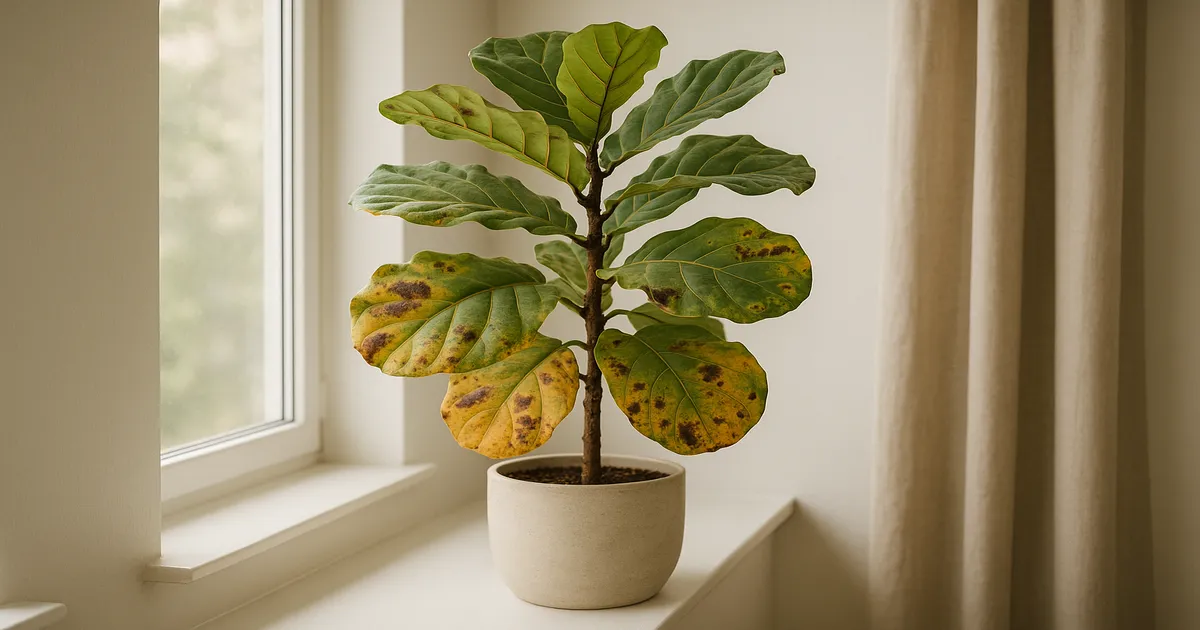
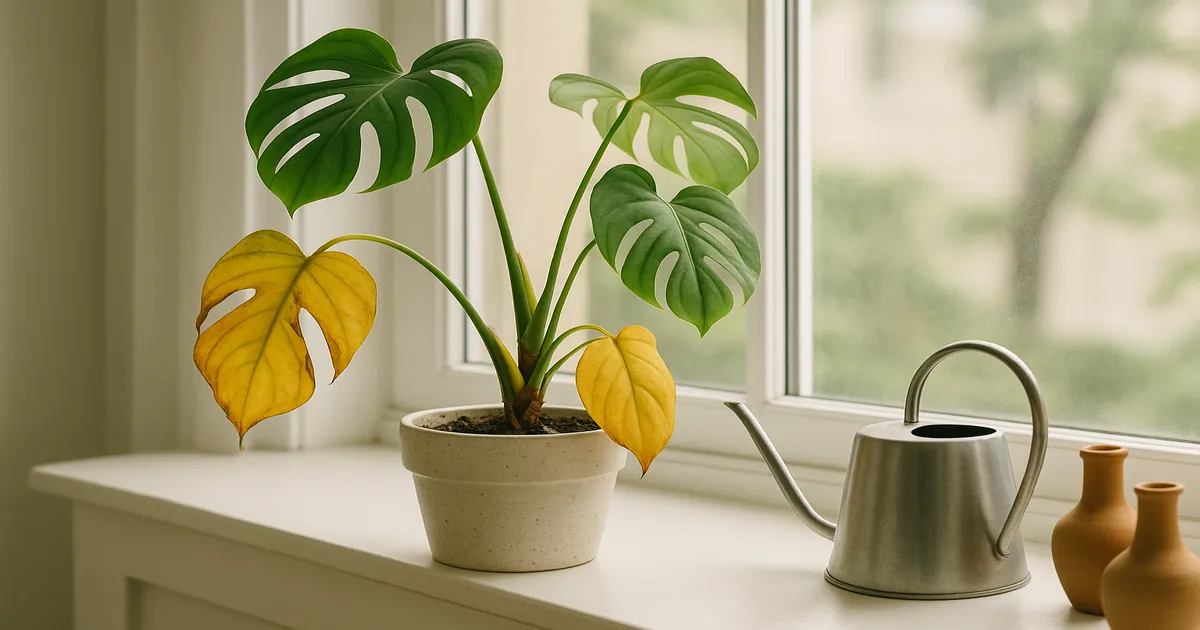
Overwatering and root rot: When soil stays waterlogged, roots are deprived of oxygen. Cell membranes rupture, releasing organic compounds that feed water-mold pathogens like Pythium and Phytophthora. You’ll notice yellowing starting on lower leaves, a foul smell from the soil, and stems that feel soft or hollow at the base.
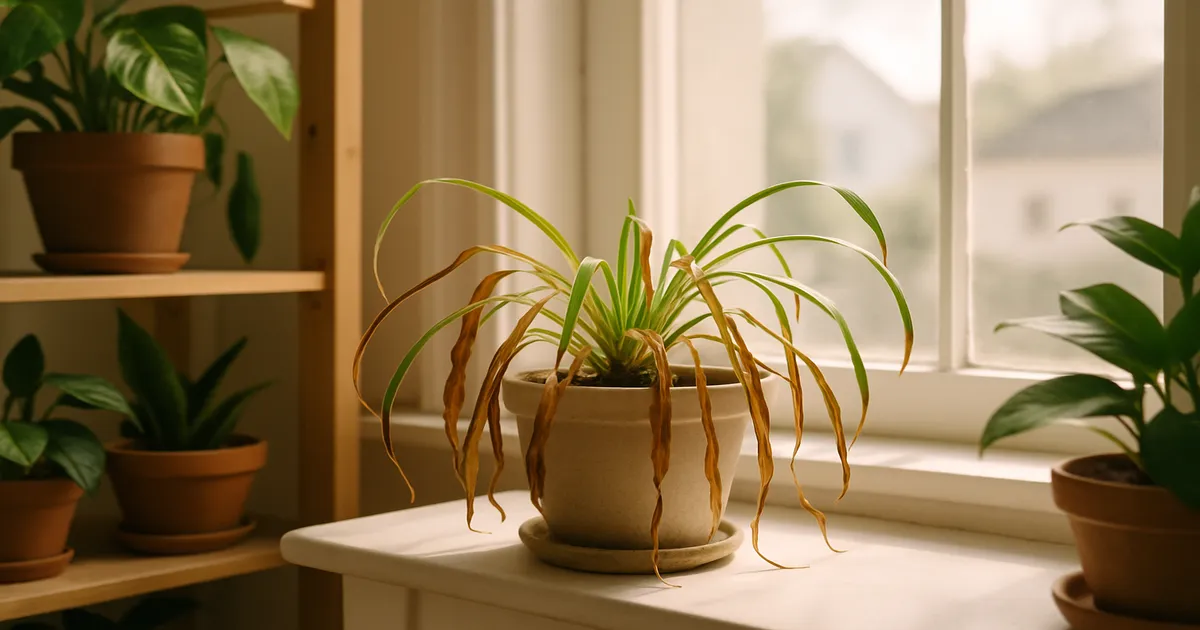
Drought stress: Leaf curl is the plant’s self-defense — reducing surface area limits water loss through transpiration. If drought is prolonged, plasmolysis occurs: cell membranes pull away from cell walls permanently, and that damage cannot be reversed even after watering.
Insufficient light: Below about 500 foot-candles, Pilea cadierei begins etiolating — stretching its internodes in search of light. The air-pocket layer responsible for the silver shimmer collapses as cells lose their specialized structure. Low light also slows soil drying, compounding overwatering risk.
Cold damage: Below 50°F (10°C), lipid changes in cell membranes disrupt ion transport. Below 40°F (4°C), damage is typically fatal within hours. Tissue turns black or water-soaked almost overnight. Even temperatures within the acceptable range can cause stress if delivered as a cold draft from an AC vent or single-pane window.
Low humidity: The mesophyll cells at leaf margins are farthest from the vascular supply. When the air is much drier than the leaf, those edge cells desiccate first, turning brown and crispy. Low humidity alone rarely kills Pilea cadierei, but it weakens the plant and makes every other stressor worse.
Pests: Spider mites leave tiny pale dots on upper leaf surfaces and fine webbing underneath — they thrive in hot, dry air. Mealybugs appear as white cottony masses in leaf axils and stem joints. Fungus gnat larvae chew root hairs in wet soil, compounding overwatering damage. Scale insects show up as small brown waxy bumps on stems.
How to Revive a Severely Stressed Pilea Cadierei with Root Rot
Root rot is the number-one killer of aluminum plants indoors. Act quickly — every extra hour in wet, anaerobic soil makes the situation worse.
Step 1: Unpot and Inspect the Roots
Remove the plant from its pot immediately. Shake off as much old soil as possible, then rinse the roots under lukewarm water for a clear view. Healthy roots are white to cream-colored and firm. Infected roots are brown to black, mushy, and often smell foul.
Step 2: Prune Rotted Roots and Treat with Hydrogen Peroxide
Using sterile scissors wiped with 70% isopropyl alcohol between cuts, prune every affected root back to clean, white tissue. Even if this means removing most of the root system, it’s necessary — leaving rotted tissue behind allows pathogens to keep spreading.
After pruning, soak the remaining roots in a solution of 1 part 3% hydrogen peroxide to 4 parts water for 30 minutes. This kills residual pathogens and re-oxygenates root tissue. Alternatively, dust cut ends with powdered sulfur as a natural fungicide. Let roots air-dry for 30–60 minutes before repotting so cut surfaces can begin to callous.
Step 3: Choose the Right Soil and Pot
Never reuse old soil from a root rot situation. Mix a fresh, sterile growing medium:
- 60% high-quality peat-based or coco coir potting mix
- 20% perlite
- 20% coarse horticultural sand or orchid bark
A well-draining mix like Fox Farm Happy Frog works well as a base before you amend it. Target a soil pH of 6.0–6.5. Always use a pot with drainage holes. If you’ve been overwatering, terracotta is your best friend — it wicks moisture from the soil and helps it dry faster.
Step 4: Post-Repot Watering and Fertilizer Protocol
With a reduced root system, the plant can’t handle normal watering volumes. Allow the top 2 inches of soil to dry completely before watering again, and hold all fertilizer for at least 6–8 weeks. Damaged roots cannot process nutrients, and fertilizer salts will cause further root burn on already-compromised tissue.
If the stem is mushy at soil level, the plant is almost certainly unrecoverable from that stem. Look for any firm, healthy stem sections above the rot line and take cuttings immediately — this is how you save the plant’s genetics even when the parent is lost.
Reviving a Drought-Stressed Aluminum Plant
Bottom-Watering for Hydrophobic Soil
Severely dry soil becomes hydrophobic — it repels water. If you pour water in from the top, it channels straight down the gap between the soil and the pot wall and drains out the bottom without ever reaching the root zone. You’ll think you watered; the plant will still be thirsty.
Instead, place the pot in a basin of room-temperature water and let it sit for 20–30 minutes. Capillary action pulls moisture up through the soil evenly. If you prefer top watering, do it in slow passes — pour a little, wait 30 seconds, pour again — until water flows freely from the drainage holes.
Trimming Damaged Leaves and Supporting Recovery
Drooping and wilting caused by turgor loss is reversible with rehydration. Plasmolysis — the irreversible separation of cell membranes from cell walls after prolonged drought — is not. Leaves affected by plasmolysis will yellow and die even after you water correctly. Trim them with sterile scissors to redirect the plant’s energy.
Mild drought stress typically resolves within 24–48 hours of proper rehydration. Severe cases may result in permanent leaf loss. Grouping plants together or placing a pebble tray nearby reduces transpirational demand while the plant rebuilds.
Fixing Light, Temperature, and Humidity Problems
Moving to the Right Light Conditions
Pilea cadierei needs bright indirect light — roughly 1,500–3,000 foot-candles. An east-facing window, where it gets gentle morning sun and indirect light the rest of the day, is ideal. North-facing windows usually don’t provide enough light on their own. South and west windows work with a sheer curtain to diffuse intensity.
Don’t move a plant from very low light to bright light suddenly. Acclimate it gradually over 1–2 weeks to prevent photooxidative shock, which can bleach leaves just as badly as direct sun.
A full-spectrum LED grow light positioned 12–18 inches above the plant for 12–14 hours per day can fully compensate for a dim apartment. Look for a light that delivers roughly 2,000–3,000 lux at plant level — the Soltech Solutions Aspect is a reliable option that fits naturally into most rooms.
Pruning Leggy Stems to Encourage Bushy Regrowth
Once you’ve improved the light situation, cut leggy stems back by one-third to one-half, just above a leaf node. This redirects the plant’s energy into new, compact growth rather than maintaining long, weak stems. Use sterile scissors and make a clean cut at a slight angle.
Protecting Your Plant from Cold and Drafts
The safest placement is on an interior wall, 3–6 feet from a window, well away from AC vents, heating vents, exterior doors, and single-pane windows in winter. Remove any blackened, water-soaked tissue with sterile scissors — it won’t recover, and leaving it creates an entry point for pathogens.
Raising Humidity Effectively
Skip misting. It provides only momentary humidity and leaves moisture sitting on leaves, which promotes fungal problems. What actually works:
- Pebble tray with water beneath the pot — evaporation raises local humidity without waterlogging roots
- Group plants together — transpiration from multiple plants creates a more humid microclimate
- Small ultrasonic humidifier nearby — the most effective option for consistently dry homes
Aim for 40–70% relative humidity. A hygrometer tells you exactly what you’re working with and removes the guesswork.
Treating Pest Infestations on a Stressed Pilea Cadierei
Isolate the plant immediately upon detection — pests spread fast.
Spider mites: Rinse the plant thoroughly in the shower to knock off as many mites as possible. Apply neem oil or insecticidal soap to all leaf surfaces, especially undersides. Increase humidity — mites hate it. Repeat every 5–7 days for 3–4 weeks. Safer Brand Insect Killing Soap is a reliable ready-to-use option.
Mealybugs: Dab individual bugs with a cotton swab dipped in 70% isopropyl alcohol. Follow with a neem oil soil drench to address any root mealybugs. Repeat weekly until no new activity is seen.
Fungus gnats: Let the soil dry out more between waterings — larvae need moisture to survive. Place yellow sticky traps near the soil surface to catch adults. Apply Bacillus thuringiensis israelensis (BTi) as a soil drench to kill larvae without harming the plant or beneficial organisms. (Bonide Mosquito Beater BTi Granules)
Scale: Scrape off visible scale manually with a soft toothbrush. Treat with horticultural oil applied to stems and leaf surfaces. Repeat every 10–14 days.
Always address the underlying care issue simultaneously — a stressed plant is far more vulnerable to pests than a healthy one.
How to Revive a Severely Stressed Pilea Cadierei Through Propagation
Propagation is not a consolation prize. For plants over 2–3 years old, severely rotted at the base, or simply too far gone to recover meaningfully, it’s the most practical path to a healthy aluminum plant.
Taking Stem Cuttings from a Stressed Plant
Look for firm, healthy stem sections above any rot line. Each cutting should be:
- At least 3–4 inches long
- Have 2–3 leaf nodes
- Cut just below a node with sterile scissors
- Have lower leaves removed, leaving 2–3 upper leaves
Take multiple cuttings if possible — not all will root successfully, and redundancy is your friend.
Water Propagation vs. Soil Propagation
Water propagation: Place cuttings in a clean glass of water in bright indirect light. Change the water every 2–3 days to prevent bacterial buildup. Roots typically appear within 2–3 weeks. Pot up once roots reach 1–2 inches long, using the soil mix described above. The transition from water to soil can cause brief wilting — this is normal and resolves within a week.
Soil propagation: Dip cut ends in rooting hormone powder, then insert into a small pot of moist perlite or a 50/50 perlite-and-potting-mix blend. Cover loosely with a clear plastic bag or humidity dome to maintain moisture around the cutting. Remove the cover for 30 minutes daily to prevent fungal issues. Roots typically establish in 3–4 weeks.
Both methods work well. Water propagation lets you monitor root development; soil propagation produces roots that are already adapted to growing medium and tend to establish faster after potting up.
Frequently Asked Questions
Why are the silver patches on my aluminum plant disappearing? Fading silver patches are the first sign of stress, regardless of cause. The metallic shimmer comes from air pockets between cell layers — stress collapses those pockets. Check soil moisture, light levels, and temperature first. Once you correct the underlying problem, new growth should show normal markings, though existing faded leaves won’t recover.
How often should I water Pilea cadierei? There’s no fixed schedule — it depends on pot size, soil mix, light, and season. A reliable rule: water thoroughly when the top 1–2 inches of soil are dry, then allow excess water to drain completely. In winter or low-light conditions, this may mean watering only every 10–14 days. In summer near a bright window, every 5–7 days is more typical.
Can I save a Pilea cadierei with no leaves left? It depends on the stems. If at least one stem is still firm and green above soil level, the plant may push new growth after you correct the care issue. If all stems are mushy or shriveled, the plant is almost certainly unrecoverable — take any healthy stem sections as cuttings before discarding the parent.
Why does my Pilea cadierei keep getting leggy? Legginess is almost always a light problem. Pilea cadierei stretches its internodes when it isn’t getting enough light. Move it closer to a bright window or add a grow light. After improving light, prune leggy stems back by one-third to one-half to encourage compact, bushy regrowth.
Is Pilea cadierei toxic to pets? Pilea cadierei is generally considered non-toxic to cats and dogs according to the ASPCA. That said, ingestion can still cause mild gastrointestinal upset in some animals. Keep it out of reach as a precaution, especially for pets that like to chew on plants.