Quick Answer: Most houseplants die from a handful of fixable mistakes — overwatering, wrong light, and poor soil cause the vast majority of deaths. Plant decline is almost always a slow, cumulative process, which means early action really does work. Identify the root cause, adjust your routine, and most struggling plants can recover.
If you’ve ever searched “how to stop killing my plants,” you’re not alone — and you’re probably not as bad at this as you think. Most plant deaths trace back to just a few repeatable mistakes that are completely fixable once you know what to look for. This guide covers nine of the most common causes, with clear fixes for each one.
Why You Keep Killing Your Plants (And How to Stop)
The Most Common Plant Killers at a Glance
- Overwatering — the single biggest killer, often mistaken for a different problem
- Wrong light levels — too dim or too harsh for the specific plant
- Poor soil or drainage — the wrong mix traps water or starves roots of oxygen
- Low humidity — especially damaging for tropical plants in winter
- Fertilizer errors — too much and too little both cause real damage
- Pest infestations — often overlooked until the damage is severe
- Tap water quality — fluoride and minerals accumulate quietly over months
- Wrong pot size — too large promotes rot; too small stresses roots
- Temperature stress — drafts and heating vents do more damage than most people realize
How Plant Stress Builds Before You Notice It
Plant decline is rarely sudden. A yellowing leaf or drooping stem is usually the result of weeks of cumulative stress — waterlogged roots slowly suffocating, light levels just barely below what the plant needs, or humidity dropping across an entire winter. By the time things look bad, the underlying problem has often been building for a while. The good news: once you identify the cause, most plants respond quickly to the right fix.
How to Stop Killing Your Plants: Start With Watering
What Overwatering Actually Does to Plant Roots
Roots need oxygen just as much as they need water. When soil stays saturated, water fills every air pocket in the mix, creating anaerobic (oxygen-free) conditions. Roots begin to die within 24–48 hours. Dead roots then become colonized by pathogens like Pythium, Phytophthora, and Fusarium — the fungi responsible for root rot. What started as too much water becomes a full-blown disease problem.
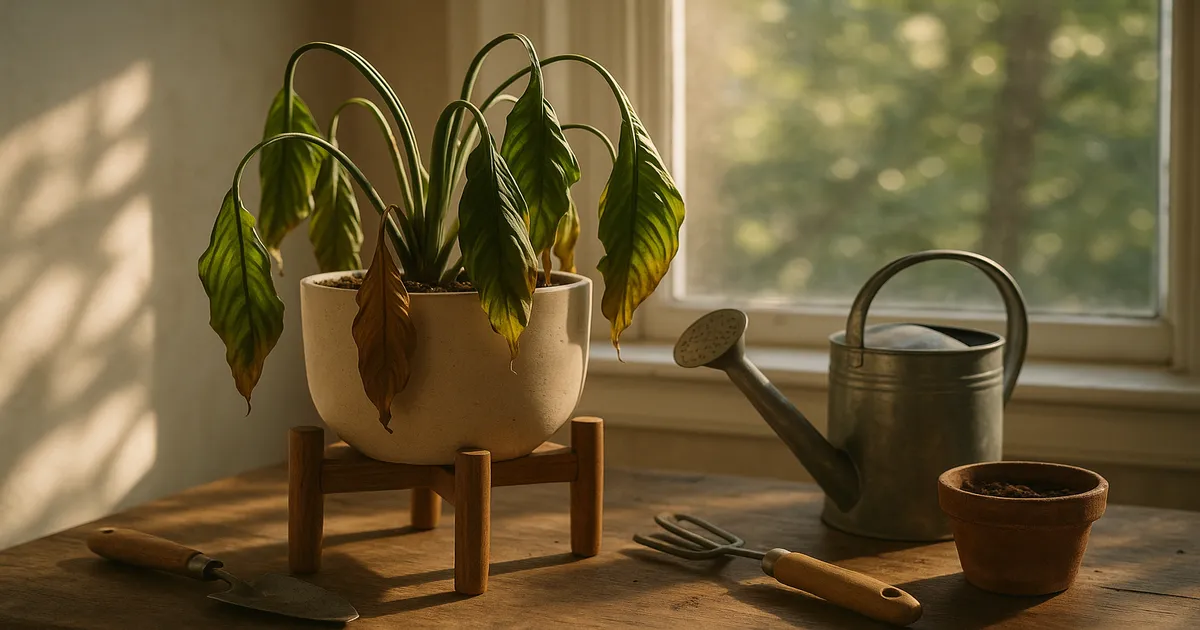
Symptoms of an Overwatered Plant
- Yellowing leaves, especially on the lower portion of the plant
- Mushy, soft stems at the base
- Wilting despite wet soil
- Foul-smelling potting mix
- Brown, mushy roots (healthy roots are white or tan and firm)
Succulents, cacti, snake plants, ZZ plants, and orchids are especially vulnerable. These plants evolved in environments where soil dries out significantly between rains — they have no tolerance for chronic moisture. Pots without drainage holes make the problem worse by trapping water with nowhere to go.
How to Fix an Overwatered Plant
- Remove the plant from its pot and gently shake off the old soil.
- Inspect the roots — trim any black or mushy sections with sterile scissors.
- Dust cut ends with powdered cinnamon or sulfur as a natural antifungal.
- Repot into fresh, well-draining mix suited to your plant type.
- Add perlite (20–50% by volume) to improve drainage and aeration. A reliable option is Espoma Organic Perlite, which is widely available and easy to work with.
- Going forward, use the finger test: insert your finger 1–2 inches into the soil and water only when that depth feels dry.
- A moisture meter removes the guesswork entirely — the XLUX Soil Moisture Meter is a popular, inexpensive choice.
- Always use pots with drainage holes, and empty saucers within 30–60 minutes of watering.
Signs Your Plant Is Dying of Thirst
Underwatering causes turgor pressure in plant cells to collapse — that’s why drought-stressed plants droop and go limp. Prolonged drought can cause irreversible cellular damage. Watch for crispy brown leaf edges, soil pulling away from the sides of the pot, and wilting that doesn’t bounce back after watering.
If the soil has become so dry it repels water, bottom watering is your best option. Place the entire pot in a basin of room-temperature water for 20–30 minutes and let the soil reabsorb moisture from below. Once the top of the soil feels damp, remove the pot and let it drain fully before returning it to its spot.
Light, Humidity, and Temperature: The Environmental Mistakes Most People Miss
Understanding Light Levels: What “Bright Indirect Light” Really Means
Light is the most misunderstood variable in plant care. Here’s a practical reference:
| Light Level | Foot-Candles | Common Examples |
|---|---|---|
| Low light | 25–100 fc | ZZ plant, cast-iron plant |
| Medium indirect | 100–1,500 fc | Peace lily, most tropical foliage |
| Bright indirect | 1,500–3,000 fc | Monstera, philodendron, most aroids |
| Bright direct | 3,000–10,000+ fc | Cacti, succulents, herbs |
One thing most people don’t realize: light intensity drops sharply with distance. Moving a plant just two feet from a window can cut available light by up to 75%. That “bright corner” across the room may actually be low-light territory.
Too little light shows up as leggy, stretched growth, small new leaves, and pale or yellowing foliage. Too much direct sun causes bleached or silvery patches, crispy brown edges, and leaves that curl inward.
To boost light, use a smartphone light meter app to measure actual foot-candles at your plant’s location. South- and west-facing windows provide the most light in the Northern Hemisphere; north-facing windows provide the least. Full-spectrum LED grow lights (5,000–6,500K color temperature) placed 6–18 inches above the plant and running 12–16 hours a day can fully replace natural light. Sheer curtains are an easy way to diffuse harsh direct sun for plants that need bright indirect light. Rotate plants 90° every one to two weeks so all sides receive even exposure.
Why Most Homes Are Too Dry for Tropical Houseplants
Most popular houseplants — pothos, calatheas, ferns, monsteras — evolved in tropical environments with 60–90% relative humidity. The average home runs at 30–50% RH, and in winter, when heating systems are running hard, indoor humidity can drop to 10–20%. That gap is significant. Low humidity forces plants to lose water through their leaves faster than their roots can replace it, which shows up as brown, crispy leaf tips and edges.
The most effective fix is a cool-mist humidifier. Target 50–70% RH for most tropicals. A pebble tray — a shallow tray filled with pebbles and water, with the pot sitting on top but not touching the water — raises local humidity by roughly 5–10%. Clustering plants together also helps, since their collective transpiration creates a shared microclimate. Skip misting: it raises humidity for only a few minutes and can promote fungal disease on leaves.
Temperature Ranges That Keep Houseplants Healthy
Keep most tropical houseplants between 65–80°F (18–27°C). Temperatures below 50°F (10°C) cause cellular damage, and even a cold draft from a single-pane window can trigger leaf drop overnight. Keep plants away from heating vents, air conditioning units, and exterior doors. A min/max thermometer placed near your plants will reveal temperature swings you’d never otherwise notice.
Soil, Pot Size, and Fertilizer: Getting the Basics Right
Choosing the Right Potting Mix
- Succulents and cacti: 50–70% inorganic material (coarse sand, perlite, or pumice) mixed with 30–50% organic matter
- Aroids (Monstera, Philodendron, Pothos): Standard potting mix plus 20–30% perlite and optional orchid bark
- Orchids: Pure orchid bark or a bark/perlite/charcoal blend — never standard potting soil
- Ferns and moisture-lovers: Peat-based or coco coir mix with added compost; retains moisture without waterlogging
Never use garden soil in indoor pots. It’s too dense, lacks aeration, and often carries pathogens that thrive in the warm, enclosed environment of a container.
Why Pot Size and Drainage Holes Matter
A pot that’s too large holds far more moisture than the roots can absorb, creating chronically wet conditions even with careful watering. A pot that’s too small stresses roots, restricts water and nutrient uptake, and causes roots to circle and eventually strangle themselves. When repotting, go up only one pot size at a time — roughly 1–2 inches in diameter. Drainage holes are non-negotiable.
Fertilizer: Too Much and Too Little Both Cause Damage
Over-fertilizing creates osmotic stress: high salt concentrations in the soil draw water out of root cells rather than allowing absorption. Symptoms include brown leaf tips, a white salt crust on the soil surface, and wilting despite adequate moisture. If you suspect salt buildup, flush the soil by running room-temperature water slowly through the pot for 3–5 minutes, then repeat after 30 minutes.
Nutrient deficiency looks different. Uniform yellowing across older leaves usually signals nitrogen deficiency. Yellow leaves with green veins still visible — called interveinal chlorosis — typically points to iron or magnesium deficiency, often caused by soil pH being too high and locking out nutrients rather than a true shortage in the mix.
A simple fertilizing schedule:
- Feed monthly during active growth (spring through summer) with a balanced, water-soluble fertilizer at half strength — something like Jack’s Classic All Purpose 20-20-20 works well for most houseplants.
- For flowering plants, switch to a high-phosphorus formula (such as 5-10-5) during bud development.
- Do not fertilize in winter, or when a plant is stressed, sick, or recently repotted.
Pests, Water Quality, and Root Health
The Six Most Common Houseplant Pests
- Spider mites: Stippled, bronzed leaves with fine webbing on undersides. Thrive in low humidity.
- Mealybugs: White cottony clusters in leaf axils and along stems. Leave sticky honeydew that promotes sooty mold.
- Fungus gnats: Tiny dark flies hovering around soil. Adults are harmless; larvae feed on roots in moist soil.
- Scale insects: Brown bumps on stems and leaves. Hard to spot, harder to eradicate.
- Thrips: Cause silvery streaking on leaves and can transmit plant viruses.
- Aphids: Soft-bodied insects clustered on new growth. They reproduce rapidly and transmit disease.
Treatment steps:
- Identify the pest correctly — treatment differs by species.
- Wipe leaves with a damp cloth, or use a cotton swab dipped in 70% isopropyl alcohol for mealybugs and scale.
- Apply insecticidal soap spray to all leaf surfaces, including undersides. Repeat every 5–7 days for 3–4 cycles.
- Use neem oil as a soil drench or foliar spray for persistent infestations.
- Isolate affected plants immediately to prevent spread.
Always quarantine new plants for two to three weeks before placing them near your existing collection. Inspect leaves — especially undersides — during your weekly check-in.
What’s in Your Tap Water and Why It Matters
Tap water typically contains chlorine, chloramine, fluoride, and dissolved minerals. Fluoride accumulates in leaf tissue over time and causes toxicity, particularly visible as brown tips on dracaenas, spider plants, and peace lilies. Unlike chlorine, chloramine does not dissipate by letting water sit overnight — it requires a carbon filter to remove. Hard water also raises soil pH gradually, eventually locking out nutrients even when you’re fertilizing regularly.
Filtered water (carbon filter or reverse osmosis) removes chloramine, fluoride, and dissolved minerals. Collected rainwater is naturally soft and slightly acidic — ideal for most houseplants. Letting tap water sit overnight removes chlorine only and is better than nothing, but it’s not a complete solution for sensitive plants.
How to Stop Killing Your Plants: A Simple Ongoing Routine
Weekly and Monthly Plant Care Checklist
Every week:
- Check soil moisture with the finger test or a moisture meter
- Inspect both sides of leaves for early signs of pests
- Remove dead or yellowing leaves
Every month:
- Check for root-bound signs (roots at drainage holes, soil drying unusually fast)
- Fertilize during the growing season (spring and summer)
- Wipe dusty leaves with a damp cloth to maximize light absorption
Match the Plant to Your Actual Conditions
The single most effective thing you can do is choose plants that fit your real environment — not the conditions you wish you had. If your apartment gets only low to medium indirect light, don’t buy a succulent. If you can’t run a humidifier, skip the calathea. The best plant is one that suits where you actually live.
Best Low-Maintenance Houseplants for Beginners
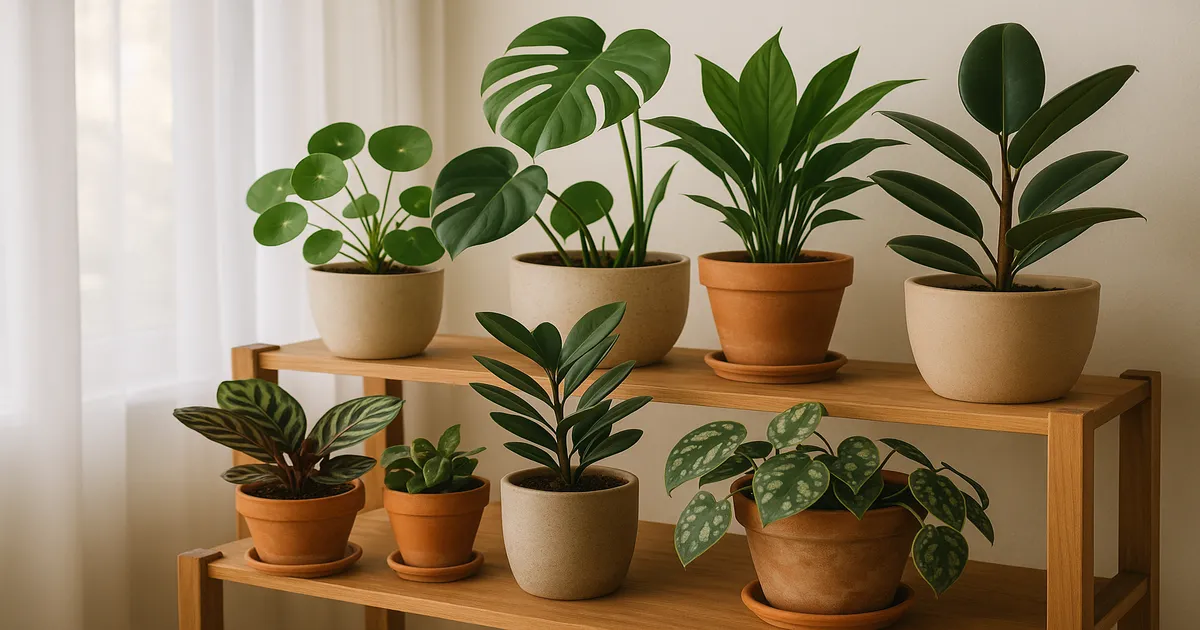
- Pothos (Epipremnum aureum) — tolerates low light, irregular watering, and neglect
- ZZ plant (Zamioculcas zamiifolia) — nearly indestructible, thrives on neglect
- Snake plant (Dracaena trifasciata) — drought-tolerant, adaptable to most light levels
- Spider plant (Chlorophytum comosum) — fast-growing, forgiving, and easy to propagate
- Peace lily (Spathiphyllum spp.) — one of the few flowering plants that tolerates low light
Frequently Asked Questions
Why do my plants keep dying even when I water them regularly? Regular watering is often the problem, not the solution. Most houseplants die from overwatering, not neglect. Water only when the top 1–2 inches of soil are dry, and always use pots with drainage holes.
How do I know if my plant is getting enough light? Use a free light meter app on your smartphone to measure foot-candles at your plant’s location. Most tropical foliage plants need 1,500–3,000 fc (bright indirect light). If your reading is consistently below 100 fc, consider a grow light.
Can a dying plant be saved? Usually, yes — if you catch it early enough and address the root cause. Overwatered plants can recover after root trimming and repotting. Light-starved plants bounce back once moved or supplemented with a grow light. The key is diagnosing correctly before treating.
Why does my plant have brown leaf tips? Brown tips are most commonly caused by low humidity, fluoride in tap water, or salt buildup from over-fertilizing. Check your humidity levels first, then consider switching to filtered or rainwater. If you fertilize frequently, flush the soil to remove accumulated salts.
How often should I repot my houseplants? Most houseplants benefit from repotting every one to two years. Signs it’s time: roots growing out of drainage holes, soil drying out unusually fast, or visible root circling when you remove the plant from its pot. Go up only one pot size at a time.