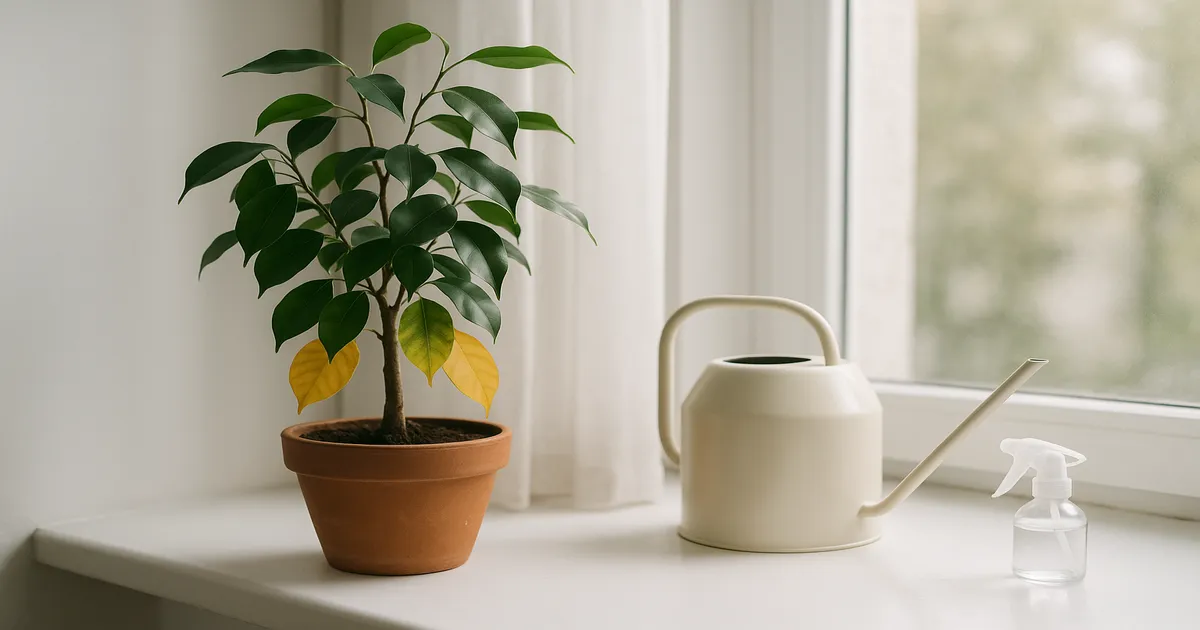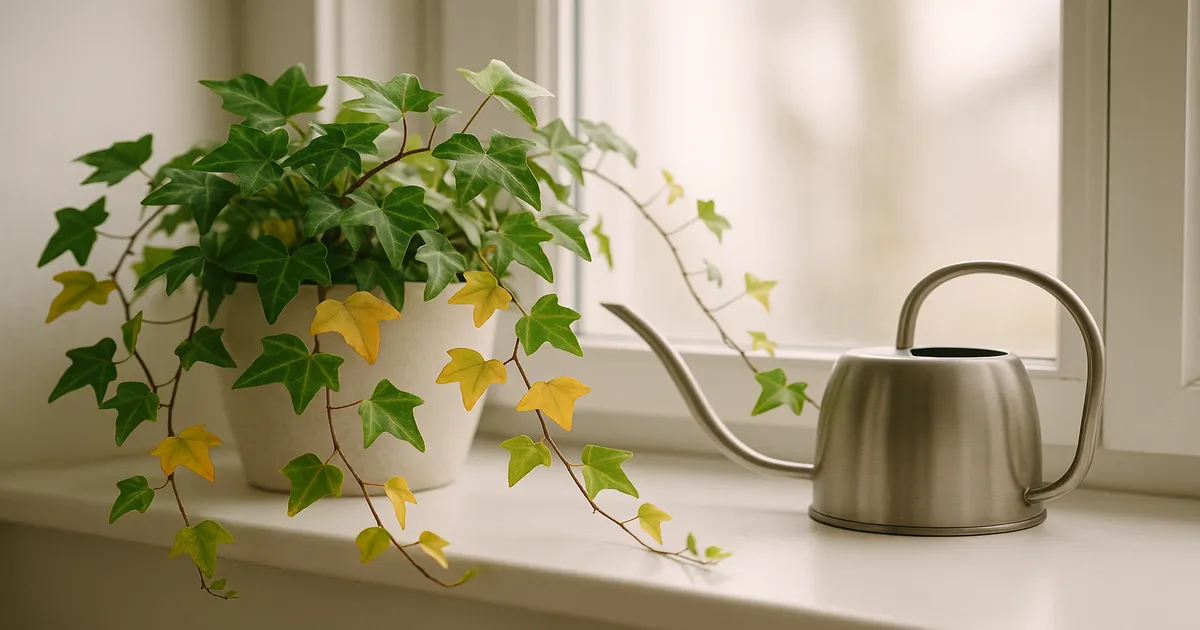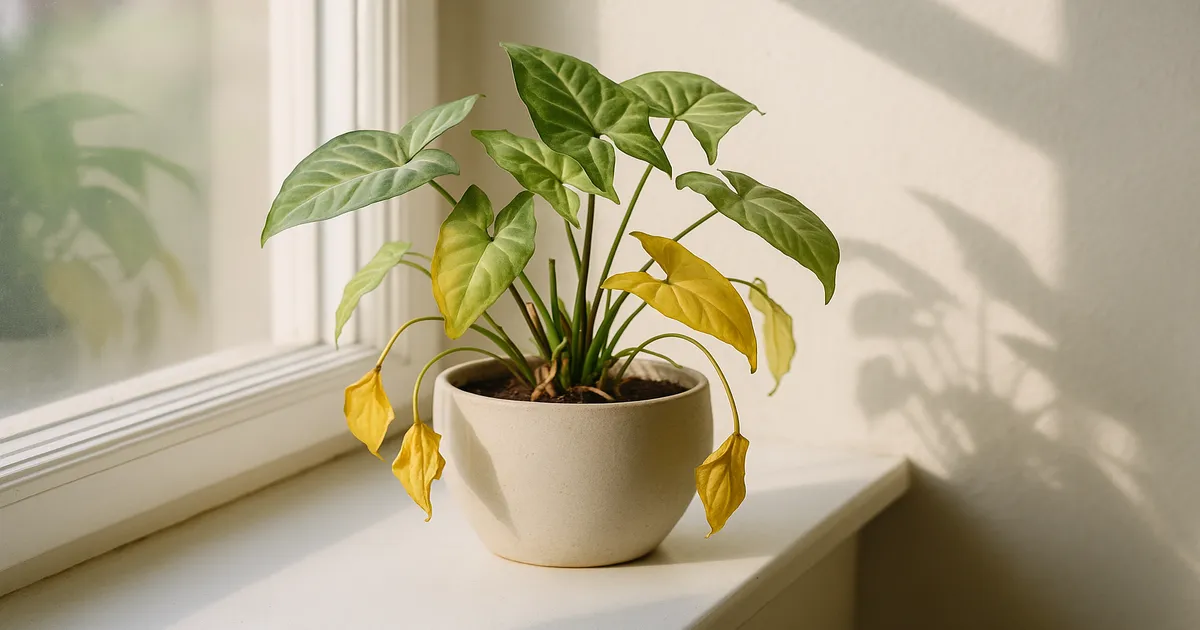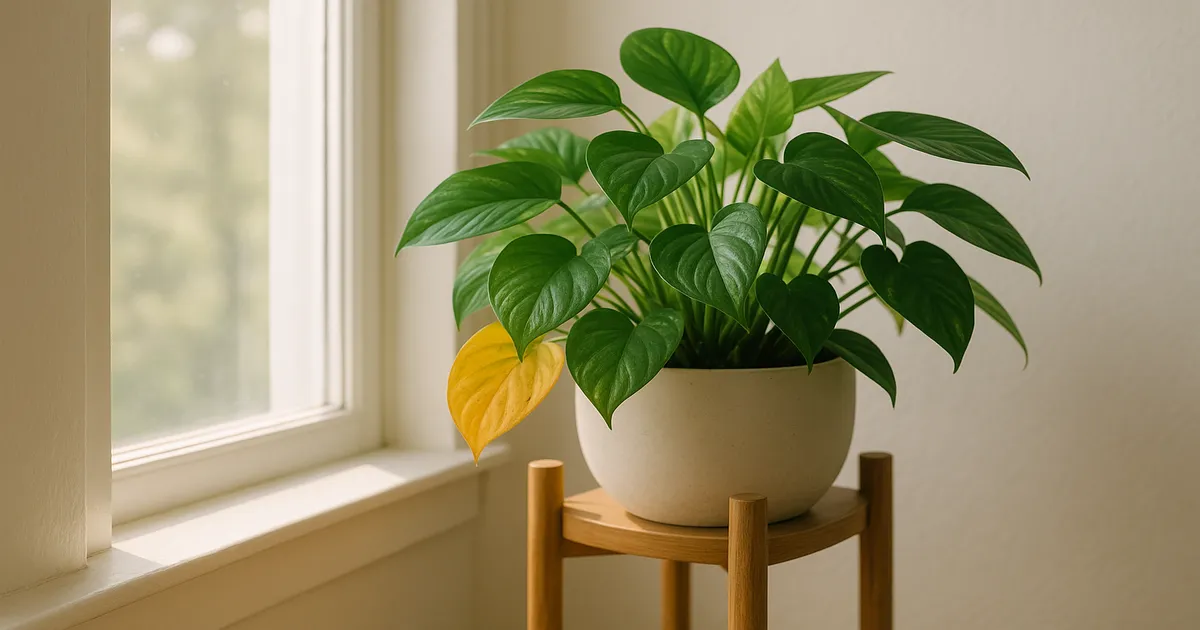
Quick Answer: In most cases, yes — cut off yellow leaves that are more than 50% yellow, diseased, or pest-damaged. But cutting is only half the job. Finding and fixing the underlying cause is what stops more leaves from turning yellow in the first place.
Should You Cut Off Yellow Leaves? The Short Answer
Cut the leaf if it’s mostly yellow and no longer doing useful work for the plant. Wait if you haven’t diagnosed the cause yet — the pattern of yellowing is your best clue, and removing leaves too soon destroys the evidence.
When to Cut
Remove a yellow leaf when:
- It’s more than 50% yellow and unlikely to recover
- It shows signs of disease (spots, lesions, mold) or pest damage
- It’s fully yellow, soft, or mushy
- It’s cosmetically dead with no remaining photosynthetic value
When to Wait
Hold off if you haven’t identified the cause. Is the yellowing on old leaves or new ones? Uniform or between the veins? Crispy or soft? These details point directly to the problem, and you need the leaf in place to read them. Also wait if the leaf is only partially yellow — green sections are still photosynthesizing and feeding the plant.
When to Leave It Alone
If a lower leaf is yellowing slowly on an otherwise healthy plant with vibrant new growth, it’s almost certainly natural aging. It’ll drop on its own within days. Skipping the cut means one fewer wound site for pathogens to enter.
Quick-Reference: Cut, Wait, or Leave?
| Action | When to Use |
|---|---|
| ✅ Cut | Leaf is >50% yellow, diseased, or pest-affected |
| ⚠️ Wait | Still diagnosing; leaf is partially green and photosynthesizing |
| ❌ Leave | Natural senescence — leaf is about to drop on its own |
What Causes Leaves to Turn Yellow? The 10 Main Reasons
Leaf yellowing — technically called chlorosis — happens when chlorophyll breaks down or can’t form properly. Chlorophyll needs light, nitrogen, magnesium, iron, and several other inputs to stay intact. Disrupt any of them, and the green fades to reveal the yellow pigments (xanthophylls and carotenoids) that were always there underneath.
Here are the ten most common culprits.
Overwatering — The Most Common Culprit
Waterlogged soil cuts off oxygen to the roots. Without oxygen, roots can’t respire, they begin to die, and secondary pathogens like Pythium and Phytophthora move in fast. The plant ends up showing both drought stress and nutrient deficiency at the same time — confusing, but explainable once you check the soil.
Pattern clue: Yellowing starts on lower, older leaves and moves upward; leaves feel soft or mushy; soil smells sour.
Underwatering and Drought Stress
When water runs short, the plant closes its stomata, shuts down photosynthesis, and may deliberately sacrifice lower leaves to protect new growth. Severe dehydration ruptures cell membranes — that damage is irreversible.
Pattern clue: Yellow leaves with crispy, dry edges; leaves curling inward; bone-dry soil pulling away from pot edges.
Nutrient Deficiency (Nitrogen, Magnesium, Iron, and More)
Each deficiency has a signature look. The key principle: mobile nutrients (nitrogen, phosphorus, magnesium, potassium) show deficiency on older leaves first because the plant strips them and sends them to new growth. Immobile nutrients (iron, calcium, sulfur, zinc, manganese) show up on newer leaves first because they can’t be relocated once deposited.
Pattern clue: Uniform pale yellow on old leaves = likely nitrogen; interveinal yellowing on old leaves = magnesium; interveinal yellowing on new leaves = iron or manganese.
Too Little or Too Much Light
Below about 50–100 foot-candles, most tropical houseplants can’t sustain photosynthesis and begin shedding leaves, starting with the lowest and most shaded. Too much direct sun causes the opposite — UV radiation bleaches and denatures chlorophyll, leaving pale or whitish patches.
Pattern clue: Low light = gradual yellowing of inner and lower leaves; too much sun = bleached patches on the side facing the window.
Root Bound or Compacted Roots
When roots fill every inch of the pot, they compress each other, reducing oxygen and limiting water and nutrient uptake. The soil also degrades faster, shifting pH and worsening drainage.
Pattern clue: Slow, generalized yellowing across the whole plant; roots visible at drainage holes; pot dries out unusually fast.
Pests: Spider Mites, Mealybugs, Scale, and Others
Sap-sucking insects drain the plant’s energy and nutrient reserves directly. Spider mites thrive in hot, dry air and low humidity (below 40%). Fungus gnat larvae damage roots underground, mimicking overwatering symptoms. Scale and mealybugs leave sticky honeydew that leads to sooty mold.
Pattern clue: Stippled or speckled yellowing (spider mites); distorted new growth (aphids, thrips); yellowing with visible cottony masses or hard bumps on stems (mealybugs, scale).
Fungal, Bacterial, or Viral Disease
Fungal leaf spots (from Alternaria, Cercospora, Septoria) show as yellow halos around brown lesions. Bacterial infections leave water-soaked, yellow-bordered patches. Viral infections — like mosaic virus — create irregular mottled or streaked yellowing with no clean pattern.
Pattern clue: Yellow halos around spots or lesions = fungal or bacterial; irregular mosaic or ring patterns = viral.
Environmental Stress: Cold Drafts, Heat, and Low Humidity
Most tropical houseplants suffer chilling injury below 50–55°F (10–13°C), with yellowing appearing within 24–72 hours of cold exposure. Heat above 95°F (35°C) accelerates chlorophyll breakdown. Low humidity (below 40%) causes leaf edges and tips to desiccate and yellow first.
Pattern clue: Yellowing shortly after a cold snap or placement near an air vent; tip and margin yellowing in dry indoor air.
Natural Senescence — Normal Leaf Aging
Every leaf has a genetically programmed lifespan. When an older leaf has contributed its energy and nutrients, the plant actively dismantles its chlorophyll and recycles what it can. This is efficient biology, not a problem.
Pattern clue: Only the lowest, oldest one or two leaves yellowing; new growth is healthy and green; no other symptoms present.
Soil pH Imbalance
Most houseplants need a soil pH of 5.5–6.5. Above pH 7.0, iron, manganese, and zinc become chemically locked in the soil — present but unavailable to the plant. Tap water with high alkalinity (pH 7.5–8.5) gradually pushes soil pH up over months of regular watering.
Pattern clue: Interveinal chlorosis on new growth despite regular fertilizing; especially common in hard-water areas.
How to Diagnose Why Your Plant Has Yellow Leaves
Read the Pattern First
Location is everything. Step back and look at the whole plant before touching anything.
- Lower/older leaves yellowing → overwatering, underwatering, nitrogen deficiency, or natural senescence
- Upper/newer leaves yellowing → iron, manganese, calcium, or sulfur deficiency; or root problems blocking uptake
- All leaves yellowing uniformly → sudden light change, severe root rot, or systemic disease
- Interveinal yellowing (veins stay green, tissue between turns yellow) → magnesium (old leaves) or iron (new leaves)
- Marginal or tip yellowing → potassium deficiency, fluoride or salt toxicity, or low humidity
Texture matters too. Soft and mushy points to a moisture problem. Crispy and dry points to drought or environmental stress.
Mobile vs. Immobile Nutrients — A Useful Diagnostic Framework
Mobile nutrients (nitrogen, phosphorus, magnesium, potassium) can be moved within the plant. When they run short, the plant pulls them from old leaves to feed new growth — so old leaves yellow first. Immobile nutrients (iron, manganese, calcium, sulfur, zinc) stay put once deposited, so new growth suffers first when supply is interrupted.
| Symptom | Likely Cause |
|---|---|
| Uniform pale yellow, old leaves first | Nitrogen deficiency |
| Interveinal yellow, old leaves | Magnesium deficiency |
| Interveinal yellow, new leaves | Iron or manganese deficiency |
| Marginal yellowing or scorch, old leaves | Potassium deficiency or salt buildup |
| Uniform yellow, new leaves | Sulfur deficiency |
| Soft yellow leaves, wet soil | Overwatering or root rot |
| Crispy yellow leaves, dry soil | Underwatering |
| Mottled or mosaic yellow, no pattern | Viral disease |
Check the Soil, Roots, and Pot
Before assuming a nutrient issue, rule out the physical basics. Push your finger 2 inches into the soil — is it wet or dry? Does it smell sour or sulfurous? If you’re unsure, a soil moisture meter removes the guesswork.
If the soil seems fine, unpot the plant and inspect the roots. Healthy roots are white or tan and firm. Brown, black, or mushy roots indicate rot. Tightly coiled, pot-shaped roots mean it’s time to repot.
Inspect for Pests
Check the undersides of leaves — that’s where most pests hide. Look for fine webbing (spider mites), tiny moving dots, cottony clusters (mealybugs), or hard waxy bumps on stems (scale). Thrips leave silver streaks and tiny black droppings on leaf surfaces. Use a magnifying glass if you’re not certain.
Don’t remove yellow leaves before completing this inspection. The pattern they display is your evidence.
How to Cut Off Yellow Leaves Correctly
Tools and Sterilisation
Use sharp scissors or pruning shears — dull blades crush tissue rather than cutting cleanly. Wipe the blades with 70% isopropyl alcohol before you start and between each cut. This step is non-negotiable when disease is involved, since contaminated tools spread pathogens between plants in seconds.
Where to Make the Cut
Cut at the base of the petiole (the leaf stem) where it meets the main stem or trunk. Aim for a clean cut close to the stem without nicking it. Never tear or pull a yellow leaf off — this rips vascular tissue and leaves a ragged wound that heals slowly and invites bacterial infection.
If a leaf is only partially yellow but still has healthy green sections, leave it. Those green portions are still photosynthesizing and contributing energy to the plant.
How Many Yellow Leaves Can You Remove at Once?
Remove no more than 20–25% of the plant’s total foliage in a single session. Taking too much at once stresses the plant and slows recovery. If you have many yellow leaves, spread removal over several weeks.
Dispose of diseased or pest-affected leaves in the bin, not the compost. Compost piles rarely reach temperatures high enough to kill pathogens or pest eggs.
How to Fix Yellow Leaves: Solutions by Cause
Fixing Overwatering and Root Rot
Let the soil dry before watering again — for most tropicals, wait until the top 1–2 inches are dry. Make sure drainage holes are clear and never leave the pot sitting in standing water for more than 30–60 minutes.
If root rot has set in, unpot the plant, trim all black or mushy roots with sterilized scissors, dust cut ends with cinnamon or powdered sulfur, and repot in fresh mix. A well-draining potting mix amended with 20–30% perlite helps prevent recurrence. Terracotta pots also help by allowing moisture to evaporate through the walls.
Fixing Underwatering and Drought Stress
Water thoroughly until it drains freely from the bottom. If the soil has become hydrophobic — water rushes straight through without being absorbed — bottom-water by setting the pot in a tray of water for 20–30 minutes. Going forward, check soil moisture every 2–3 days rather than watering on a fixed calendar schedule.
Correcting Nutrient Deficiencies
Always identify the deficiency pattern first — treating the wrong one wastes time and can make things worse.
- General deficiency: Apply a balanced water-soluble fertilizer at half the recommended dose every 2–4 weeks during spring and summer.
- Magnesium deficiency: Dissolve 1 teaspoon of Epsom salt per gallon of water and apply as a soil drench. Results are usually visible within 2–3 weeks.
- Iron deficiency: Lower soil pH to 5.5–6.5 and apply chelated iron (Fe-EDTA or Fe-DTPA), which stays plant-available at higher pH levels than standard iron sulfate.
- Salt buildup from over-fertilizing: Flush the soil with 3–4 times the pot volume of plain water, letting it drain completely each time.
Adjusting Light Levels
Move plants gradually — one light zone at a time over two weeks — to avoid shock. If natural light is limited, a full-spectrum grow light at 5,000–6,500K providing 1,500–3,000 foot-candles for 12–14 hours a day will compensate. A free light meter app on your phone can reveal that a “bright” corner is darker than you think.
Treating Pests and Disease
Isolate the affected plant immediately to protect your others. Then treat based on the pest:
- Spider mites: Raise humidity above 50%; spray all leaf surfaces (especially undersides) with insecticidal soap or diluted neem oil every 5–7 days for 3–4 cycles.
- Scale: Remove manually with a cotton swab dipped in isopropyl alcohol, then follow with neem or horticultural oil.
- Mealybugs: Dab bugs directly with isopropyl alcohol; use a systemic insecticide drench for severe infestations.
- Fungal disease: Improve air circulation, reduce leaf wetness, and apply a copper-based fungicide.
- Viral disease: There is no cure. Remove and dispose of the plant to protect the rest of your collection.
Yellow Leaves by Plant Type
Monsteras, Pothos, and Philodendrons
Overwatering is the most likely culprit, followed by low humidity. Check the soil before assuming anything else. These plants are forgiving, but their roots need oxygen — a well-draining mix and a pot with drainage holes are essential.
Succulents and Cacti
If a succulent has yellow leaves, assume overwatering until proven otherwise. These plants store water in their tissues and need their soil to dry out completely between waterings. Mushy, translucent leaves signal rot that can spread quickly — act fast.
Orchids (Phalaenopsis)
One or two lower leaves yellowing on a Phalaenopsis is completely normal — it’s just the oldest leaves completing their lifespan. If upper or middle leaves are yellowing, that points to a root problem. Healthy Phalaenopsis roots are green when wet and silvery-white when dry.
Ferns and Calatheas
These plants are highly sensitive to fluoride and mineral salts in tap water, which cause marginal and tip yellowing. Switch to filtered or rainwater and flush the soil every few months. They also need consistent humidity above 50%.
Palms
Yellowing on the newest fronds — especially with a frizzled, distorted texture — signals manganese deficiency, commonly called “frizzle top.” It’s most common in alkaline soils. Apply manganese sulfate or a palm-specific fertilizer that includes micronutrients.
Citrus and Acid-Loving Plants (Gardenias, Azaleas, Camellias)
These plants need acidic soil (pH 5.0–6.0) to access iron and manganese. In alkaline conditions — or when watered repeatedly with hard tap water — interveinal chlorosis on new leaves is almost inevitable. Use an acidifying fertilizer, apply chelated iron, and test your soil pH if you haven’t already.
How to Prevent Yellow Leaves
- Water by soil moisture, not schedule. Push your finger 2 inches into the soil before every watering. Soil dries at different rates depending on pot size, season, and temperature — the calendar is a poor guide.
- Feed during the growing season. Most houseplants benefit from a diluted balanced fertilizer every 2–4 weeks from spring through early autumn. Stop or reduce feeding in winter when growth slows.
- Match light to the plant’s needs. A plant in too little light will slowly decline no matter how well you water or fertilize.
- Check for pests monthly. Catching an infestation early — before it causes widespread yellowing — is far easier than treating a heavy one.
- Repot every 1–2 years. Fresh potting mix restores drainage, corrects pH drift, and gives roots room to grow.
- Use appropriate water. In hard-water areas, switch sensitive plants (ferns, Calatheas, orchids) to filtered or rainwater to prevent fluoride and salt buildup.
Frequently Asked Questions About Yellow Leaves
Should I cut off yellow leaves even if I don’t know the cause? Only if the leaf is more than 50% yellow, diseased, or pest-damaged. If the leaf is partially green and you haven’t diagnosed the problem yet, leave it — the yellowing pattern is your best diagnostic clue.
Will a yellow leaf ever turn green again? No. Once chlorophyll breaks down in a leaf, it doesn’t regenerate. You can stop further yellowing by fixing the underlying cause, but the affected leaf itself won’t recover.
Can cutting yellow leaves spread disease? Yes, if you use unsterilized tools. Always wipe blades with 70% isopropyl alcohol before cutting and between plants. Dispose of diseased leaves in the bin, not the compost.
How many yellow leaves is too many? One or two lower leaves yellowing on an otherwise healthy plant is normal. If multiple leaves across different parts of the plant are yellowing at once, that signals a systemic problem — overwatering, root rot, or a nutrient issue — that needs to be addressed at the root cause.
Should I cut yellow leaves off my pothos or monstera? Yes, once they’re more than 50% yellow. These plants produce new leaves readily, so removing spent ones keeps the plant tidy and directs energy toward healthy growth. Just make sure to check the soil moisture first — overwatering is the most common trigger for both species.