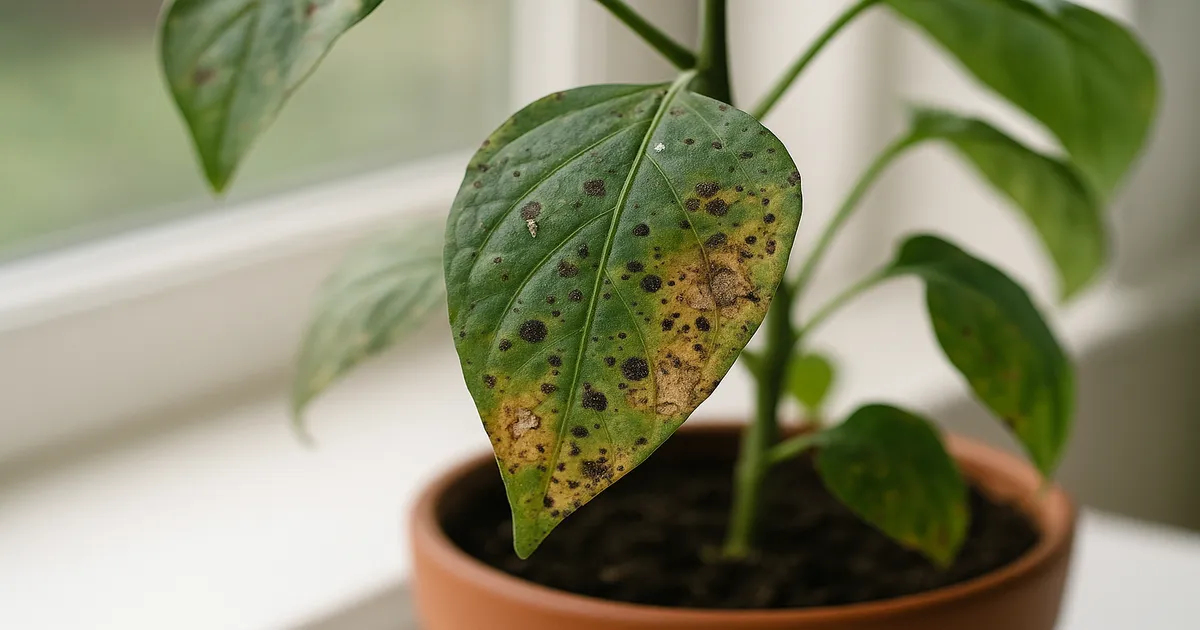
Quick Answer: Something growing on your plant could be a fungal disease, insect infestation, algae, moss, lichen, or even your plant doing something completely normal — like producing aerial roots or baby offsets. Most growths are treatable or harmless once you identify them. Start by matching what you see to the visual descriptions below, then check the environmental context for confirmation.
Figuring out what is growing on my plant is easier than it sounds. Look carefully at the growth’s color, texture, and location — then cross-reference with what’s been happening in your plant’s environment lately. High humidity? Poor drainage? A new plant you brought home recently? Those clues narrow the diagnosis fast.
Here’s a quick-reference table to get you started:
| What You See | Likely Cause |
|---|---|
| White or gray powder on leaves | Powdery mildew |
| Fuzzy gray-brown fuzz on dying tissue | Botrytis (gray mold) |
| Black sooty coating on leaves | Sooty mold (insect problem) |
| White cottony clusters on stems or roots | Mealybugs |
| Brown or tan oval bumps on stems | Scale insects |
| Tiny specks + fine webbing on leaf undersides | Spider mites |
| Green film or crust on soil or pot | Algae or cyanobacteria |
| Velvety green mat on soil surface | Moss or liverwort |
| White threads in soil | Fungal mycelium (often harmless) |
| Root-like structures from stems | Aerial or adventitious roots |
| Miniature plants at the base | Offsets, pups, or stolons |
| Swollen, distorted tissue | Galls |
What Is Growing on My Plant? Identifying by Appearance
White or Gray Powdery Coating
This is almost always powdery mildew — a fungal disease that looks like someone dusted flour on your leaves. It appears on upper leaf surfaces, stems, and buds, and won’t wipe off cleanly without leaving a residue. Begonias, African violets, and cucurbits are frequent victims.
Fuzzy Gray-Brown Mold
Botrytis (gray mold) starts on dead or dying tissue before spreading to healthy growth. Disturb it and you’ll see a puff of spores. It thrives in cool, damp, still air and commonly attacks orchids, geraniums, and impatiens.
Black Sooty Film
A black coating that wipes off relatively easily is sooty mold. It doesn’t infect your plant directly — it grows on the sticky honeydew left by sap-sucking insects. If you see it, start hunting for aphids, scale, or mealybugs right away.
White Cottony or Waxy Clusters
Fluffy white masses tucked into leaf axils, along stems, or on roots are mealybugs. They look almost like tiny cotton balls. Root mealybugs are sneakier — you may not find them until you unpot the plant.
Brown or Tan Bumps on Stems
Flat, oval bumps that seem almost welded to the stem are scale insects. They’re easy to mistake for natural bark texture. Press one with your fingernail — if it’s an insect, it will feel soft or leave a smear.
Tiny Specks and Fine Webbing
Near-invisible specks on leaf undersides paired with silky webbing means spider mites. Affected leaves look stippled, bronzed, or silvery where cells have been drained. These thrive in the dry, heated air of winter indoors.
Green Film or Crust on Soil and Pots
A green or blue-green film on your pot exterior, soil surface, or inside a glass terrarium is algae — or possibly cyanobacteria. Mostly cosmetic, but it can form a hard crust that repels water over time.
Velvety Green Mats on Soil Surface
A flat, lobed green mat — especially one that looks like a tiny leafy plant — is almost certainly liverwort (Marchantia polymorpha). Cushiony green mounds are moss. Both signal that your soil stays wet for too long.
Root-Like Structures Emerging from Stems
Aerial or adventitious roots growing out of stems above the soil line are completely normal on many tropical plants. This is your plant doing exactly what it evolved to do.
Miniature Plants at the Base or on Runners
Small plants emerging from the base are offsets or pups — vegetative babies. Long stems with plantlets dangling from them are stolons, classic in spider plants. Both are signs of a healthy, reproducing plant.
Abnormal Swellings or Distorted Tissue
Lumpy, warty, or distorted growth on leaves, stems, or roots is likely a gall — caused by bacteria, mites, or nematodes manipulating your plant’s hormones to create a shelter for themselves.
Fungal Growths: The Most Common Culprits
Powdery Mildew
Here’s the counterintuitive part: powdery mildew actually prefers moderate humidity (around 50–70%), not the soaking-wet conditions you might expect. Very high humidity actually suppresses spore germination. Temperature swings between 60–80°F (15–27°C) combined with poor air circulation are the real triggers. The fungi responsible (order Erysiphales) are obligate biotrophs — they keep your plant alive while feeding on it through specialized structures called haustoria that penetrate leaf cells.
Botrytis (Gray Mold)
Botrytis cinerea is a necrotrophic pathogen, meaning it kills tissue first and then feeds on it. It produces oxalic acid and enzymes that break down cell walls, always starting on dead or damaged material — spent flowers, yellowing leaves — before moving into healthy tissue. Humidity above 85% and still air are its best friends. Remove dead plant material promptly and you remove its foothold.
Sooty Mold
Sooty mold fungi (Capnodium and Fumago spp.) don’t infect your plant at all. They feed on the honeydew produced by sap-sucking insects. The mold itself can block enough light to reduce photosynthesis by 30–50%, but treating the mold without treating the insects is pointless. Find the infestation first.
White Mycelium in Soil: Harmful or Beneficial?
White threads or cottony patches in your potting mix are often completely harmless — saprophytic fungi breaking down bark or compost, or even beneficial mycorrhizal fungi working with your plant’s roots. The key question is: is your plant declining? If it looks healthy, the mycelium almost certainly isn’t the problem. If it’s wilting and yellowing despite normal watering, you may be dealing with a Pythium or Fusarium infection — both of which cause brown, mushy roots and a plant that collapses even in moist soil.
Insect Infestations That Look Like Plant Growths
Scale Insects
Scale insects are masters of disguise. Armored scales (family Diaspididae) secrete a hard protective shell; soft scales (family Coccidae) are covered by their own waxy body wall. Both feed by inserting needle-like mouthparts into phloem tissue. The adult stage is essentially impervious to contact sprays — the crawler stage (newly hatched nymphs) is the only window when treatments work well. Ficus, citrus, orchids, and palms are common hosts.
Mealybugs
Mealybugs (Planococcus citri and relatives) coat themselves in waxy filaments and excrete honeydew prolifically. They hide deep in leaf axils and stem joints where sprays don’t reach easily. Root mealybugs (Rhizoecus spp.) live entirely in the soil and are typically discovered only when you repot — contaminated potting mix is a common way they spread.
Aphids
Aphids reproduce through parthenogenesis — asexual reproduction — under favorable conditions, allowing a single individual to produce up to 80 offspring in a week. They cluster on soft new growth and shoot tips, injecting saliva that distorts leaves and transmitting plant viruses in the process. Their honeydew fuels sooty mold.
Spider Mites
Spider mites are arachnids, not insects — a distinction that matters for treatment, since many insecticides don’t affect them at all. Tetranychus urticae (two-spotted spider mite) is the most common houseplant offender. It thrives at humidity below 40% and temperatures above 70°F (21°C), making heated winter homes a perfect environment.
Fungus Gnat Larvae
Adult fungus gnats are annoying but largely harmless. The larvae (Bradysia spp.) are the real problem — tiny white worms with black heads that feed on fungi and decaying matter in the soil, and will chew through fine root hairs and seedling stems when populations are high. Consistently moist, peat-heavy mixes are their ideal habitat.
Algae, Moss, and Lichen: Usually Harmless but Worth Addressing
Green algae and cyanobacteria appear when wet surfaces receive enough light. On the soil surface, they can form a hydrophobic crust that causes water to bead off rather than soak in, eventually stressing your plant’s roots.
Liverwort (Marchantia polymorpha) is nearly a guaranteed sign of chronic overwatering or poor drainage. Dense mats impede water penetration and shelter fungus gnat larvae. The fix isn’t just scraping it off — it’s changing how you water.
Lichen, by contrast, is a symbiotic organism — a fungus and an alga living as one. It grows extremely slowly (sometimes just 1–2 mm per year) and is actually a bioindicator of clean air, highly sensitive to pollution. Finding lichen on a pot or wooden stake is essentially harmless and even a good sign about your indoor air quality.
When the Growth Is Actually Your Plant
Aerial and Adventitious Roots
Monstera, Philodendron, and epiphytic orchids all produce aerial roots as part of their natural growth habit. Orchids have thick, silvery velamen roots that rapidly absorb water; Monstera produces prop roots for structural support. Low humidity (below 50%) can trigger more aerial root production as the plant reaches for moisture — this is normal behavior, not a distress signal.
Offsets, Pups, and Stolons
Pups emerging from the base of an Aloe or Agave are clonal offspring produced from axillary buds. In bromeliads, pup production is triggered after the central rosette flowers — bromeliads are monocarpic, meaning the main plant dies after flowering, and the pups are its legacy. Spider plants send out long stolons that produce new plantlets at nodes, which can be snipped off and rooted in water or soil.
Galls
A gall is your plant’s own tissue, manipulated to grow abnormally by a foreign organism. The inducer hijacks the plant’s auxin and cytokinin signaling to create a nutrient-rich pocket for itself. The four main causes are:
- Crown gall (Agrobacterium tumefaciens) — tumor-like growths at the soil line
- Gall mites (family Eriophyidae) — leaf galls and felt-like erineum patches
- Gall wasps (Cynipidae) — primarily on oaks, rarely indoors
- Root-knot nematodes (Meloidogyne spp.) — root galls that impair water and nutrient uptake
What Is Growing on My Plant? How to Treat It
Powdery Mildew and Botrytis
- Isolate the plant immediately to prevent airborne spore spread.
- Remove and bag (don’t compost) all visibly affected leaves.
- Set a small fan nearby to improve air circulation.
- For powdery mildew, apply a potassium bicarbonate solution (1 tablespoon per gallon of water) or diluted neem oil to all leaf surfaces.
- For botrytis, focus on removing all dead and dying tissue — that’s its entry point. Reduce humidity and increase airflow.
Scale, Mealybugs, and Aphids
- Scale: Dab individual bumps with a cotton swab soaked in 70% isopropyl alcohol. For crawler-stage infestations, apply insecticidal soap to all surfaces and repeat weekly for a month.
- Mealybugs: Use the same alcohol-swab treatment for visible colonies. For root mealybugs, unpot, rinse the roots thoroughly, and repot in fresh mix. Systemic insecticides containing imidacloprid can help for severe root infestations.
- Aphids: Knock them off with a strong stream of water, then apply insecticidal soap or neem oil. Repeat every 3–5 days — their reproduction rate is fast.
Spider Mites
Raise humidity immediately — spider mites struggle above 60% relative humidity. Rinse leaves with water to dislodge mites and remove webbing. Apply a dedicated miticide or neem oil, covering leaf undersides thoroughly, and repeat every 5–7 days for three cycles. (Bonide Mite-X)
Fungus Gnats
- Let the top 2 inches of soil dry out between waterings — larvae can’t survive in dry conditions.
- Place yellow sticky traps near the soil surface to catch adults.
- Apply Bacillus thuringiensis var. israelensis (Bti) as a soil drench — it kills larvae without harming plants or beneficial organisms.
- For persistent infestations, beneficial nematodes (Steinernema feltiae) are an effective biological control.
Algae, Moss, and Liverworts
- Reduce watering frequency and let the soil surface dry between waterings.
- Scrape off visible growth, then top-dress with a layer of perlite — it dries quickly and makes the surface inhospitable to algae and liverworts.
- For algae on pots, scrub with a dilute bleach solution (1 part bleach to 9 parts water) and rinse thoroughly.
Root Rot and Soil Fungi
- Unpot the plant and inspect the roots — healthy roots are white or tan and firm.
- Trim away all brown, mushy roots with sterile scissors.
- Let the root ball air dry for 30–60 minutes.
- Repot in fresh, well-draining mix with added perlite.
- Water sparingly for the first few weeks while roots recover.
Galls and Crown Gall Bacteria
Galls caused by mites cannot be cured — prune out affected tissue and dispose of it. For crown gall (Agrobacterium tumefaciens), remove the plant entirely and sterilize the pot, as the bacteria persist in soil. Root-knot nematodes are best managed by replacing the soil and treating with beneficial nematodes.
Prevention: How to Stop Unwanted Growths Before They Start
Most fungal diseases and many insect infestations thrive when air is still and humidity is uncontrolled. A small USB fan running on low for a few hours a day makes a significant difference. Aim for 50–60% relative humidity for most tropical houseplants — enough to keep them comfortable without creating a breeding ground for mold or mites.
Water correctly: always check the top inch or two of soil before watering, and never let pots sit in standing water. Quarantine any new plant for two to three weeks before placing it near your collection. Inspect leaf undersides and stem joints regularly — catching an infestation early is far easier than treating a full-blown outbreak.
Frequently Asked Questions
Is the white fuzz on my plant dangerous? It depends on where it is. White fuzz on leaves is almost always powdery mildew — treat it promptly. White fuzz in the soil is usually harmless fungal mycelium breaking down organic matter, especially if your plant looks healthy. White cottony clusters on stems or in leaf axils are mealybugs and need immediate treatment.
Can I use neem oil on all houseplants? Neem oil works on most houseplants but can cause leaf burn if applied in direct sunlight or to plants that are already stressed. Always test on a small area first, apply in the evening, and avoid spraying open flowers. Some ferns and delicate succulents can be sensitive to oil-based sprays.
Why does my plant have tiny white worms in the soil? Those are almost certainly fungus gnat larvae. They thrive in moist, peat-heavy potting mixes. Let the top 2 inches of soil dry out between waterings, apply a Bti soil drench, and use yellow sticky traps to catch the adults. The problem usually resolves within a few weeks with consistent treatment.
How do I know if the bumps on my plant are scale or just natural texture? Press a bump firmly with your fingernail. Natural bark or texture won’t compress or smear. A scale insect will feel slightly soft or leave a yellowish residue. You can also try to slide a bump sideways — scale insects can be dislodged, while natural plant tissue cannot.
My plant has white powder on the leaves but it’s not in a humid spot. What’s going on? Powdery mildew actually thrives in moderate humidity (50–70%) with temperature fluctuations — not necessarily in very wet conditions. If your plant is near a vent, window, or experiences temperature swings between day and night, that’s enough to trigger an outbreak. Improve air circulation and treat with a potassium bicarbonate spray or diluted neem oil.