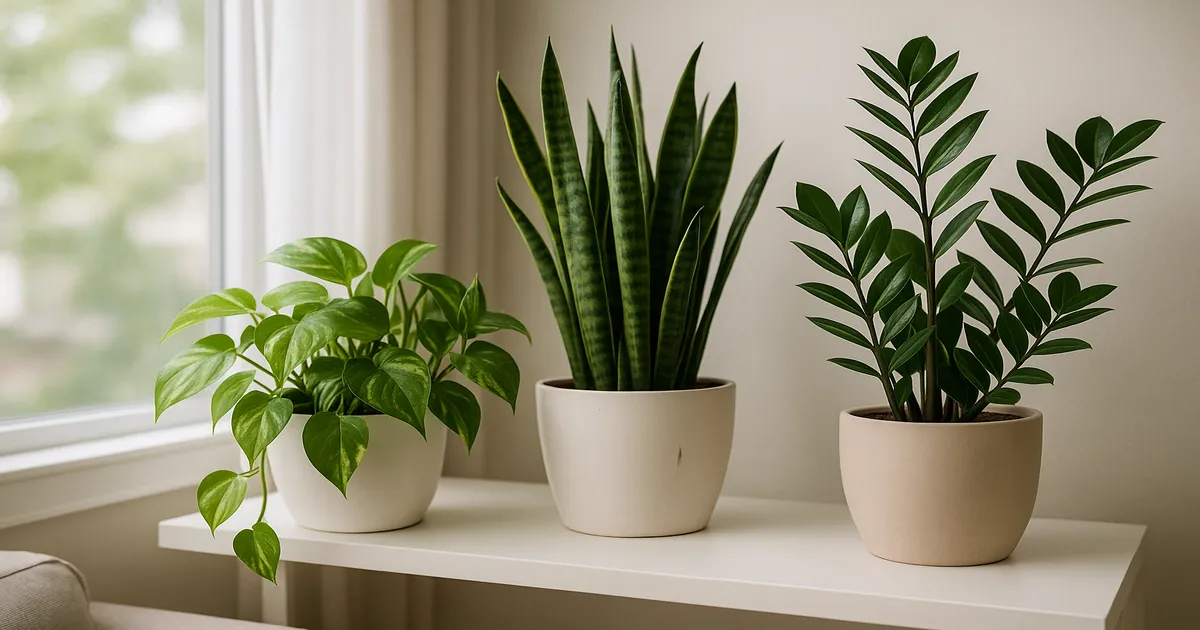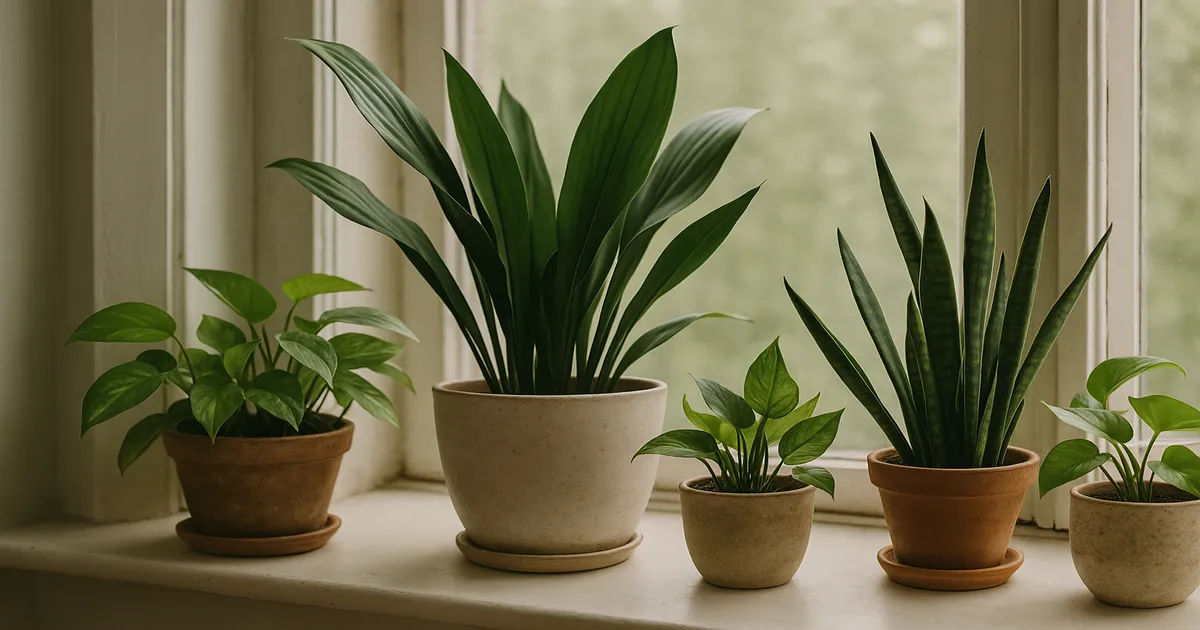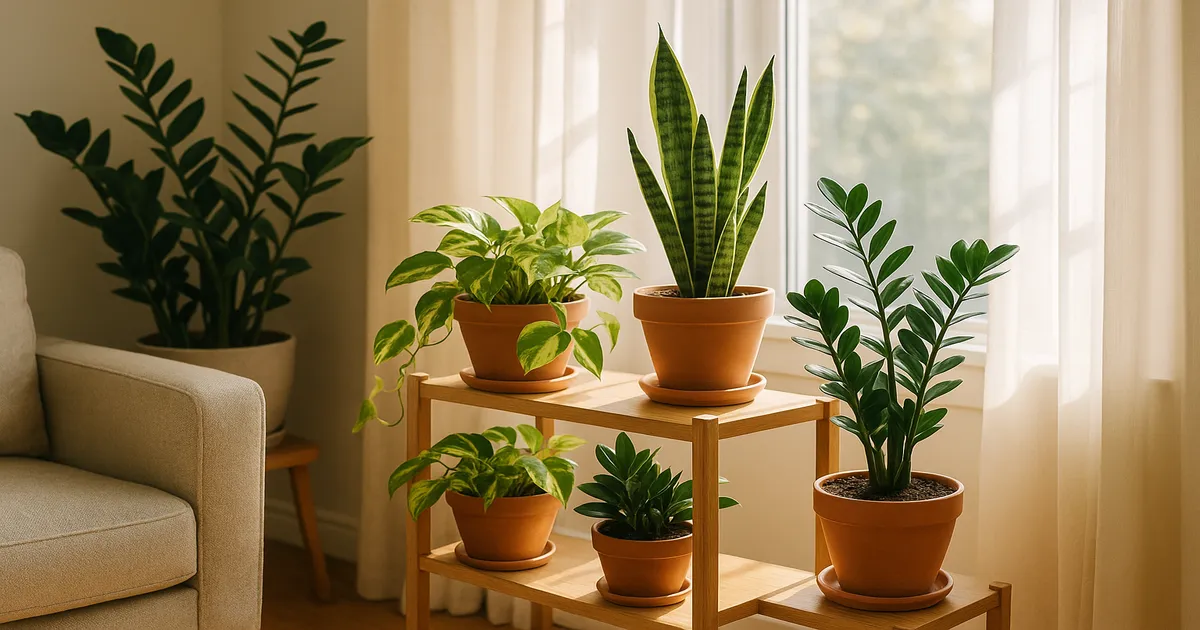
Quick Answer: If you’re brand new to houseplants and want something genuinely hard to kill, start with a Pothos — it droops visibly before any permanent damage sets in, giving you a clear warning system. Snake Plant is an equally brilliant first choice: it stores water in its thick leaf tissue and can go weeks without attention. Between the two, you’ve got almost any home condition covered.
So, what are the best houseplants for someone new to all of this? It’s one of the most common questions in the plant world, and the honest answer is: fewer than you think, but they’re really good ones. Most beginner plant deaths come down to three things — overwatering, not enough light, and buying a plant that was never suited to your home in the first place. The ten plants in this guide are chosen specifically to survive all three of those pitfalls.
What to Look For in a Beginner Houseplant
Not all “easy” plants are equal. Before you spend any money, it helps to know what you’re actually evaluating.
Tolerance Range
The single most useful quality a beginner plant can have is a wide tolerance band — meaning it survives across a broad range of conditions rather than demanding precision. Plants native to environments with variable rainfall, seasonal drought, or shifting canopy light are naturally adapted to the inconsistency of home care. That’s why so many top beginner picks come from tropical forest floors or semi-arid regions.
Light Flexibility
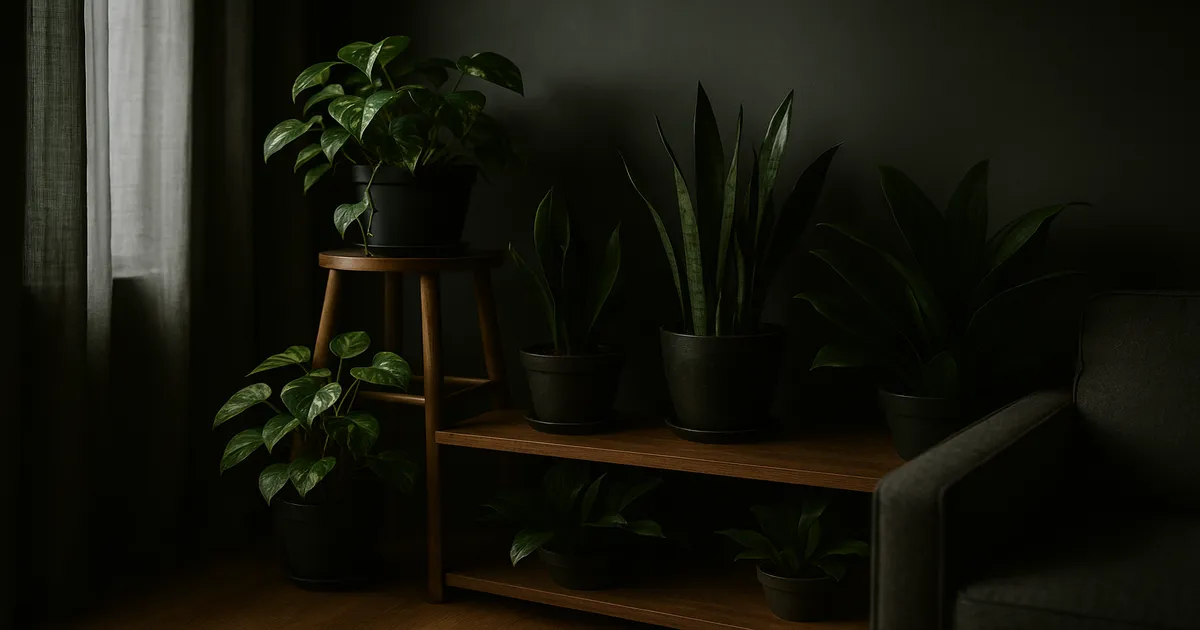
Most homes are darker than you think. A typical living room away from windows might measure 50–200 foot-candles on a bright day — that’s genuinely low light. Look for plants with a low light compensation point (around 50–150 foot-candles), meaning they can survive on what your home actually provides. “Low light tolerant” on a plant tag is often marketing; the species in this guide genuinely mean it.
Watering Forgiveness
The best beginner plants either store their own water (in rhizomes, thick leaves, or stems) or signal drought stress visually before damage becomes permanent. Avoid any plant labelled “keep evenly moist” until you’ve built some confidence — that phrase is a recipe for root rot.
Pet and Child Safety
This one matters enormously and often gets buried at the bottom of care guides. Pothos, peace lily, ZZ plant, and heartleaf philodendron are all toxic to cats and dogs. If you have pets, jump straight to the spider plant section — it’s the safest widely available beginner pick. See the pet safety FAQ at the bottom of this article for a full breakdown.
Best Beginner Houseplants Compared: At-a-Glance Specs
| Common Name | Botanical Name | Light (foot-candles) | Watering Frequency | Pet-Safe | Difficulty (1–5) |
|---|---|---|---|---|---|
| Pothos | Epipremnum aureum | 50–500 | Every 1–2 weeks | ❌ No | 1 |
| Snake Plant | Dracaena trifasciata | 50–1,000 | Every 2–6 weeks | ❌ No | 1 |
| ZZ Plant | Zamioculcas zamiifolia | 50–500 | Every 3–4 weeks | ❌ No | 1 |
| Spider Plant | Chlorophytum comosum | 200–2,000 | Every 1–2 weeks | ✅ Yes | 1 |
| Peace Lily | Spathiphyllum wallisii | 50–500 | When top inch dries | ❌ No | 2 |
| Heartleaf Philodendron | Philodendron hederaceum | 100–1,000 | Every 1–2 weeks | ❌ No | 1 |
| Rubber Plant | Ficus elastica | 500–2,000 | Every 1–2 weeks | ❌ No | 2 |
| Aloe Vera | Aloe vera | 1,000–3,000 | Every 3–4 weeks (summer) | ⚠️ Mildly | 1 |
| Chinese Evergreen | Aglaonema commutatum | 100–500 | Every 1–2 weeks | ✅ Yes (green cvs.) | 1 |
| Cast Iron Plant | Aspidistra elatior | 50–500 | Every 2–3 weeks | ✅ Yes | 1 |
The 10 Best Houseplants for Beginners
1. Pothos (Epipremnum aureum)
Pothos is widely considered the single most forgiving houseplant you can buy. When it’s thirsty, its leaves droop and very slightly wrinkle — before any permanent damage occurs — giving anxious beginners a clear, forgiving warning system. The ‘Golden’ cultivar is the most tolerant of the bunch. Variegated forms like ‘Marble Queen’ are beautiful but need noticeably more light to maintain their patterning, so they’re a better second or third plant than a first.
Key specs: Light: 50–500 foot-candles | Water: every 1–2 weeks (finger test at 2 inches deep) | Humidity: 30–80% RH | Toxicity: toxic to cats and dogs
Pros
- Genuinely thrives in low light where most plants merely survive
- Fast grower — new leaves appear within weeks, which is enormously encouraging
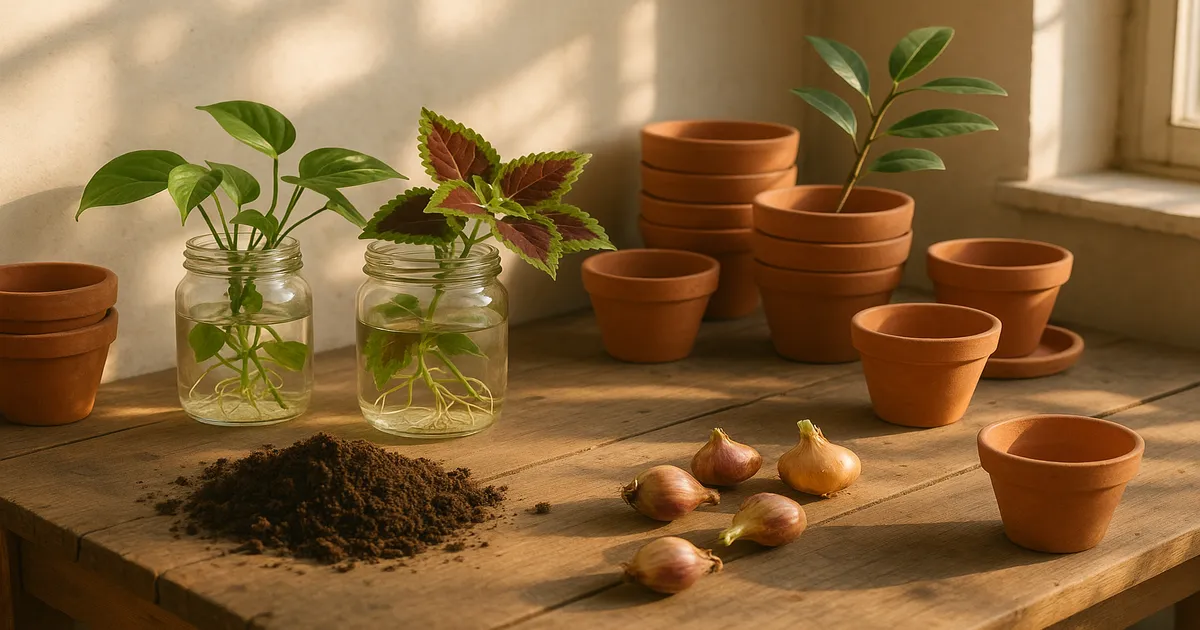
- Propagates effortlessly in a glass of water; you’ll have extras to give away within a month
- Widely available and inexpensive, often under $10
Cons
- Toxic to cats and dogs; not suitable for pet households
- Gets leggy and loses colour vibrancy in very low light
- Variegated cultivars need more light than beginners often have available
Best for: Almost any beginner in almost any home. It’s the default first plant for a reason.
2. Snake Plant (Dracaena trifasciata)
Snake plants store water directly in their thick, fibrous leaf tissue, which means they can go three to six weeks without water in winter without showing any distress. They tolerate low humidity (30–50% RH), a huge light range (50–1,000 foot-candles), and genuinely don’t mind being ignored. The cultivars ‘Laurentii’ (yellow-edged) and ‘Moonshine’ (silvery-green) are equally tough; the dwarf ‘Hahnii’ is ideal if you’re short on space.
Key specs: Light: 50–1,000 foot-candles | Water: every 2–6 weeks depending on season | Humidity: 30–50% RH | Toxicity: toxic to cats and dogs
Pros
- Near-indestructible under normal home conditions
- Architectural look suits modern interiors
- Tolerates the low humidity of centrally heated or air-conditioned rooms
- Thrives in offices and rooms with limited natural light
Cons
- Toxic to pets
- Susceptible to root rot if overwatered in cold weather — terracotta pots help enormously
- Slow grower; don’t expect dramatic changes week to week
Best for: Forgetful waterers, offices, and anyone with a dim room that needs a stylish plant.
3. ZZ Plant (Zamioculcas zamiifolia)
The ZZ plant is the closest thing to a self-sufficient houseplant that exists. Its underground rhizomes store substantial water reserves, giving it drought tolerance that rivals succulents — you can genuinely forget it for three to four weeks and return to a perfectly happy plant. The ‘Raven’ cultivar, with its striking near-black foliage, is equally tough but tends to cost a little more. One important note: the sap is a skin irritant, so wear gloves when repotting or pruning.
Key specs: Light: 50–500 foot-candles | Water: every 3–4 weeks | Humidity: 30–60% RH | Toxicity: toxic to pets and mildly irritating to human skin
Pros
- Rhizome water storage makes underwatering almost impossible
- Glossy, deep-green foliage looks expensive with minimal effort
- One of the most low-light-tolerant plants available
Cons
- Toxic to pets and irritating to human skin — always handle with gloves
- Very slow grower; not the plant for someone who wants rapid progress
- Overwatering is the one reliable way to kill it — always err on the dry side
Best for: Frequent travellers, busy people, and anyone who tends to forget plants exist for weeks at a time.
4. Spider Plant (Chlorophytum comosum)
Spider plants are the standout choice for pet households — they’re completely non-toxic to cats and dogs, which immediately sets them apart from most of the competition. They’re also rewarding for beginners because they produce cascading ‘spiderettes’ (baby plantlets on long runners) that are easy to propagate, giving you a tangible early win. They prefer medium to bright indirect light and tolerate occasional drought, though they’re not quite as indestructible as pothos or snake plant.
Key specs: Light: 200–2,000 foot-candles | Water: every 1–2 weeks | Humidity: 40–60% RH | Toxicity: non-toxic to cats and dogs ✅
Pros
- One of the very few popular beginner plants that is genuinely pet-safe
- Produces spiderettes that are easy to propagate and share
- Attractive in hanging baskets where trailing plantlets can cascade
Cons
- Leaf tips brown in low humidity or with fluoride in tap water — use filtered or rainwater if this bothers you
- Needs more light than snake plant or pothos to look its best
- Can look sparse and scraggly if light is too low
Best for: Pet owners who want a rewarding, propagation-friendly beginner plant.
5. Peace Lily (Spathiphyllum wallisii)
Peace lilies are one of the very few flowering plants that bloom reliably in low to medium indirect light, which makes them genuinely special in the beginner category. Like pothos, they’re wonderfully communicative — when thirsty, they droop dramatically, then bounce back within an hour or two of watering. They do prefer higher humidity (50–60% RH) than most plants on this list, so a bathroom with a window is an ideal spot. Note that peace lilies are sensitive to fluoride in tap water, which causes brown leaf tips; filtered or rainwater is better.
Key specs: Light: 50–500 foot-candles | Water: when top inch of soil dries out | Humidity: 50–60% RH | Toxicity: toxic to pets and mildly irritating to humans
Pros
- Produces elegant white blooms in low light — rare among easy houseplants
- Dramatic drooping when thirsty makes overwatering very unlikely
- Lush appearance that looks far more demanding than it actually is
Cons
- Toxic to pets and children
- Sensitive to fluoride in tap water, causing brown leaf tips
- Needs higher humidity than snake plant or ZZ plant; may struggle near heating vents
Best for: Beginners who want flowers, have no pets, and have a low-light room — a bathroom or north-facing windowsill is ideal.
6. Heartleaf Philodendron (Philodendron hederaceum)
Heartleaf philodendron is pothos’s closest rival in terms of ease, and the two are often confused at nurseries. Care requirements are nearly identical — both tolerate low light, prefer the finger test for watering, and trail beautifully from a shelf or hanging basket. The ‘Brasil’ cultivar adds a gorgeous yellow-green variegation but needs slightly more light to maintain its colouring, so stick with the standard green form if your light is limited.
Key specs: Light: 100–1,000 foot-candles | Water: every 1–2 weeks (finger test at 2 inches) | Humidity: 40–70% RH | Toxicity: toxic to cats and dogs
Pros
- Fast-growing and satisfying to watch develop
- Propagates easily in water, just like pothos
- Heart-shaped leaves have a warmer, softer look than pothos
Cons
- Toxic to pets
- Becomes leggy and loses vibrancy in very low light
- ‘Brasil’ cultivar needs more light than the standard green form
Best for: Anyone who loves the look of pothos but wants a slightly different aesthetic — or simply can’t find one nearby.
7. Aloe Vera (Aloe vera)
Aloe is the quintessential beginner succulent — its thick, gel-filled leaves store weeks’ worth of water, and it asks very little beyond a sunny windowsill and well-draining soil. Water every three to four weeks in summer and every six to eight weeks in winter, and you’re basically done. The critical difference between aloe and the other plants on this list is light: aloe genuinely needs bright indirect to some direct sun (1,000–3,000 foot-candles). It’s only the right pick if you have a south- or west-facing window. Use a cactus mix blended with extra perlite for best drainage.
Key specs: Light: 1,000–3,000 foot-candles | Water: every 3–4 weeks in summer; every 6–8 weeks in winter | Humidity: 30–50% RH | Toxicity: mildly toxic to cats and dogs
Pros
- Extraordinarily drought-tolerant — one of the hardest plants to kill by underwatering
- Practical bonus: the gel soothes minor burns and skin irritation
- Near-zero maintenance once established in the right spot
Cons
- Needs significantly more light than most other plants on this list — a dim room will kill it slowly
- Root rot risk is high in poorly draining soil; terracotta pots are non-negotiable
- Mildly toxic to pets
Best for: Beginners with a bright, sunny windowsill who want a genuinely low-maintenance succulent.
8. Rubber Plant (Ficus elastica)
The rubber plant earns its place on this list through sheer adaptability. It tolerates a wide range of indoor light levels (500–2,000 foot-candles), though it genuinely thrives near a bright window. Its large, glossy leaves — deep green in the standard form, burgundy-red in ‘Burgundy’, and cream-edged in ‘Tineke’ — make it one of the most striking statement plants a beginner can own. Water every one to two weeks, allowing the top two inches of soil to dry out between waterings. Wipe the leaves occasionally with a damp cloth to remove dust, which can block light absorption.
Key specs: Light: 500–2,000 foot-candles | Water: every 1–2 weeks | Humidity: 40–60% RH | Toxicity: toxic to cats and dogs (milky sap is a skin irritant)
Pros
- Bold, architectural look that suits a wide range of interiors
- More forgiving of low light than its reputation suggests
- Grows into an impressive floor plant over time
Cons
- Toxic to pets; milky sap irritates skin — wear gloves when pruning
- Drops leaves if moved frequently or exposed to cold draughts
- Needs more light than snake plant or ZZ plant to look its best
Best for: Beginners with a bright room who want a bold, statement floor plant.
9. Chinese Evergreen (Aglaonema commutatum)
Chinese evergreens are one of the most underrated beginner plants available. They tolerate low to medium indirect light (100–500 foot-candles), irregular watering, and average home humidity — a combination that suits most households perfectly. The green-leaved cultivars are considered non-toxic to cats and dogs; however, the red, pink, and orange varieties contain higher concentrations of calcium oxalate crystals and should be treated as toxic in pet households. Stick with green cultivars like ‘Silver Bay’ or ‘Maria’ if pets are a concern.
Key specs: Light: 100–500 foot-candles | Water: every 1–2 weeks | Humidity: 40–60% RH | Toxicity: non-toxic (green cvs.) ✅
Pros
- Genuinely tolerates low light without becoming leggy
- Wide range of foliage colours and patterns available
- Pet-safe in green-leaved cultivars
Cons
- Red and pink cultivars are not pet-safe — easy to confuse at the nursery
- Prone to root rot if overwatered in low light
- Less widely available than pothos or snake plant
Best for: Beginners who want variety in foliage colour without sacrificing ease of care.
10. Cast Iron Plant (Aspidistra elatior)
The cast iron plant earns its name. It tolerates deep shade (as low as 50 foot-candles), temperature fluctuations, irregular watering, and low humidity — conditions that would finish off most houseplants within weeks. Growth is extremely slow, but the deep green, strap-like leaves are handsome and virtually indestructible. It’s also one of the few plants on this list that’s completely pet-safe. Water every two to three weeks and otherwise leave it alone.
Key specs: Light: 50–500 foot-candles | Water: every 2–3 weeks | Humidity: 30–60% RH | Toxicity: non-toxic to cats and dogs ✅
Pros
- Tolerates genuinely dark corners where almost nothing else survives
- Completely pet-safe
- Virtually pest-resistant when grown in appropriate conditions
Cons
- Extremely slow grower — not rewarding for beginners who want visible progress
- Plain appearance compared to more colourful beginner options
- Can be difficult to find at mainstream garden centres
Best for: Anyone who needs a tough, pet-safe plant for a genuinely dark corner and doesn’t mind waiting for growth.
Our Verdict: Best Beginner Houseplant by Use Case
Here’s the short version for when you just want a straight answer.
- Best Overall: Pothos — unmatched tolerance, built-in visual stress signals, and available almost everywhere for under $10.
- Best for Forgetful Waterers: Snake Plant or ZZ Plant — either survives weeks of neglect without complaint.
- Best for Pet Owners: Spider Plant — one of the only popular beginner plants that’s genuinely non-toxic to cats and dogs.
- Best for Low-Light Rooms: Snake Plant or Cast Iron Plant — both tolerate genuinely dim conditions; snake plant has the edge on looks.
- Best for Bright Windowsills: Aloe Vera or Rubber Plant — both want more light than the average home provides and reward you for it.
- Best First Flowering Plant: Peace Lily — blooms reliably in low light, which is almost unheard of among easy houseplants.
- Best Budget Pick: Pothos or Heartleaf Philodendron — both are widely available, often under $10, and propagate freely so you’ll rarely need to buy another one.
A few parting principles worth keeping: start with just two or three plants and learn their rhythms before adding more. Always check pet toxicity before you buy. Use pots with drainage holes — no exceptions. And water based on what the soil feels like, not what the calendar says.
Frequently Asked Questions: Best Houseplants for Beginners
What is the easiest houseplant that is almost impossible to kill?
Pothos and snake plant are the two most genuinely unkillable houseplants for beginners. Pothos warns you before damage occurs by drooping visibly when thirsty, and snake plant stores water in its leaves while tolerating drought, low light, and low humidity simultaneously. Either one is an excellent starting point.
Which beginner houseplants are safe for cats and dogs?
Spider plant is the top recommendation for pet households — it’s non-toxic, widely available, and genuinely easy to grow. Cast iron plant and Chinese evergreen (green-leaved cultivars only — red and pink varieties are irritating) are also considered non-toxic to cats and dogs. Avoid pothos, peace lily, ZZ plant, and heartleaf philodendron if you have pets; all can cause vomiting and oral irritation if ingested.
How do I know if I am overwatering my houseplant?
The classic signs are yellowing lower leaves, stems that feel soft or mushy at the base, and soil that stays wet and never seems to dry out between waterings. The simplest fix is the finger test: push your finger two inches into the soil — if it still feels damp, wait. A soil moisture meter removes the guesswork entirely and is worth the small investment for beginners. If root rot has already set in, remove the plant, trim any black or mushy roots, and repot into fresh, well-draining mix.
Can I grow houseplants in a room with no windows?
No plant survives indefinitely without light — below a certain threshold, a plant slowly depletes its energy reserves and declines. That said, full-spectrum LED grow lights running on a timer for 12–14 hours per day can fully substitute for natural light. Pothos, snake plant, and ZZ plant all do well under artificial light at 1,000–2,000 foot-candles at plant level.
Do houseplants actually purify indoor air?
This is one of the most persistent myths in the plant world. The famous NASA Clean Air Study (1989) was conducted in sealed, airtight chambers — nothing like a real home with ventilation and normal airflow. At the plant densities realistic for a home, the measurable impact on indoor air quality is negligible. Houseplants are wonderful for aesthetics, stress reduction, and the satisfaction of keeping something alive — but meaningful air purification isn’t one of their strengths.